Updated my website again with a few more additions.
Added a few pics of how I install the roller while ON the boat easily (used info from this forum, not my idea).
Had a custom sail cover made to match the cushions we had made. Fits like a glove. Workmanship is spectacular
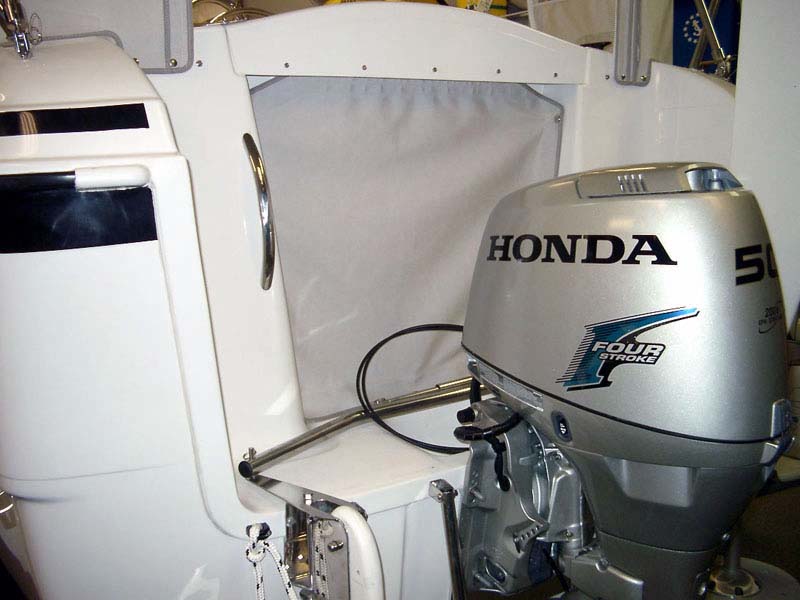
The sail shop, Harding sails, also made me a transom cover to keep stuff from falling out the back. It also helps with following waves out of the cockpit.
Few other things I have done to the boat. Newer pictures are at the bottom:
I really like that transom cover-first time I have seen this. Also, I like the idea of removing the head shelf and getting that pottie down lower! Good pictures of your roller furler attchment procedure-first time I did this (on land) I had a devil of a time even with my borther-in-law helping-we finally had to crank the mast a bit more forward to slack things off a bit. Thanks for sharing.
-Walt
Yea, ripped out that shelf first thing. It is totally useless with the extra capacity head. Not sure what owners with 05+ will do now that the shelf is molded into the boat.
Not sure where I got the idea for the transom net. But it seemed logical. Looks good I think. Works well so far
When I step the mast, I usually give it a click or 2 on the raiser after it is up all the way. gives just enough slack to do the roller without a huge effort.
There are two places I use it. First in it's normal place at the rear of the cockpit if I am using the hatchboards to lock up the companionway.
Second, I have a set of slots at the rear of the cockpit under the seat for the hatchboards when we want the boat open. This gives me a hard back wall. This is the normal way we have the boat most of the time when on board with our full enclosure up. Usually we just zip up the side panels when we close it up, however we sometimes find that at night when we are in a marina we have a need to close off the companionway for privacy. Rather than put in the hard hatchboards, I have a set of fasteners that let us put the fabric transom cover in the companionway as a privacy screen. You can slide the hatch to close things all the way or as we do more often, leave the hatch open and just put up the panel for privacy. Because it is all inside the dodger there is no worry about weather and you can get privacy and ventilation.
My installation allows both the hard hatchboards and the fabric panel to be installed at the aft end of the cockpit at the same time.
There are two places I use it. First in it's normal place at the rear of the cockpit if I am using the hatchboards to lock up the companionway.
Second, I have a set of slots at the rear of the cockpit under the seat for the hatchboards when we want the boat open. This gives me a hard back wall. This is the normal way we have the boat most of the time when on board with our full enclosure up. Usually we just zip up the side panels when we close it up, however we sometimes find that at night when we are in a marina we have a need to close off the companionway for privacy. Rather than put in the hard hatchboards, I have a set of fasteners that let us put the fabric transom cover in the companionway as a privacy screen. You can slide the hatch to close things all the way or as we do more often, leave the hatch open and just put up the panel for privacy. Because it is all inside the dodger there is no worry about weather and you can get privacy and ventilation.
My installation allows both the hard hatchboards and the fabric panel to be installed at the aft end of the cockpit at the same time.
In that picture you can really see the side difference in the transom area between the X and M. My transom net is about the size of a paper towel Since the motor is right under the seat, I could not put it any further back toward the motor.


 Since the motor is right under the seat, I could not put it any further back toward the motor.