Are These Boats Suitable for Bluewater Cruising?

A forum for discussing topics relating to MacGregor Powersailor Sailboats
User avatar
delevi
Admiral
Posts: 2184
Joined: Fri May 06, 2005 1:03 am
Location: San Francisco Catalina 380, former 26M owner
Contact:

Post by delevi »

Well the rudders do look cheesy. Admittedly that sight is the most annoying to me about the Mac, i.e. when motoring with those two big flappers hanging off the stern. :o

I must concur, however, that they are strong. One time, sailing out of a shallow bay in Lake Tahoe, I ran over a huge rock with the rudders, literally. We were running downwind and I actually had the daggerboard all the way up. I practically never do this but this time I did. Lucky too. Suddenly, the stern climbed a foot in the air and back down after a second or two, all the while **CRUNCH!**. I thought the rudders were goners for sure, but when I pulled them up, each was in one piece. A few wedges of fiberglass were eaten out of the bottoms, about an inch or so. A minor gelcoat job and some sanding and they were good as new. Can't say much for their effectiveness in weather, however. Both beating and on a broad reach with quartering waves, they are, in my opinion, less than adequate. This is why I replaced them with custom ones. These are squared at the bottom, 2 inches wider and 9 inches longer than stock. They work significantly better in all conditions, but still stall out in big quartering seas; though still an improvement.

Terry, like your idea about running the motor at low rpm while sailing in quartering seas. I find it hard not to broach in such conditions with a strong breeze and full main out. I may try reefing it next time or bringing it to centerline… just hate to run the motor when there is wind, but if it’s the only way, it’s nice to know there is still a solution. This was a really annoying problem last week when sailing back through the Golden Gate. I believe four or five broaches :| … nasty swells with wind waves, about 25 knots blowing behind me, full sails up. Perhaps, herein lies the problem :P

Leon
User avatar
Terry
Admiral
Posts: 1487
Joined: Thu Feb 19, 2004 2:35 pm
Sailboat: MacGregor 26M
Location: Vancouver, B.C. Canada. '03 26M - New Yamaha 70

Say What?

Post by Terry »

Catigale wrote:Terry- what do you say when the Admiral asks "Does the Mac make my rear look big??"

:wink:
Stephen, I say what ever it takes to cover mine! :P
:? Does that sound right? :?
User avatar
baldbaby2000
Admiral
Posts: 1382
Joined: Sun Mar 28, 2004 8:41 am
Location: Rapid City, SD, 2005 26M, 40hp Tohatsu
Contact:

Post by baldbaby2000 »

Not in my opinion they don't. I've read that slow speed steering used to be a problem on some X's, but that has been completely eliminated on the M's.
There is no problem, per say with the rudders or steering, especially when you talk about low speeds. The problem is when sailing in heavy air.
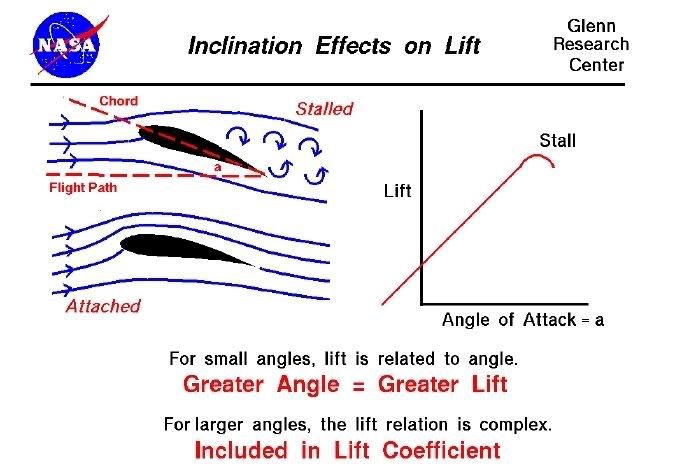
I have a different opinion. I've noticed a problem in both very light air and heavy air. I don't think it's simply a surface area issue. The stock rudders pivot near the center of the rudder meaning the both leading and trailing edges move left and right as it pivots. According to Joel at IDA sailors this can cause the desired laminer (non turbulent) flow to become separated and the rudder looses the desired lifting function. It's like an airplane wing that stalls out. The IDA sailor rudders pivot at the leading edge to avoid this effect. In other words only the trailing edge moves when the rudder is turned. Leon has a bigger IDA version and size probably does matter somewhat too (I'm talking rudders here). I just got the standard IDA size which aren't much bigger than the stock M rudders but I sailed Richard O'Briens IDA equiped M in a few races last year and they seemed to perform better than the stock. It's a tough thing to evaluate because you just can't switch between 2 different rudders instantly to do an A/B comparison. I thought about putting a stock rudder on one side and and IDA on the other to see if one tack was different than the other but I decided...Nah.

By the way, the daggerboard can stall too which is why you want to fall off slightly after a tack to get the speed up before trying to point too high.


Image
User avatar
Currie
Captain
Posts: 621
Joined: Fri Feb 02, 2007 12:31 pm
Location: Michigan ---- '04 26M "Take Five" 50HP Suzuki efi 4-stroke

Post by Currie »

My two cents...

It seems like it shouldn't matter where the pivot hole is in the rudder, but rather where the bracket shaft rotates in its bearing. In this case, it should still be toward the leading edge of the stock rudder on the 26M...

Image

Not arguing with those who experience better performance with IDA rudders, however.

Cheers,
~Bob
Last edited by Currie on Fri Mar 23, 2007 10:57 am, edited 1 time in total.
Fairwinds
Chief Steward
Posts: 65
Joined: Fri Mar 16, 2007 9:35 pm
Location: Sonora, Mexico

Post by Fairwinds »

Having a "balanced" rudder is a great benefit. The steering force required to pivot the rudder is GREATLY reduced. Having about 1/3 of the area ahead of the pivot point is a GOOD thing.

If the rudder is ineffective (stalls) I would favor increasing the SIZE of the blade, and NOT alter is steering geometry..

I would use only the jib, which you can easily control and keep the speed down. Broaching can be VERY unpleasant! This will move the center of effort way forward and help keep the boat heading in the right direction!
User avatar
baldbaby2000
Admiral
Posts: 1382
Joined: Sun Mar 28, 2004 8:41 am
Location: Rapid City, SD, 2005 26M, 40hp Tohatsu
Contact:

Post by baldbaby2000 »

It seems like it shouldn't matter where the pivot hole is in the rudder, but rather where the bracket shaft rotates in its bearing. In this case, it should still be toward the leading edge of the stock rudder on the 26M...
Yes, that's what I meant; I may not have worded it the best. You're drawing shows the concept. The bracket shaft as you've shown will result in the leading edge changing position. This in theory can cause the flow to separate easier especially if the rudder is moved quickly. The IDA rudders have the leading edge under the shaft. I can see a downside in that a lot of weather helm can put more force on the steering mechanism. I agree that if part of the rudder is forward of this point the perceived weather helm may be reduced but the weather helm will still be there. In addition if the rudder stalls and the boat slows, the weather helm will increase because the boat will heel more so I can see an advantage to the IDAs even for weather helm if they keep the boat from slowing.

Daniel
User avatar
Currie
Captain
Posts: 621
Joined: Fri Feb 02, 2007 12:31 pm
Location: Michigan ---- '04 26M "Take Five" 50HP Suzuki efi 4-stroke

Post by Currie »

Cool - I'm probably the only one with the initial confusion. The shape of the factory rudder looks as though it would wobble thru the water backwards. Took me a while before I realized what was going on. I posted the pic in case someone out there is picturing it like I did. That's about all I can add to this thread, since I haven't experienced the feel of either type of rudder in the water (yet ;))

Cheers,
~ Bob
User avatar
Catigale
Site Admin
Posts: 10421
Joined: Fri Jun 11, 2004 5:59 pm
Sailboat: MacGregor 26X
Location: Admiral .............Catigale 2002X.......Lots of Harpoon Hobie 16 Skiffs....Island 17
Contact:

Post by Catigale »

FIrst season I didnt realise how important it was to cleat the rudders off tightly and sailed for a 1/2 season with the rudders loose...amazing i didnt break anything in the steering system

Playing with the center of rotation of the rudders can make large changes on the torques on this system, so play carefully.
User avatar
tangentair
Admiral
Posts: 1234
Joined: Mon Jan 22, 2007 11:59 am
Sailboat: MacGregor 26M
Location: Highland Park, IL ...07M...Merc 50 BF...Mila K

Post by tangentair »

Being new to the Mac, having keel boats before, I have been very interested in this thread. I have seen "how to sail Mac's 101" and Macgregor's Sailing for Dummies chapter in the manual but threads like this should be added to an FAQ or archive called advanced sailing techniques. There may not be as high a risk of broaching here on Lake Michigan as in SF or PNW but I think I will keep the motor down and idling while getting the hang of running down wind in heavy gusts and strong breezes. So thanks for this post and consider a list of links or a section of archived posts called "real sailing so read this first".
Ron
Fairwinds
Chief Steward
Posts: 65
Joined: Fri Mar 16, 2007 9:35 pm
Location: Sonora, Mexico

Post by Fairwinds »

Maybe I can post a URL now..This is what happens when you get a little careless. We had sailed Costa for 12 years in these waters. What you see in these pictures occurred between 9pm and 11pm one evening in February. At 8pm she was resting comfortably at anchor in a sheltered bay. Then the wind shifted from south to NW (a frontal passage) leaving her exposed. Surf conditions changed so rapidly we could not use the dinghy to get back out to her..The bow cleats tore out and in less than a minute she was on the rocks..

http://www.parkerdawson.com/topic.asp?TOPIC_ID=301
User avatar
Catigale
Site Admin
Posts: 10421
Joined: Fri Jun 11, 2004 5:59 pm
Sailboat: MacGregor 26X
Location: Admiral .............Catigale 2002X.......Lots of Harpoon Hobie 16 Skiffs....Island 17
Contact:

Post by Catigale »

There may not be as high a risk of broaching here on Lake Michigan as in SF or PNW
The Great Lakes are rife with stories of 'blue water' sailors who didnt treat them with respect and ended up sunk...they dont call them the Greats for nothing...

Weather comes up quickly and shallows and long fetches can be a deadly combination for the new sailor

Keep that motor handy and by all means idling if its breezy.....dont sweat the .5 knot loss in speed with the motor down....(a much hashed on thread on this board)

:evil:
User avatar
Dimitri-2000X-Tampa
Admiral
Posts: 2043
Joined: Fri Jan 02, 2004 5:36 am
Sailboat: MacGregor 26X
Location: Tampa, Florida 2000 Mercury BigFoot 50HP 4-Stroke on 26X hull# 3575.B000

Post by Dimitri-2000X-Tampa »

waternwaves wrote:
You'll be fortunate indeed to be able to tack an X through anything better than 110 degrees.
you're a better sailer than I am chip if you hold 110, by the time I have enough wind to sail upwind, I have enough waves to generally make it 125-130........ but some of that has to do with my deep baggy main I suppose.....
Sounds like you guys may not be trimming your sails properly. Although I agree that 110 is probably about the best you will do with a Genoa, you can easily get another 15 degrees out of it by using the jib and cabin top cars as opposed to the outboard genny cars. Also make sure that you are sheeting inside both shrouds (outside of the baby stays though).

Maybe because I have a windsurfing background, I don't have any hesitation pulling the snot out of the mainsail when I'm trying to sail upwind for long distances. Yes, it will never point as well as a racing keelboat however, you can probably get it within 10-20 degrees given the right trim. Of course, you need a couple mods too, like an adjustable outhaul and backstay (for X boat). You must have the sheet and vang completely loose when you raise the main, then torque the heck out of the outhaul to remove all the vertical wrinkles. Once you have the sail good and flat with no wrinkles, then yank the main sheet down hard and then tighten the vang hard. Now you are ready to release the sheet blocks and start sailing. Make sure to winch in the jib real tight too. I think in this config, you can get about 95 degrees (I'll bet you could get 5 more degrees with a better mainsail)...I'm pretty sure I've verified this on my GPS track before. Now of course the difference between a Mac and a racing boat is that your VMG will be highest pointed as close to the wind as you can with a racing boat but with a Mac, you will probably open it up another 5-10 degrees to get max VMG.

Fairwinds, I'm another one of these guys who downsized to a MAC from a much heavier keelboat (after 3 decades of sailing/windsurfing experience) The first time I saw a Mac about 10-11 years ago, I thought it looked like total junk and I skipped right over them. After studying the design for a couple years though, I learned that the advantages far outweighed the disadvantages for my shallow Florida West coastal cruising that I do most of the time. I don't want to cross an Ocean in this boat, but for everything else, it is perfect. I've probably owned close to a dozen boats, finding some reason or another to get rid of each one after a few years (usually due to lack of usage). Not so with the Mac, now that I have customized it just the way I want it, this is going to be my long term boat.

Sure, I know that some of my hardcore racing friends despise this boat, but I think it is mostly due to jealousy... :D I use my boat much more than they use theirs. Everytime I anchor my Mac near people or take it to a boat ramp, everyone wants to know more about this wonder boat. Just last week at Longboat key near Sarasota, strangers were taking pictures of my boat anchored in 18 inches of water on the pristine Gulf beach side of the key and asking me who built this boat.
User avatar
Dimitri-2000X-Tampa
Admiral
Posts: 2043
Joined: Fri Jan 02, 2004 5:36 am
Sailboat: MacGregor 26X
Location: Tampa, Florida 2000 Mercury BigFoot 50HP 4-Stroke on 26X hull# 3575.B000

Post by Dimitri-2000X-Tampa »

Fairwinds wrote:Maybe I can post a URL now..This is what happens when you get a little careless. We had sailed Costa for 12 years in these waters. What you see in these pictures occurred between 9pm and 11pm one evening in February. At 8pm she was resting comfortably at anchor in a sheltered bay. Then the wind shifted from south to NW (a frontal passage) leaving her exposed. Surf conditions changed so rapidly we could not use the dinghy to get back out to her..The bow cleats tore out and in less than a minute she was on the rocks..

http://www.parkerdawson.com/topic.asp?TOPIC_ID=301
Wow, what a heartbreaker, sorry for your loss. We have it lucky here in West Florida with our soft sugary beaches. I was not aware of these PD boats, don't think I've ever seen a mid cockpit design on a smallish boat like that.

I don't believe the Mac has any backing plates under the cleats either, but another advantage of the lightweight Mac is that there will be less stress on the cleats. Other's on this board will disagree, but I like keeping the ballast empty when the boat is getting tugged on in an exposed slip (like where I used to keep her). I think it hits the cleats much harder with that extra 1400 lbs on board.

When I am on anchor, there always seems to be plenty of elasticity in the rode to absorb shocks. Which btw, would lead me to my next question which has been heavily debated around here. What kind of rode were you using when the cleats ripped out? Was it all chain, partially chain, what type and size of rope, etc? How much do those PD's weigh in at?

Another big advantage of the Mac is that you can anchor in much more shallow gunkholes than traditional sailboats can...where the waves are typically much less than the deeper waters. It is a perfect boat for West Florida waters, thats for sure...I can hug my shallow lee mangrove shores with the wind whipping through the top of the mast and still get a good night's sleep on calm water. Just throw out a stern anchor out to keep the boat from violently swinging around...one of the downsides of the skinny tall design...but also what gives you the standing headroom in the cabin.
waternwaves
Admiral
Posts: 1499
Joined: Wed Oct 13, 2004 8:18 pm
Location: X less in North Puget Sound -have to sail other boats for a while

Post by waternwaves »

Sounds like you guys may not be trimming your sails properly. Although I agree that 110 is probably about the best you will do with a Genoa
yes a jib would help, but most of my sailing seems to be reaching with our winds, so the genny will stay for a while.

I wonder tho, those that are showing 110 to 115 are you determining this from compass or actual gps track. My numbers are from actual GPS track

I have found the compass indication (which does not show heel slip) is more generous than the actual track which is 10 degrees more.

add that to my well used (or as Todd at BWY might say ...Probably blown out.....main) I can see a replacement soon,

and tho my hobie and sailboard days are long past....

I do try to keep trimmed, and use most of the tricks....


Since I do my navgation plotting based on measured tracks, it helps me plan my next passage.
eric3a

Post by eric3a »

..
Last edited by eric3a on Tue Mar 11, 2008 7:32 am, edited 1 time in total.
Post Reply