Hi!
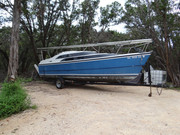
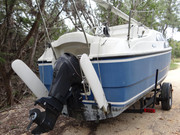
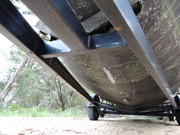
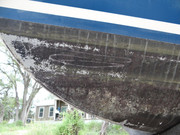
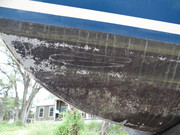
It looks like you have what’s left of an ablative bottom paint. Ablative starts out rough. It is supposed to wear away and shed the marine growth.
Often times owner or dealer applied ablative bottom paint was/is done without proper surface preparation or primer.
If you are only going to have limited on water exposure and primarily be on clean fresh water then after a through removal of the existing bottom paint followed by a good through epoxy primer layer followed by a good through epoxy top coat will provide a nice smooth bottom surface that you can clean with a gentle pressure wash for years.
The bottom anti fouling ablative paint that came on Over Easy when we purchased her was vintage (something like a decade and a half ago). We chose to give it a try and see what happens.
After four months in a SC estuary slip had a fairly solid couple of inches of marine growth. Yuck!
And that was with our going out motoring 3-to-4 days a week.
We had Over Easy hauled out in July and had the bottom “abrasive wet blasted” to clean off the marine growth and old ablative coating. Sure enough the residual ablative had actually sort of did it’s job inhibiting marine growth from adhering to the hull but also shed the ablative in sheets because there wasn’t an underlying primer. Kind of a mixed bag….
So given we are both salt water and fresh water use we decided to properly prepare our hull with the professional abrasive wet blasting to clean off all the old materials back to the gelcoat. Then we had two coats of epoxy primer applied followed by two coats of ablative barrier bottom coating. (Note: A hard barrier coating like a copper based doesn’t allow one to pull it in/out of the water and still have it function as these hard coating will oxidize in air which requires sanding to be reactivated just prior to relaunching).
Ablative coatings don’t have that limitation and can go in/out of either fresh/salt/both waters.
An epoxy paint bottom will not inhibit saltwater marine growth. Saltwater Marine growth can actually etch into a fiberglass and allow moisture into the structure leading to blistering.
Hope this helps some.
Best Regards,
Over Easy


 arrived today.


 changes as it cleans up into something that you embrace when all the cleaning is done.