
Without a 3D printer... me carving an octopus... hmmm... How's this:

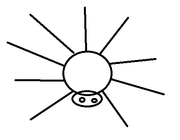


Without a 3D printer... me carving an octopus... hmmm... How's this:
I kind of like that mindset better!


As a Miata owner, I can't help but keep thinking of the Mazda MX-5 (Miata)!

Wow... that's a PILE of questions.Inquisitor wrote: ↑Tue Jan 12, 2021 9:25 amThank you Kevin.
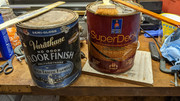
Having never sprayed polyurethane,
- Is it safe? - I've read paint like aircraft Imron will flat kill you without the right air gear.
- I'm not looking for selling quality furniture grade results... just better than what I see with brushing.
- The can recommended and I used 4 coats on this project, but the more it built-up the more wavy and brush strokes are visible.
- Like I mentioned above, I prefer the non-yellowing of this specific product. All others I've tried - polys, lacquers, spar, varnish... etc seem to yellow and seriously change over time. This one on oak flooring never yellowed. I could put a piece of the raw wood next to it and can't tell a color difference.
- Does spraying take a long learning curve before a Noob can get better than brushing results?
- Since its a water based Poly, I'm assuming I just thin it with water??? How do I tell how much? - Trial and Error?
- I got this on sale... well... because it was on-sale $9.95 and some day, I might use it.
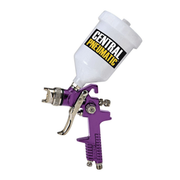

Inquisitor wrote: ↑Tue Jan 12, 2021 9:29 amWithout a 3D printer... me carving an octopus... hmmm... How's this:
 I just noticed; your octopus is a novempus.
 Sorry... I come by my username honestly. Maybe... I should be promoted to The Grand Inquisitor


Daine Bramage


Kevin,
Inquisitor wrote: ↑Mon Jan 25, 2021 2:30 pm Kevin,
I've done a panel with the sprayer. viewtopic.php?f=8&t=28122
I have four coats on it and it looks ten times better than the brushed-on version. I used 220 grit between the first two coats and 400 grit after that and it is totally smooth except some dust that I just can't avoid. I'm not going to have a clean room. So I either have to live with the nits or sand them out and that hazes the surface a little. Frankly, its close which way I'd rather live with. After this last coat and 400 grit to remove the last specs... is there something else I can do? Is this like paint or gel-coat where I can use polish and/or wax on top of the polyurethane?
Thank you for your advice!
Great that it's worked out for you!

Every input is valued here.Jimmyt wrote: ↑Mon Jan 25, 2021 4:14 pm Sorry I can't help on this one. Never used water-based finish on something I wanted slick. The oil-based Helmsman spar urethane can be cut and polished like an automotive finish. Don't know if you can do that with the water-based product you are using, though. Are you going to be able to see the dust particles when it's installed? You could always do a test piece, let it cure, then try and do a polish on it.
I'll warn you that once you start, you'll probably have to do all surfaces. The sheen won't match when comparing the polished surface to the sprayed only surface (in my experience).
Sounds like you and Kevin have it dialed-in.
If it doesn't work out, I sand it out and reapply another layer of poly. No harm, no fowl, no learn. 