Yesterday (Monday, 11/7) my wife and I were returning from a motor cruise down river on the St. Johns River out of Monroe Harbor marina in Sanford, FL. We were motoring to our home slip in Lake Monroe; winds 12-15 steady with gusts around 18-20. Lake Monroe is about 5 miles in diameter, so waves can get a little nasty for smaller boats. I noticed one sailboat in the lake as we continued in the channel from the river. As we approached, the woman in the sailboat, moving unsteadily under jib alone, made the universal hailing signal of waving arms back and forth. We slowed and asked if she needed help. She was in a sloop similar to a Com-Pac 16. She said, "yes" and started pointing toward a cushion in the water 100 feet astern of her, and I thought she was saying, "diver in the water". We at first turned away, but there was no indication of a diver's flag or apparatus, so I ventured closer, and we saw a person's head in the water about a hundred feet beyond. I approached slowly, and, when within shouting distance, I asked if he needed help. He shouted, "yes". My wife scrambled to retrieve the four step boarding ladder we have to use on the gunwale for reboarding, broke down the lifelines on the leeward side, and headed over close to him, approaching from upwind. He started swimming toward us and gained the ladder. I went into idle, and we helped him in the boat. He was obviously tired and cold. Temperature of the water was probably mid 70's. The young man did not speak English very well, but he was able to tell us he thought he was going to die, and that we had saved his life. I took that as a statement of gratitude but did not take it too seriously. The shoreline was about 500 yards away, but entirely a concrete seawall with about five feet of wall above the water level. He was able to tell us that his girl friend did not know how to sail, but she could take the boat over to the sea wall, which was about 500 yards downwind. I knew the boat would be battered severely if beached against the seawall in the present conditions, if she tried to take it there, so I suggested we try to tow it somewhere safe. My wife scrambled to get the tow line, and I rigged it to one of the stern cleats. The man we took out of the water said he did not think his girlfriend would know how to secure a tow line, so we decided to try to get him back in his boat. We tried to get him back in a PFD, but we were alongside his boat before he figured out how to get it to fit and secured, so while the two women held the boats together, our Mac upwind, he scrambled back aboard his boat, and we slowly pulled away. His girlfriend yell out to us as we pulled away, "God bless you"! When we got back to our slip, my wife told me that the man had said a second time to her, that we had saved his life, that he had been in the water for about 30 minutes, and had come to the conclusion that this was it for him.
I wanted to share this not for "horn tooting" purposes, but to help us all think about the way emergencies can crop up so quickly, and to say how well the mac handled during all of this activity in choppy seas with no ballast water in the tank. After we tied up and secured our boat in our slip, we did get in the car and proceed along the highway that accompanies the shoreline (and seawall) until we were within hailing distance of the little boat. The man and his girlfriend were wearing PFD's, sailing on a broad reach with jib alone, under control, and headed, we think for a dock and ramp about a mile downwind. I waved, and they waved back. You know, a friendly wave. I was prepared to call 911, if I did not like what I saw at that point, but it did not appear necessary.
Action I think I did right: (1) stopped to help, (2) had the necessary gear (ladder, tow line, towel) aboard and readily available, (3) made all approaches from upwind so my boat could shelter the swimmer or other boat, for man to board and wind on the mac would help us rather than hurt us, (4) made the most sensible disposition in the situation (put skipper back in his boat), (5) Double check on them, prepared to call for 1st responders if needed, (6) I keep three fenders tied on both sides of the boat secured in an up position for sailing and motoring, and we had just dropped them down for docking; that was very handy in this evolution.
Would do differently next time: (1) Had boarding ladder more accessible (it was under hatch, cushions, dodger, and gear under the cockpit), (2) Had stern mooring lines already in both stern cleats, so had to take extra time to figure out how to secure with tow line; simplify rigging to take a tow line quickly, (3) ask more pertinent questions early on to assess just what I was dealing with rather than let things evolve. (4) when approaching the other boat, I should have warned the ladies not to put their hands in places that could get caught as the boats came together. No problems developed in that way, but I became worried as I saw them grabbing each for the other boat.
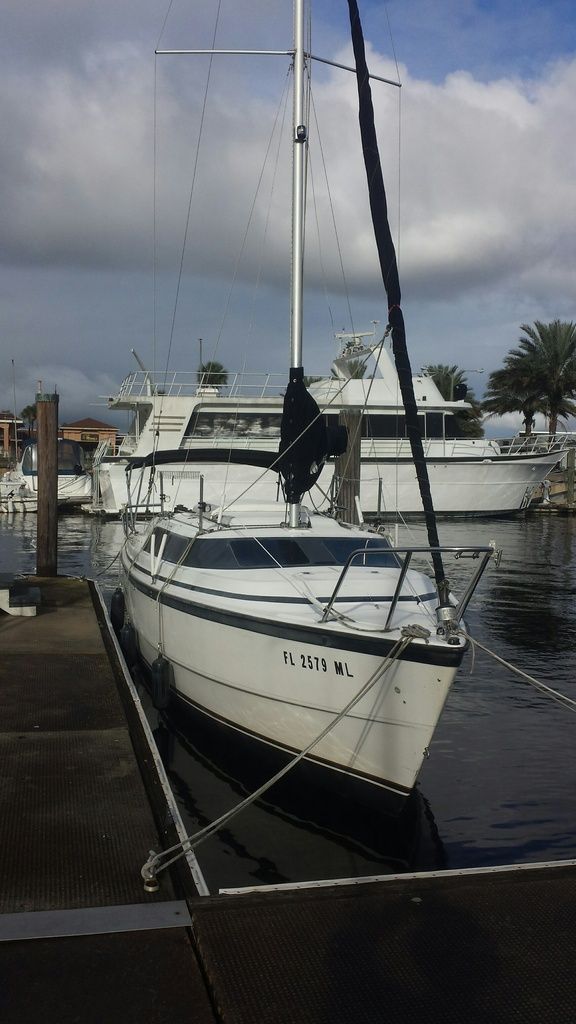
My wife and I had seen the movie Sully recently, and the aspect of the movie that impressed me was the factor of the time it takes even experienced people to think through a novel emergency situation. That was certainly validated for us in this scenario. Any suggestions would be appreciated. But, very proud of my boat, American Spirit, today. This Friday will be my 13th anniversary of ownership.


 Great job
  Ron.
Ron.


 Once they inflate, you rise quickly
