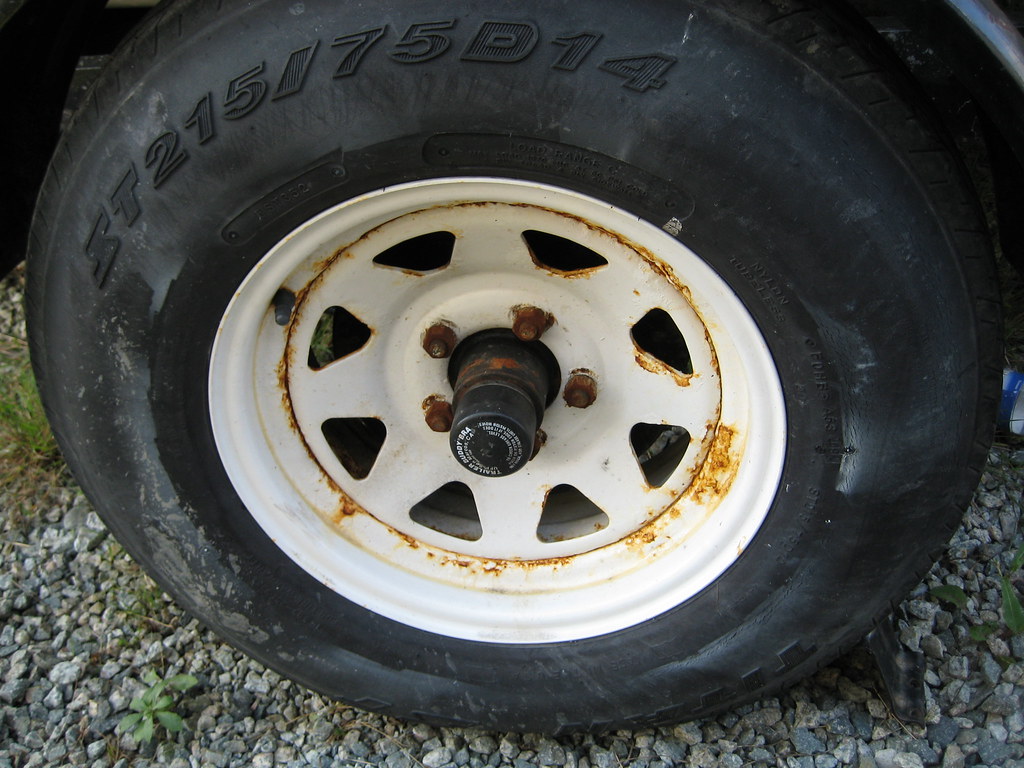
Kelly Hanson East wrote:The issue is the "properly torqued" - Kevin wrote this up very nicely earlier, but he is busy watching the Phillies blow it right now....
Torque recommendations are for dry studs/nuts, and with lube the same torque will mean substantial more tension on the threaded assembly, which will hurry their failure. I think if you lube and run with less torque and diligently maintain them for tightness (every hour while trailering) you will neither lose a wheel nor break a stud.
My instructors in my mechanics class (also saw in Popular Mechanics auto section) that lugnuts torque is for lightly oiled, clean threads. Been working for me with well over 1million miles on my cars combined without a failure..yet

Been told dry lugnuts can give an inaccurate torque causing failures due to excess friction when torqued. Always a controversial issue on all the car forums I am on too.. so this is not an unusual point to ponder. Not that PM is the be-all, end-all of mechanics, but between my instructors, experience, and PM, I came to the conclusion that lubed lugnuts are the way to go. as usual... YMMV
Pretty close to what I was taught at class -
http://www.popularmechanics.com/how_to_ ... 72441.html
Popular Mechanics wrote:.............If there's a difference of 20% between any two lug nu ts, that's too much. Try loosening all the lug nuts, cleaning the stud threads with a wire brush, lightly coating them and the nut chamfer with clean engine oil, and then reinstalling the nuts fingertight.
Next, using a crisscross pattern, tighten all of them to about one-third the specified reading, then to two-thirds and finally to the specified torque.
and
http://www.popularmechanics.com/how_to_ ... tml?page=3
Popular Mechanics wrote:.....Accurate torquing of the lugs requires a smooth, lubricated surface. There's one school of thought that says not to oil the lug nuts, and the extra friction will keep them from spinning off. I hate to see squeaky, dry lug nuts that chatter and smoke as you tighten them. The friction between the stud, rim chamfer and the lug nut will reduce the preload. Further, dry lug nuts will gall the wheel's chamfer, further reducing preload. A clean, properly lubricated wheel/brake/lug nut assembly that's been properly torqued doesn't need to be retorqued. The only exception is torquing a new wheel, as the paint on the lug nut chamfer and the back of the rim will wear in slightly.