What happened to my lower unit.....????? (Honda 50 HP)
Posted: Wed Jan 31, 2007 7:19 pm
Glad to see the site backup…. Missed it dearly!!
So, here is something for the OB motor experts to chew on.
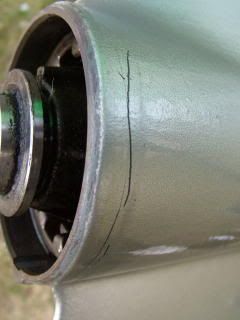
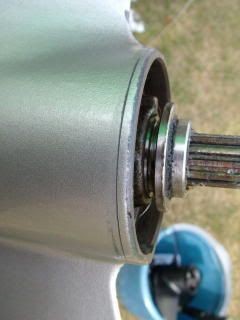
I noticed the cracks shown in the pictures a week ago. I am quite certain they were not there (or at least visible) when I changed the gear oil in the lower unit last October. The boat has been in my yard ever since. When I changed the gear oil there was no evidence of water. Even if there was water in the case, it would have been drained when I changed the oil.
The crack on the right side is a lot worse and is located 9-12 mm from the edge. The crack on the left side is closer to the edge (4-8 mm).
I am really puzzled about this. The location of the crack is not in an area where water could have been trapped. In fact the inside is exposed for 13.5 mm.
The motor has now 6 seasons on it. I have used the boat for 4 seasons and the first 2 seasons, the boat got little use as it was a demo of the Mac dealer.
During the last season, I noticed a small amount of oil seeping past the prop shaft seal (the boat is kept on the trailer). I was not too worried about it because the amount was so small. I checked the oil level regularly. There always seemed to be sufficient oil in the unit.
I have had some minor accidents, like a line wrapped around the prop etc. During my second season my cheap PVC dinghy got sucked into the prop while anchoring. It broke one blade. I’ve also had some fishing line wrapped around the prop (not last year) but not to the extent that it was wrapped around the prop shaft putting outward pressure on the casing. I also never hit the bottom or a rock with the OB.
I have considered the possibility of bent shaft. This would cause stresses on the outer bearing holder which could in turn cause the cracks in the casing. However, I would think that the motor would have suffered from excessive vibrations. Also, spinning the prop does not show anything out of alignment, at least not with the naked eye.
I did get a line wrapped around the prop early this pas summer. I cannnot remember that it was wrapped around the cast just forward of the prop. The line was quite tight. Could it have been so tight that it skweezed the cast, causing it to crack? Perhaps.
I showed the pictures to a local Honda Marine dealer. He had never seen this before and had no clue what might have caused it. However, he quoted me a whopping $2500 to replace the lower unit. Defender quoted me $1100, a lot better.
So, I am planning to replace the lower end before the season starts. I really would like to know though what caused this so I can prevent this from happening.
Any thoughts?
Harry
So, here is something for the OB motor experts to chew on.
I noticed the cracks shown in the pictures a week ago. I am quite certain they were not there (or at least visible) when I changed the gear oil in the lower unit last October. The boat has been in my yard ever since. When I changed the gear oil there was no evidence of water. Even if there was water in the case, it would have been drained when I changed the oil.
The crack on the right side is a lot worse and is located 9-12 mm from the edge. The crack on the left side is closer to the edge (4-8 mm).
I am really puzzled about this. The location of the crack is not in an area where water could have been trapped. In fact the inside is exposed for 13.5 mm.
The motor has now 6 seasons on it. I have used the boat for 4 seasons and the first 2 seasons, the boat got little use as it was a demo of the Mac dealer.
During the last season, I noticed a small amount of oil seeping past the prop shaft seal (the boat is kept on the trailer). I was not too worried about it because the amount was so small. I checked the oil level regularly. There always seemed to be sufficient oil in the unit.
I have had some minor accidents, like a line wrapped around the prop etc. During my second season my cheap PVC dinghy got sucked into the prop while anchoring. It broke one blade. I’ve also had some fishing line wrapped around the prop (not last year) but not to the extent that it was wrapped around the prop shaft putting outward pressure on the casing. I also never hit the bottom or a rock with the OB.
I have considered the possibility of bent shaft. This would cause stresses on the outer bearing holder which could in turn cause the cracks in the casing. However, I would think that the motor would have suffered from excessive vibrations. Also, spinning the prop does not show anything out of alignment, at least not with the naked eye.
I did get a line wrapped around the prop early this pas summer. I cannnot remember that it was wrapped around the cast just forward of the prop. The line was quite tight. Could it have been so tight that it skweezed the cast, causing it to crack? Perhaps.
I showed the pictures to a local Honda Marine dealer. He had never seen this before and had no clue what might have caused it. However, he quoted me a whopping $2500 to replace the lower unit. Defender quoted me $1100, a lot better.
So, I am planning to replace the lower end before the season starts. I really would like to know though what caused this so I can prevent this from happening.
Any thoughts?
Harry
