Hi Agi & Kurz!
Regarding battery type… Personally I use a dual Battery system on our Mac26X with switches to control tandem or singular use and charging.
We use dual purpose MARINE grade Start/Store batteries.
These are designed to operated in the kinetic dynamics of a bouncing heeling boat.
With this setup we can charge one battery while using the other which can allow us to always have one fully charged battery for starting purposes… I don’t know about you but I’d personally like to avoid hand pull starting a 60hp outboard while out on the water.
As mentioned the exotic battery arena is growing and some may have developed systems that can work with engines designed for 12 volts but I’d also caution to look carefully at the ‘fine print’ and specifications. Not knowing the specifics of what Kurz is operating I’m not in a position to critique anything specifically. Because something works for the moment isn’t to say it isn’t going to be problematic or that damage inflicted doesn’t have an accumulative effect.
Many old outboard engines are bone head simple without any electronics and only a magneto ignition/charging system.
There are now also many older outboards that DO have engine control modules and solid state ignition as well as alternators and digital voltage regulators that were engineered specifically for 12 volt DC.
Add to that there are newer outboards with even more advanced digital ignition and engine control modules and charging systems that were designed for 12 volt DC.
There is a large variety of potential variability and capability out there but have a common feature of being designed an built to operate within a 12 volt DC environment. At this time I’m not aware of and internal combustion ,2-stroke or 4-stroke, outboard engine that was designed to operate on/in anything other than 12 volt DC environment. That’s not to say people haven’t been able to get away with things outside of the manufacturers design, but what damage may occur or when it may can be challenging to predict.
What I can relate is what I’ve read and experienced …
I’ve known of automotive engine control module frying with the mere connection to 14.6 Volt LiFe or other Lithium batteries.
I’ve also known of automotive alternator/voltage regulators being over tasked with attempting to charge 14.6 LiFe or other Lithium batteries.
I’ve also known of entertainment and communication radio systems getting smoked when connected to 14.6 volt LeFe or other Lithium batteries.
An engine ignition or engine control module can be a PITA to replace.
An alternator and or voltage regulator system can also be a PITA to replace.
Either can also be expensive and will inevitably occur when it’s needed…
So from my perspective why would I deliberately choose to potentially stress a working functional system especially when the functional benefit is so limited?

The battery Kurz is utilizing might have worked out how to provide just 12 volts output for starting and may also have the capability of internally changing 12 volts to 14.6 volts and not over task tge charging system of the engine. At this moment I just don’t know.
For my application which is cruising locally and for extended durations I’ve found that a pair of standard 12 volt lead-acid batteries is both reliable and affordable as well as operating within the engine manufacturer’s specifications/recommendations.
If at sometime in the future we ever decide to need more than what we currently

have then we’d probably consider a prepackaged system like a Jackery (sp?) or other similar system with a built in inverter for house use along with mated solar panels. The capability, cost and reliability of these prepackaged systems are making them more affordable by the day (not factoring the ever changing dynamic aspects of tariffs

which is a consideration as of late… it’s just the reality of things today).
As said before, it’s your boat and your rules.
Best Regards,
Over Easy
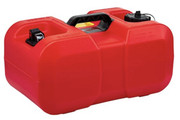
 I have to ask the company if and what the costs will be to sent them to Greece

 ) are in a state of flux with all the different variations of design, construction and chemistry. Making a comprehensive list with the various advantages/disadvantages would be a bit daunting.
 ?
?