Hi JamesToBoot!
Boy are you ambitious…. Taking apart a boat to fix a couple of cracks tan the support channels….
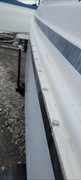
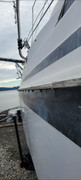
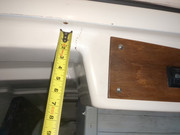
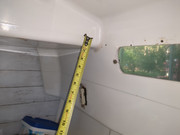
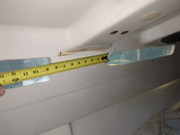
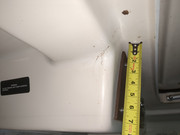
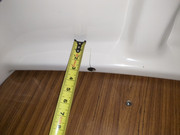
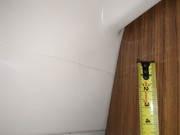
It’s just my own perspective but that’s a really ambitious undertaking for something you could fix in a lot less time and effort by dealing with it insitu. What I mean is this is fiberglass. Basically you can cut open the damaged areas from the interior or exterior sufficient to expose &/or remove the damaged areas then clean up the surrounding interior/exterior surfaces surrounding the areas in question and apply new fiberglass, filler and gelcoat/paint to make it as good as new. There really isn’t the need to strip it all apart like you are asking about. I think you maybe overthinking this. Taking a few steps back and define what you are actually trying to do…. “Restore” the structural integrity of a 20+ year old fiberglass boat.
For each of the areas you highlighted there really isn’t a need to split the top deck and headliner shells apart. Doing so is gonna be a huge undertaking as the sections are fiberglass tabbed together.. that means when the top deck and headliner were originally mated together there were big wads of fiberglass put down in various locations and the shells were then pressed together. Separating them will be a PITA for little to no real benefit.
This is just a suggestion of how I might approach this… you need to become familiar with fiberglassing and blending in splices on your own.
Whatever you choose to do is what you choose to do.
Start with the most likely candidate area.
Grind the gelcoat off for several (3-to-4) inches in every direction to the bare fiberglass of the headliner.
Re-examine the crack.
Now let’s say the crack goes all the way through to the center void of the channel.
Grind away so you have about a 1-to-2 inch gap or so centered where the crack had been.
Now try to get the hollow interior of the channel cleaned up…. There will probably be a waxy layer that you need to get cleaned/sanded/ground off for 1-to-2 inches on either side of the opening. (Think of a right angle grinder and wheel sort of attachment to a drill or dremel or similar tool) Resin and fiberglass will not bond to wax.
Clean everything up good with acetone or other suitable solvent.
Wet the exposed original fiberglass with resin then apply long strand glass fiber filler to the interior surfaces working back to the opening working the fill onto the interior void surfaces ( with something like an Allen wrench or bent hard clean stiff wire) then fill the void to the surface. Now wet the clean exposed fiberglass cabin interior surfaces with resin and apply several layers of resin wetted 718 biaxial fiberglass cloth to tan a thickness of about 1/8-to-1/4 thick wetting it out to about 2-to3 inches surrounding where the crack had been. Smooth things out to resemble the original contours of that area of the headliner.
Let cure and then sand/grind carefully to shape without cutting into your new fiberglass if you can. Use some filler material to fill in the low spots so the surface is smooth.
Clean and Re-gelcoat.
Yes ther will be a bump of sorts but you should be getting back the structural integrity of that area at a fraction of the time and effort.
Repeat the process where applicable.
Now regarding your soft deck issue.
I believe (I could be mistaken) the S model used balsa core.
This has probably become water saturated and rotted.
I’d Try to mark out where the soft spots are on the top deck.
I’d drill small exploratory test holes through the top deck to verify that the core is rotted. These can be patched up later.
Then I’d Make a general square or rectangle shape encompassing the adjacent soft areas.I’d cut out the rectangle from the top deck with a router just deep enough to cut the top deck surface only and try to save the section I’d be removing for future reuse.
Gently pry off this section anticipating those spots where tabbed together (as mentioned earlier).
Once the top piece is removed clean out all the rotten balsa and clean off the cavity surfaces (from the cut section removed too).
Then structural foam core would be fitted to replace the now exposed areas. Contour them to fit allowing for reinstall of the cut panels.
Apply resin to the cleaned interior surfaces and the structural foam then press them together. A couple heavy sand bags wrapped in plastic generally does help at this point.
After the resin has cured one would then grind back the deck gelcoat to bare fiberglass about 1-to-3 inches on both sides of where the router cut and around the exploratory test holes.
Wet the surfaces with resin and apply a couple layers of resin wetted 718 cloth.
Let cure, sand smooth, Re-texture as appropriate then apply gelcoat.
For other surface cracks take a dremel and grind out the cracks about 1/8 to 1/4 inch wide sort of like a shallow V.
Clean back from the V about 1 inch to either side.
Fill the V with structural epoxy and possibly fine chopped strand fiberglass filler.
Sand smooth, re-texture where appropriate and re-gelcoat.
That should cover most of what your looking at without splitting the boat apart at a fraction of the time and effort and risk.
This breaks down the work into manageable doable projects without all the complications of attempting the splitting apart of the deck and headliner.
Just my opinion… it’s your boat so it’s your rules and your project.
Good luck however you decide to proceed or not.
Keep us posted!
Best Regards,
Over Easy