Ormonddude wrote:However its important that they understand the stress involved (Hence the physics lesson) sorry if I was wordy
OD...I ran the basic calcs on the two ramps you suggested and three boat weights, just to put a little set of numbers together for everyone.
For a 5:1 ramp, the angle is ~11.3 degrees. The multiplier for force should be .196 (SIN 11.3)
For a 3:1 ramp, the angle is ~18.26 degrees. The multiplier for force should be .313 (SIN 18.26)
Just from that, it is obvious that the increased boat ramp steepness results in more than 50% increase in the force on your winch.
So, using those multipliers - the static force down each ramp is:
5:1 ramp
For 3000# boat load, (3000 * .196) = 588#
For 4000# boat load, (4000 * .196) = 784#
For 5000# boat load, (5000 * .196) = 980#
3:1 ramp
For 3000# boat load, (3000 * .313) = 939#
For 4000# boat load, (4000 * .313) = 1252#
For 5000# boat load, (5000 * .313) = 1565#
This is how much force would be exerted down the ramp against the winch just from having your boat attached. However, it would be modified by the friction of your boat against the bunks***! This is important...and a very good reason to consider using a bunk slickening agent as some on this board have suggested!
For example, when you pull your boat up onto the trailer on the ramp, and haven't yet attached the winch strap - if your boat doesn't move (slide back down), then there is enough friction between your boat and the bunks to resist the forces shown above. This means that when you try to winch the boat UP onto the trailer, you have to overcome both the weight of the boat AND that amount of friction (or a significant portion of it) just to get the boat up onto the trailer. This is probably why roller bunks are so popular, as they add almost no additional friction force to the weight of the boat that the winch has to handle.
***Friction works against motion, resists motion, so whatever direction your boat is trying to move, the friction will resist that. This kinda works in your favor when launching, meaning when you back your boat down to launch, if you release the winch strap and the boat doesn't slide off, the friction is resisting the weight that is trying to make your boat slide down, and holds the boat on the trailer. But that's less of a problem than getting the boat onto the trailer, where the friction will resist the movement of your boat UP the bunks onto the trailer, meaning your winch has to pull against both the weight force shown above AND the friction resisting the boat's movement up the bunks.


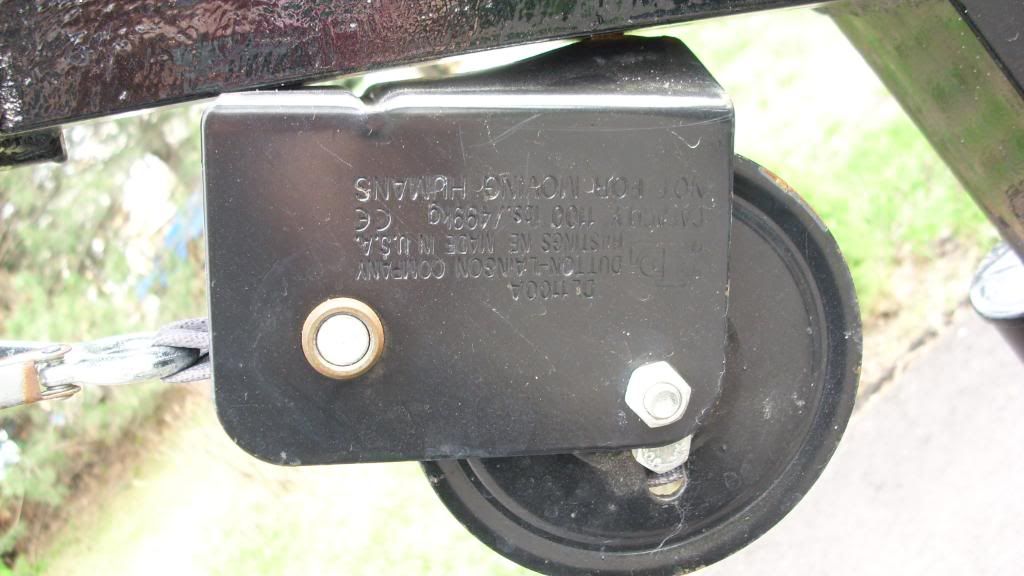
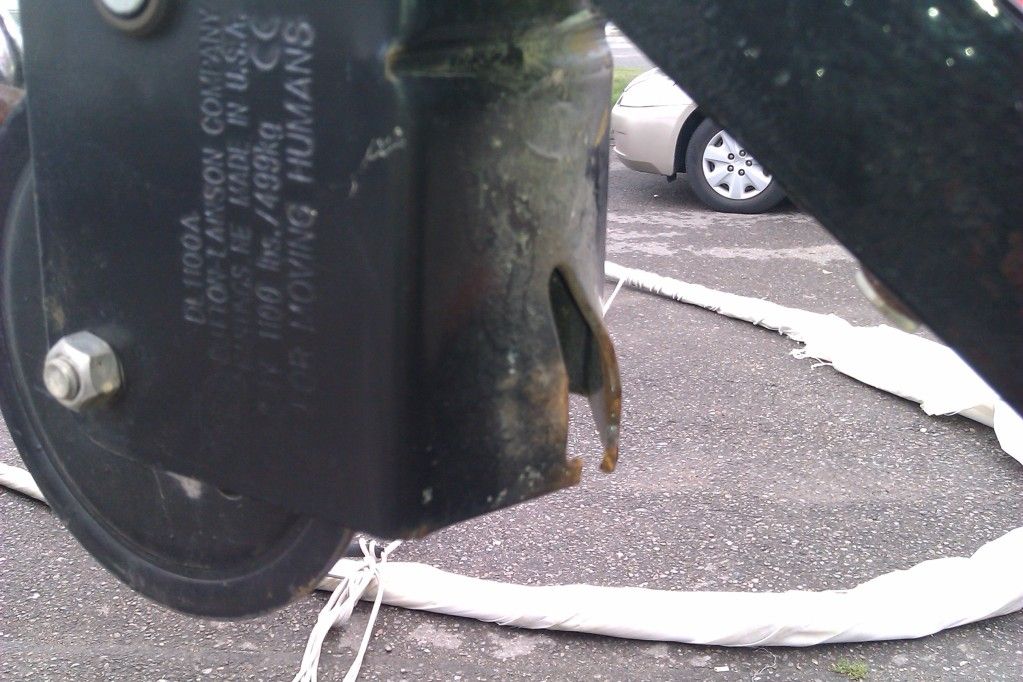
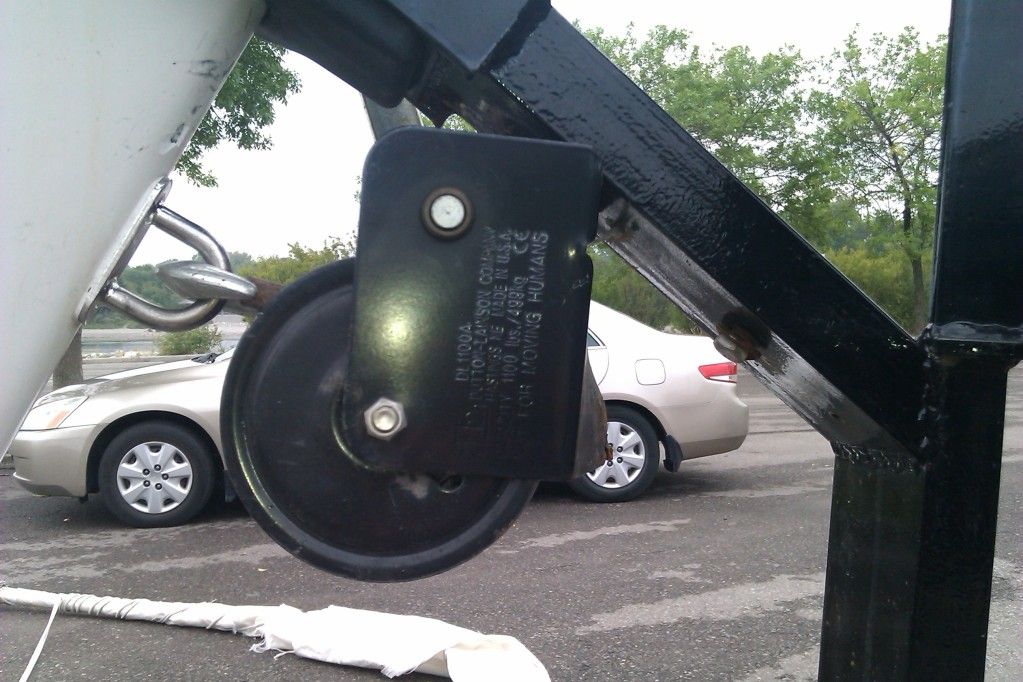


 Upon further inspection, the nut on the bottom was completely loose and about to fall off. I was using my vehicle to haul aggregate for the past week for a patio project, and all of those heavier loads with lots of turning must have loosened the nut. I tightened the nut and everything was fine, but this could have been a really bad start to the day.

 Amazed that Roger hasn't fixed this issue, as it would cost very little more to put a decent winch on these trailers..

