Page 5 of 11
Re: Flipping a Macgregor
Posted: Mon Jun 06, 2016 2:07 pm
by Ixneigh
Any boat can get knocked down by wind alone. The M is no exception. However it's high sides do offer some safety in that, in reasonably calm waters, the cockpit and companionway will still be out of the water. This usually happens with some unexpected strong weather although "it doesn't look that bad" has gotten me once or twice.
Re the 22.2 that boat is only self fighting if the keel is all the way down and locked in that position. I never sailed mine like that though. I sailed mostly in pretty shallow water. But, I was taking a chance. The M with its stability not dependent on the board is a better match for my sailing style.
The venture does not have the safety of having high sides. Getting knocked down on that boat would be more of an issue, but with the keel down it would take a lot of wind to do so, or a major flub like losing a down haul for a big headsail.
Ix
Re: Flipping a Macgregor
Posted: Mon Jun 06, 2016 2:39 pm
by sailboatmike
As stated all sail boats are capable of being knocked down, but it takes a whole lot due the the fact that as the boat heals the wind that is pushing the sails over just blows across them as the heel angle increases and countering force of the ballast becomes greater the area of the sail exposed to the wind decreases. Also as the heel angle increases the boat grip on the water decreases due to the foils becoming less effective (rudders and centerboard) causing the boat to be pushed sideways effectively reducing the force of the wind even further.
There is a world of difference between being simply knocked down and "Flipping" the dictionary definition of "Flipping" and the context it should be used in is " verb (used with object), flipped, flipping. To toss or put in motion with a sudden impulse, so as to cause to turn over
We have one very lightly ballasted type of Trailer Sailor in Australia whos association run a "Turtle" club, for boats that do actually turn over when they hold their races, mind you they only carry 75Kg (160lbs)of ballast not the 550Kg (1100lbs) plus we carry in the X and M's. I think its funny that nobody has ever mentioned them as being unsafe despite their known ability to actually turtle or flip
Re: Flipping a Macgregor
Posted: Mon Jun 06, 2016 5:24 pm
by BOAT
I was answering a question for Neo on another post and it applies here:
Okay Neo, here it is:

Thanks to Currie for this nice picture. You can see the large foot wide spline near midships in the picture.
When you consider the M hull center of weight under sail you look to the daggerboard trunk - that is where the weight is centered to counter the mast and the sails - as you know - most of the sail plan is on the front of the boat - so that is why all the ballast is up front. The elevated portion at the very front is where the vent is and it carries a large amount of water (like 40 gallons) and the area around the daggerboard has a lot of water too (like near 60 gallons) and the flat area you see there stretching from the daggerboard trunk to the transom is full of water too (about 40 gallons) There is also a solid section inside the daggerboard trunk you can see there that has 300 pounds of solid permanent ballast. So that's about 330 pounds in the nose, another 300 pounds under the sole, and ANOTHER 500 pounds around the daggerboard PLUS another 300 pounds in solid ballast. You can see that Roger had more than enough space in the sole and the nose to add a ton more ballast but the boat just does not need it - it's already ballasted more than it needs. (In fact, if my guesses are right that's over 1400 pounds and about 400 pounds too much!)
Imagine if all the space you see there was full of water and you could pull the top of that daggerboard there left and right as hard as you can. You can imagine how the boat would just roll back and forth on it's round bottom, partly because of the wide transom. That's sort of what happens in the water and why the boat can still sail quite well on its side. A boat with a narrow transom starts to get very unstable on it's side. Since the ballast is so high up in the hull you can also imagine that it does not increase in leverage as significantly as a keel would because a keel would be far away from the bottom and get much harder to lift - that is why the keel boats start to bury their sides in the water when they heel over real far and the M boat does not. This makes the M boat almost impossible to knock down with wind alone.
Just a note: It is interesting that there have been thousands of these boats on the water for years and there have been no reports of knockdowns - yet I can look up stories about dozens of models of traditional boats that have experiences knock downs. This was a phenomenon Peter Barrett noticed after racing dozens of boats and why he put such a wide transom on the family cruiser boats he designed in the 60's and 70's. He decided that if a captain was inexperienced and liable to heel the boat why not then make a boat that could sail when heeled? When a boat has a narrow transom and it gets on it's side it wobbles pretty bad nose to stern - I have seen this and it's WHY the keels boats seem to spin around in circles when they get knocked down - even if the helm is still in the water it can't overcome the nose and stern bobbing up and down. I think Roger was taking a cue from previous boat designers who were trying to create safe boats for the masses, not fast Pacific Cruisers for experienced skippers.
Re: Flipping a Macgregor
Posted: Mon Jun 06, 2016 11:18 pm
by kadet

Actually the main ballast effect is from the two tubes running along the port and starboard sides of the hull. These hold about 3/4 of the total volume of the water and because they are off the center line help to stabilise the boat when it starts to heel.
Re: Flipping a Macgregor
Posted: Tue Jun 07, 2016 3:29 am
by Québec 1
I have been know to search the wind on the Saint Lawrence in order to walk on the blue of the hull while sailing. A hard to forget experience. It only works if she's sheeted up real tight and the wind is not to strong.
Re: Flipping a Macgregor
Posted: Tue Jun 07, 2016 4:02 am
by NiceAft
BOAT wrote:I was answering a question for Neo on another post and it applies here:
Okay Neo, here it is:
Thanks to Currie for this nice picture. You can see the large foot wide spline near midships in the picture.
When you consider the M hull center of weight under sail you look to the daggerboard trunk - that is where the weight is centered to counter the mast and the sails - as you know - most of the sail plan is on the front of the boat - so that is why all the ballast is up front. The elevated portion at the very front is where the vent is and it carries a large amount of water (like 40 gallons) and the area around the daggerboard has a lot of water too (like near 60 gallons) and the flat area you see there stretching from the daggerboard trunk to the transom is full of water too (about 40 gallons) There is also a solid section inside the daggerboard trunk you can see there that has 300 pounds of solid permanent ballast. So that's about 330 pounds in the nose, another 300 pounds under the sole, and ANOTHER 500 pounds around the daggerboard PLUS another 300 pounds in solid ballast. You can see that Roger had more than enough space in the sole and the nose to add a ton more ballast but the boat just does not need it - it's already ballasted more than it needs. (In fact, if my guesses are right that's over 1400 pounds and about 400 pounds too much!)
Imagine if all the space you see there was full of water and you could pull the top of that daggerboard there left and right as hard as you can. You can imagine how the boat would just roll back and forth on it's round bottom, partly because of the wide transom. That's sort of what happens in the water and why the boat can still sail quite well on its side. A boat with a narrow transom starts to get very unstable on it's side. Since the ballast is so high up in the hull you can also imagine that it does not increase in leverage as significantly as a keel would because a keel would be far away from the bottom and get much harder to lift - that is why the keel boats start to bury their sides in the water when they heel over real far and the M boat does not. This makes the M boat almost impossible to knock down with wind alone.
Just a note: It is interesting that there have been thousands of these boats on the water for years and there have been no reports of knockdowns - yet I can look up stories about dozens of models of traditional boats that have experiences knock downs. This was a phenomenon Peter Barrett noticed after racing dozens of boats and why he put such a wide transom on the family cruiser boats he designed in the 60's and 70's. He decided that if a captain was inexperienced and liable to heel the boat why not then make a boat that could sail when heeled? When a boat has a narrow transom and it gets on it's side it wobbles pretty bad nose to stern - I have seen this and it's WHY the keels boats seem to spin around in circles when they get knocked down - even if the helm is still in the water it can't overcome the nose and stern bobbing up and down. I think Roger was taking a cue from previous boat designers who were trying to create safe boats for the masses, not fast Pacific Cruisers for experienced skippers.
Your facts are commendable BOAT, thanks, but when you state that there are no reports of a Mac being knocked down (I think that's what you said) is wrong (if memory serves).
I believe I read in a post years ago by Delevi that he was knocked down while sailing San Francisco in his Mac. I think I got the name correct. If there is one, then it is quite probable there are more. If a gust hits hard enough, and conditions right, a knockdown is happening. Objects in motion tend to stay in motion. Newton, wasn't it


That last comment was sarcasm, sorry, not deserved. I believe I am correct about his knockdown. If proven wrong, I humbly apologize in advance.
Ray
Re: Flipping a Macgregor
Posted: Tue Jun 07, 2016 5:06 am
by Retcoastie
I believe I read in a post years ago by Delevi that he was knocked down while sailing San Francisco in his Mac.
It appears Delevi did experience a knock down.
http://macgregorsailors.com/forum/viewt ... =9&t=11734
Here's another
http://www.macgregorsailors.com/forum/v ... 3&start=30
Re: Flipping a Macgregor
Posted: Tue Jun 07, 2016 6:09 am
by yukonbob
Both cases had no water ballast in. Now we're comparing apples to watermelons.
Re: Flipping a Macgregor
Posted: Tue Jun 07, 2016 7:20 am
by BOAT
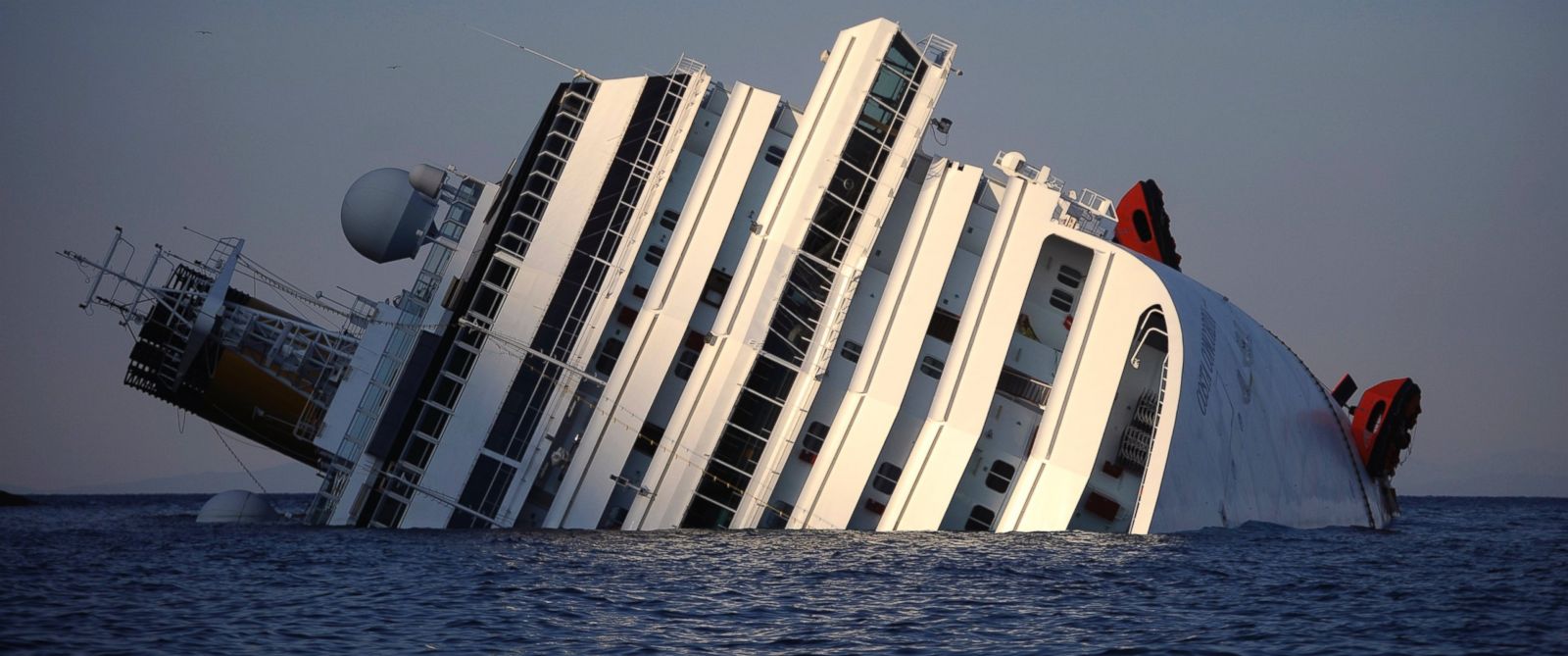
Any un-ballasted boat will knock down - even without wind! A mac with no ballast will FLIP right over if the right wave hits it just like any ski boat, ferry, or barge. Without ballast your never safe from a knockdown:
The whole point of the post was to compare BALLAST location in the MAC and other boats. The MAC holds it's ballast up high in the hull, not down low in a keel like most boats but the notion of holding the ballast up high in the hull is not a new idea at all. It's a tried and tested method of ballasting boats that has survived the most treacherous ocean crossings of all time:

Most all of the old square riggers were ballasted up high with no keel and a flat bottom just like an X boat! (They only went to a ballasted keel in the marconi rigs on the schooners)
I would not be one to argue but I know that most of the ballast in the M boat is in the front and that is why the boat dips to the front when it's on it's side. You need to realize that the cross section of the M boat gets deeper in the lower part of the hull the further forward you go so when you superimpose the forward ballast with the sole ballast you can see it's a lot deeper in the water there. There are more gallons there too because the nose is full of water (not shown in the drawing):

I still have not found a story of an un-ballasted MAC M BOAT getting knocked down. Maybe they are still too new but so far - no reports.
Re: Flipping a Macgregor
Posted: Tue Jun 07, 2016 9:47 am
by Billy
I do much more reading than posting these days but felt I should weigh in here. I know for a fact an X with full ballast can be knockeddown-twice in a row. When it went over, it was on its side. Bow was not down. There is additional weight to consider. I have a 300 pound plus engine on the rear with 24 gallons of fuel. Also below were dive tanks, tools, refrigeration ,etc.all stored at floor level or below.
Basic details : Lower Chesapeake with winds of about 18 out of the North. Heading somewhat S with the wind at boat's 7 o'clock. 150 Genoa out full. No main. Mac spinnaker out and flying from the top of the mast. Both sails on starboard side. The boat was moving strong and wind felt steady. I had just returned to the cockpit and was enjoying the ride. With no indication, the wind suddenly hit directly on port side. (It did not clock around.) In less than a second XX was on its side and I was standing on the back of the starboard bench. Just before the sails touch the water the boat begin to right itself. Halfway up, another burst sent it back on its side. Now I had started uncleating sheets and the boat rolled back to a much friendlier position. I was fortunate, though the sails were inches from the water, they never caught any water. (And btw this was witnessed by two other Mac sailors.)
Was what I was doing foolish? Of course, but one has to learn his limitations.
Things I did wrong :
Should not have flown spinnaker in those conditions.
Should not have cleated spinnaker sheet.
Should have give more respect to the front forming offshore.
Things I did right:
All gear below was stowed and secured.
I did not endanger anyone else as I solo.
I did not have to involve anyone else to recover. (You always need a "what if" plan.)
Now for the other "what ifs".
If the sails had started to fill with water and stayed cleated. And if there had been higher wave action and continual high winds on the exposed bottom of the hull, I believe the X would capsize and not right itself. Same as a Hobie cat. The M may possibly right itself since it has some permanent ballast.
Re: Flipping a Macgregor
Posted: Tue Jun 07, 2016 10:07 am
by BOAT
Billy,
I can give you at least a half dozen more reports of an X boat getting knocked down, or at least getting a hard over so fast that the boat spun around on it's side and stopped dead in the water.
I know about the X boat - it's got a flat bottom and can indeed get locked on it's side if pushed hard enough.
I am talking about the M boat. I have never got a report of a knockdown on an M boat. I am still scouring the internet for such a story but so far I have not found one. There might be one out there, but so far - I can't find one.
The person I would expect to give us a report of an M knockdown while flying a kite would be Beene - he has a kite that he used on his M boat, and he often sails alone, and he sails in treacherous waters with big waves and heavy wind. I suspect Beene would know of any M boat knockdowns, (WITH BALLAST FULL!) but so far I have no reports.
Re: Flipping a Macgregor
Posted: Tue Jun 07, 2016 10:14 am
by NiceAft
yukonbob wrote:Both cases had no water ballast in. Now we're comparing apples to watermelons.
Well, I'm glad my memory was correct about the knockdown, sorry it did not remember the empty ballast part; quite important.
BOAT, I humbly apologize.

Ray
Re: Flipping a Macgregor
Posted: Tue Jun 07, 2016 10:20 am
by BOAT
No need to apologize here guys, this is not an argument - it's a fact finding mission.
I am trying to get a report of a knockdown on an M boat so I can figure out WHY it would happen. It's really hard to plan for such a thing if it's never happened before. I think it could be that the boat is just not old enough - when did the M boat first come out? Still, it seems that there should have been a verifiable report of a knockdown by now with information we can use? I have seen movies of Beene yanking his M boat all over the place with a spinnaker tied to the top of his mast in heavy wind and the boat heels really radical! But it just keeps sailing! No knock down! If ever a boat would get knocked down it would be under a kite.
This is not an argument, it's a task: FIND THAT REPORT - I am looking feverishly and so far I got nothing.
Re: Flipping a Macgregor
Posted: Tue Jun 07, 2016 10:41 am
by Billy
You may have a valid point concerning the M. I'm game if someone is willing to volunteer their M, but it appears T.S. Colin is already on its way out to sea. Oh, well.
Re: Flipping a Macgregor
Posted: Tue Jun 07, 2016 10:57 am
by yukonbob
I've tried in stable winds to see how far over I could get her and have walked on the rubrail and lower several times as mentioned above and almost once washed the sails (mostly wave action on a broad reach) but never a knockdown. I would wager a guess at 60 degrees is as far over as we've gotten (clinometer only goes to 50). At the same time however in a good gust a few years back bare pole we went over to 20 and were held there for a few seconds and waves were not the culprit.
