Page 3 of 3
Re: Happy Labor Day from Lake Powell!
Posted: Fri Sep 12, 2025 6:26 am
by Russ
Are you planning on charging the LiFePO4 batts ONLY from solar? Keeping the motor on its own start battery? The way you use your boat, that would probably work fine.
Isolated batteries with different charging probably saves the challenge of 12v charging the LiFePO4.
You don't show a fuse/breaker going to the (5 Switch w /fuse USB & out) or the (6 fuse block).
I use one of these to fuse that run.
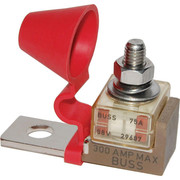
I see you have a breaker between the solar panels and the controller. I don't have this fused/breakered. It's probably a good idea though.
Re: Happy Labor Day from Lake Powell!
Posted: Fri Sep 12, 2025 8:08 am
by tuxonpup
Russ wrote: ↑Fri Sep 12, 2025 6:26 am
Are you planning on charging the LiFePO4 batts ONLY from solar? Keeping the motor on its own start battery? The way you use your boat, that would probably work fine.
Isolated batteries with different charging probably saves the challenge of 12v charging the LiFePO4.
You don't show a fuse/breaker going to the (5 Switch w /fuse USB & out) or the (6 fuse block).
I use one of these to fuse that run.
I see you have a breaker between the solar panels and the controller. I don't have this fused/breakered. It's probably a good idea though.
Yes, we've got the lead acid that came with the boat connected to the motor only. While we've kept the house system separate so far, the MPPT solar controller is also a DC-DC converter so we can charge the starter battery from solar or charge the house battery from the fully charged starter battery, but we wanted to see if we could balance the house load to just our solar output first.
Now that I look at it, the 5 switch w/ fuse, USB & out should actually be connected to the 6 fuse block just like the other 3 switch panels. The fuse block is mounted 6 inches from the battery under the aft seat, whereas the 5 switch is on an 18 inch run up to the junction box for switch access.
I currently have 40A fuses on the controller and panels but got breakers so I can use them as shut offs, as I currently just disconnect them when we're away from the boat. I could move one of those breakers between the LiFePO4 and the fuse block, leaving the 40A fuse on the solar feed. I take down the bimini/panels when we're away so it's disconnected anyway, gonna update the sketch to show those changes...
https://docs.google.com/drawings/d/182Y ... sp=sharing
Re: Happy Labor Day from Lake Powell!
Posted: Fri Sep 12, 2025 10:23 am
by Russ
You are using LiPO4 and I need to learn more about them. My understanding is they don't have the problem of losing power just sitting idle like lead acid do. So disconnecting them makes sense.
I have some 12v stuffs running all the time. A 12v WiFi switch, Cell phone wifi hot spot and a wifi camera. So I need 12v power constantly and the solar panel works fine for that.
You seem to have a good handle on the wiring and it seems to work well for you with all your power needs.
I found this about fusing:
For 12-volt marine systems, the American Boat & Yacht Council (ABYC) standard E-11 requires that fuses or circuit breakers be located within 7 inches (178 mm) of the power source, measured along the conductor. The purpose is to protect the wiring from overheating and causing a fire, especially in the event of a short circuit.
Sounds like you are good on this.
Re: Happy Labor Day from Lake Powell!
Posted: Fri Sep 12, 2025 11:00 am
by Be Free
Your design is starting to take shape. Good job! I think keeping your outboard connected directly to your lead battery is a very good idea.
Some design goals to consider:
- If you don't have any loads on the start battery other than the starter then you should never wake up to find it dead. You shouldn't but you will so get a booster pack. Murphy always finds a way onboard.
- A single positive bus bar and a single negative bus bar can make wiring neater.
- One properly sized and fused positive cable will be the only thing connected to your positive post.
- One properly sized negative cable will be the only thing connected to your negative post.
- All charge sources can be connected directly to the positive and negative bus.
- Unless you have a good reason (and on a plastic boat I can't think of one) all of your DC negative cables should be connected together, preferably at a common bus bar.
- Over-current devices protect wires. They should trip well before the wire can be damaged and never trip under normal loads. Nuisance trips are more than a nuisance. They are either a design problem or a failing over-current device.
- Safety equipment (VHF, AIS, radar, horn, navigation lights, steaming light, anchor light, bilge pump) should be connected to a dedicated circuit.
- If possible put each on its own dedicated circuit.
- Avoid using switched circuits. If the master switch (usually your Perko) is on, then the safety equipment should be powered. If the safety equipment does not have its own switch (ex: some AIS units) then a switched circuit would be preferable.
- Low voltage DC circuits will have significant voltage drop over surprisingly short distances. Some devices don't care; some are very picky. Current is not the only reason to use a larger wire. Sometimes you have to do it to keep your voltage at an acceptable level.
- Almost every electrical thing you bring from home is going to need a lot more power to run than you probably expect. Make sure you really want it and design for it appropriately.
- TANSTAAFL.
- If you change voltage (think USB charger in 12V socket) you will consume more power than the charger is providing.
- If you change DC to AC (inverter) you will consume more power than the inverter is providing (sometimes a lot more).
- If you charge a battery (tablet, phone, laptop...) by plugging into an inverter you will use a lot more power than the battery is receiving.
- Try to maximize inefficient operations (see above) during times when you have excess power production (shore power, daytime with solar, ...)
Finally, regardless of what you end up doing, label and document every wire, switch, connection, and fuse. I can guarantee that you will not remember what you did or where it was no matter how clear it is in your mind today. "Future You" will thank "Present You" next year when that "thing" stops working in the middle of the night.
Re: Happy Labor Day from Lake Powell!
Posted: Fri Sep 12, 2025 11:24 am
by Be Free
Russ wrote: ↑Fri Sep 12, 2025 10:23 am
You are using LiPO4 and I need to learn more about them. My understanding is they don't have the problem of losing power just sitting idle like lead acid do. So disconnecting them makes sense.
I have some 12v stuffs running all the time. A 12v WiFi switch, Cell phone wifi hot spot and a wifi camera. So I need 12v power constantly and the solar panel works fine for that.
You seem to have a good handle on the wiring and it seems to work well for you with all your power needs.
I found this about fusing:
For 12-volt marine systems, the American Boat & Yacht Council (ABYC) standard E-11 requires that fuses or circuit breakers be located within 7 inches (178 mm) of the power source, measured along the conductor. The purpose is to protect the wiring from overheating and causing a fire, especially in the event of a short circuit.
Sounds like you are good on this.
Russ,
You are correct re: LiPO4 self-discharge rate. 1%-3% per month is fairly common and would be on the high end in hot weather and/or older batteries. Even at 3% per month they are better than the 3%-8% for lead acid. Self discharge is not going to hurt lithium in any reasonable time period. Even at the low end of the range a "marine battery" is going to start showing degradation in three months and a golf cart battery in about a year. At the high end it's more like 1 month and 7 months.
My recommendation for all batteries is to put the fuse directly on the positive cable. The only time I'd apply the 7" rule is if I were installing a breaker instead of a fuse.
Re: Happy Labor Day from Lake Powell!
Posted: Sat Sep 13, 2025 8:29 am
by tuxonpup
Be Free wrote: ↑Fri Sep 12, 2025 11:00 am
Your design is starting to take shape. Good job! I think keeping your outboard connected directly to your lead battery is a very good idea.
Some design goals to consider:
- If you don't have any loads on the start battery other than the starter then you should never wake up to find it dead. You shouldn't but you will so get a booster pack. Murphy always finds a way onboard.
- A single positive bus bar and a single negative bus bar can make wiring neater.
- One properly sized and fused positive cable will be the only thing connected to your positive post.
- One properly sized negative cable will be the only thing connected to your negative post.
- All charge sources can be connected directly to the positive and negative bus.
- Unless you have a good reason (and on a plastic boat I can't think of one) all of your DC negative cables should be connected together, preferably at a common bus bar.
- Over-current devices protect wires. They should trip well before the wire can be damaged and never trip under normal loads. Nuisance trips are more than a nuisance. They are either a design problem or a failing over-current device.
- Safety equipment (VHF, AIS, radar, horn, navigation lights, steaming light, anchor light, bilge pump) should be connected to a dedicated circuit.
- If possible put each on its own dedicated circuit.
- Avoid using switched circuits. If the master switch (usually your Perko) is on, then the safety equipment should be powered. If the safety equipment does not have its own switch (ex: some AIS units) then a switched circuit would be preferable.
- Low voltage DC circuits will have significant voltage drop over surprisingly short distances. Some devices don't care; some are very picky. Current is not the only reason to use a larger wire. Sometimes you have to do it to keep your voltage at an acceptable level.
- Almost every electrical thing you bring from home is going to need a lot more power to run than you probably expect. Make sure you really want it and design for it appropriately.
- TANSTAAFL.
- If you change voltage (think USB charger in 12V socket) you will consume more power than the charger is providing.
- If you change DC to AC (inverter) you will consume more power than the inverter is providing (sometimes a lot more).
- If you charge a battery (tablet, phone, laptop...) by plugging into an inverter you will use a lot more power than the battery is receiving.
- Try to maximize inefficient operations (see above) during times when you have excess power production (shore power, daytime with solar, ...)
Finally, regardless of what you end up doing, label and document every wire, switch, connection, and fuse. I can guarantee that you will not remember what you did or where it was no matter how clear it is in your mind today. "Future You" will thank "Present You" next year when that "thing" stops working in the middle of the night.
I don't show the negative load runs on the sketch but that top blue box with black dots is the negative bus bar. I don't have the positive bus bar installed, as the fuse block serves that purpose, all four runs to the distributed switch panels in different parts of the boat are separately fused there within 7" of the battery. I'm adding the breaker before it mainly as a load shut-off, I like having the supply and load breakers as isolated shut-offs next to the battery for trouble shooting.
My 1+2+all switch is still under the aft seat and is strictly a disconnect for the starter battery from the motor. I already have my second 40A fuse installed to connect the starter battery to the DC-DC converter, but it's main benefit would be to charge back from the alternator to the house battery while motoring on cloudy days, an edge case scenario in Arizona.
Completing the wiring is gonna take more time than we have on our short trips up to Lake Powell, when we're also living on the boat. We've decided that on our next trip up, we're going to put the boat in, anchor it, then drive the trailer into town and have a shop pull the axle to repair a sheared off lug and do the bearings, not something I'm going to attempt in a public lot. When it's done we'll pull the boat out and try our second tow from Lake Powell down to Lake Pleasant on the North side of Phoenix. There we can make day trips to the boat from Tucson to work on projects or day sail without it requiring planning a multi-night trip. That's the plan for the start of year two on Millennium Guppy anyway...
Re: Happy Labor Day from Lake Powell!
Posted: Sat Sep 13, 2025 8:51 am
by Russ
It must be hard to plan and prepare for such a long trip to the boat. You have to think of every detail and tool you might need.
I have a 100 mile trip to my boat and i thought that was bad.
Re: Happy Labor Day from Lake Powell!
Posted: Tue Nov 11, 2025 5:45 am
by FittsFly
Be Free wrote: ↑Fri Sep 12, 2025 11:00 am
Your design is starting to take shape. Good job! I think keeping your outboard connected directly to your lead battery is a very good idea.
Some design goals to consider:
- If you don't have any loads on the start battery other than the starter then you should never wake up to find it dead. You shouldn't but you will so get a booster pack. Murphy always finds a way onboard.
Enjoyed this entire thread of info and the video Tuxon Pup! Question for everybody, I am going to be buying a booster pack (just in case) for my Honda 50 HP 4 stroke. Does anyone have preferences on what to purchase? I of course would want to be able to recharge it with 12 volt. Thanks for the help
Re: Happy Labor Day from Lake Powell!
Posted: Tue Nov 11, 2025 6:46 am
by tuxonpup
FittsFly wrote: ↑Tue Nov 11, 2025 5:45 am
Enjoyed this entire thread of info and the video Tuxon Pup! Question for everybody, I am going to be buying a booster pack (just in case) for my Honda 50 HP 4 stroke. Does anyone have preferences on what to purchase? I of course would want to be able to recharge it with 12 volt. Thanks for the help
Thanks! I bought my daughters combo jump start/tire inflators for Christmas last year, nice to have onboard for inflatables and trailer tires:
https://www.amazon.com/Acmount-Starter- ... _pr_t&th=1
Re: Happy Labor Day from Lake Powell!
Posted: Tue Nov 11, 2025 8:04 am
by tuxonpup
Russ wrote: ↑Tue Sep 02, 2025 6:15 am
I'm going to second the problem with the "gray marine" fuel line. That was my "new" hose to replace the original fuel line (which was still fine). I thought it was too old and I should replace it.
THIS is what happened after 2 weeks of use. It literally crumbled and who knows what that junk inside did. I replaced the fuel filter after that.


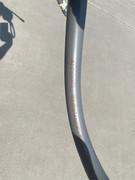
THIS is what I replace the "cheap" prefab fuel line with. Bought primer bulb and connectors and made my own fuel line. I have another as a spare.
https://www.amazon.com/dp/B0B6TTNN7H?re ... tails&th=1

Thanks for the replacement fuel line tips and link, we haven't been back to the boat since this trip but I got the parts delivered to build the new line last week and I also stopped by Home Depot and bought an 8' piece of plastic lattice H moulding for $10. I want to mount the 9" chartplotter on an articulated arm mount we ordered so it will swing to either side of the pedestal while staying lower than the main sheet controls;

Re: Happy Labor Day from Lake Powell!
Posted: Tue Nov 11, 2025 8:25 am
by Russ
That articulated arm mount sounds interesting. You should post your project and then in the mods section when complete.
When I was making my fuel line, I learned that some cheap hose clamps are not marine worthy. The fuel line is the most vulnerable part on our boats, so I learned not to cheap out like I did the first time with that horrible pre-fab fuel line.
Also, I added a fuel filter/water separator to the line. It's hard to do mods when you don't have the boat close for fitting.