Hi Sheppie62!
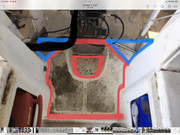
Yes some of the tanks have the fill neck at the lower level of the molded in stiffening ribs along with the output and gauge connections. We can attest that can make for a mess, especially with the non pressure venting tanks. The vapor pressure builds and leaks from the fittings!
The fix used to be a pressure relief valve but they frown on that nowadays.
Now you have to seal all the fittings and put a shut off valve in-line to prevent sending pressurized fuel to the engine which screws up the carbs and diaphragm fuel pumps on pre-fuel-injection engines.
Difference story and problem…sorry for the digression.
While in the past I’ve made fuel tanks from aluminum I also had access to heliarc AC TIG welding equipment.
That allowed welding of reasonable thinner gage sheet stock with enough weld integrity to meet the various regulator requirements for fuel transportation. One can reasonably make a tank with thicker plate aluminum and weld it with an aluminum MIG gun setup.
Stainless steel is a bit heavier by weight but thinner gages can be welded with DC TIG which many existing stick welders can be adapted to with a kit and gas supply.
The layout, bending, forming, welding and pressure/vacuum testing to make a fuel tank can be a challenge.
For that size tank one should plan on internal ribs and baffles for structural strength and slosh control.
I’ve also made fuel tanks using fuel resistant epoxy fiberglass with an internal fuel resistant polymer “sloshed in” liner coating.
The epoxy fiberglass route allows for complex geometry and seamless construction but generally requires making inner and outer half shell molds for each half section which are then joined with a glassed band. Still not a walk in the part but still doable. Sanding and finishing are additional issues and efforts.
There are also some individuals who have made blow molded, vacuum molded and roto-molded custom poly fuel tanks.
It’s all about trade-offs and design compensation to achieve the right durable solution for the application….(and how many boat bucks they want/can spend


)
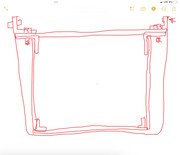
Not sure how I’d go about it but I think I’d be tempted to start with the fiberglass approach making it using the exiting foot well area as the male mold surface. Hot melt glue in what ever additional form wall needed and fillet the edges where it meets the existing structure generously. Once the form is settled then coat it with silicone mold release or mold release wax. To make this work the left and right sides must mirror each other from center line.
Lay up the fiber glass bottom shell with the fuel resistant epoxy and glass about 1/4 inch or more thick. Let it harden then pop it out without damaging the mold form.
Then make off a height from bottom all the way around the interior of the mold to make the top section half.
Lay in the fuel resistant epoxy and fiberglass to the same thickness. Let it harden then pop it out. At this point the form can be removed and the boat surfaces cleaned up.
Carefully trim the vertical side walls of the first piece (the bottom) made to a desired uniform height.
Carefully trim the vertical side walls of the second piece (the top) made to a desired uniform height.
Add any interior stiffening structure to support future foot traffic treading across the tank.
Cut and glass in any vent, fill or gauge probe ports into the top section.
Add anti slosh fuel foam to fit between the shell interior or add baffles to the interior.
Invert the top shell and rotate to match up with the bottom shell.
Rough the outer vertical walls of both sections and apply a bonding band of fuel resistant epoxy and fiber glass to join the two shell sections together (with some epoxy and fiberglass to make a good edge to edge bond between the shells). Attention would need to be paid to making the bonding band structurally thick enough but not so thick as to prevent the completed assembly from fitting back in place!


Sand and finish the exterior of the tank as appropriate.
Then get some of that fuel tank liner slosh stuff and throughly coat the interior a couple layers to ensure a sealed tank.
Next comes the process of mounting the tank with padding and straps to keep it in place with about 100+lbs of fuel sloshing about.
Just one way suggested way to get there. There are bound to be other, better ways depending on skills, shops, personal experience and materials available.
Best Regards,
Over Easy


fudt
.