paulkayak wrote:Another option for a tow vehicle that is awesome in the snow and ice and a vehicle the miss will actually want to drive would be a Subaru. The Tribeca with tow package is rated at 3500lbs. The Outback with tow package is rated at 3000lbs. Ifyou can keep the weight in this range you will be impressed with the traction and the fuel economy that these vehicles offer with outstanding reliability. I am in northern Ontario and Our Outback is better in snow and on freezing rain than any other vehicle I have ever driven and I have owned many 4x4's.
While possible, I would not recommend a vehicle of this class if you are going to tow more than occasionally. The rated tow capacity is too low for all but the few that keep thier boats stripped down. I mayself bought my

thinking I could tow with a Volvo XC70. While it did work, towing with a relatively small vehicle at (or beyond) its rated limit was a little nerve wracking. All said, I more than once just amazed other boaters on how effortlessly the Volvo AWD pulled the boat up the ramp. The current F150 w/ Ecoboost is just awsome and even my wife is comfortable driving.

As far as awesome on snow and ice, few advanced AWD vehicles (as in the awsome ones in bad weather like my XC70 or the Outback) have the tow rating needed for our boats. If you want to see what vehicles are really good in bad weather, travel to New England and north and look at the parking lots. The two most common vehcles are Volvo V70/XC70 and Subaru Outbacks. After that you will see pickups and Jeeps.
mastreb wrote:Of course a big Ford, Suburban, Mercedes, or Lincoln truck or SUV will tow a Mac just dandy. The REAL challenge is to come up with the least expensive new vehicle that meets the necessary criteria:
1) Rated Tow weight of at least 4000 lbs. (I'd call that an absolute practical minimum)
2) 4WD or FWD (Having seen pickups slide down launch ramps, I see front traction as necessary)
3) Factory two package available
Is there anything under $30K that can do the job?
To address you concerns:
(Last) Under $30k new - short answer "No". Used - yes.
(1) I would recommend a tow rating of at least 5000 lbs - less likely you will be towing more than you are rated for. BUT, this puts you in a different class of vehicles - one that is generally expensive to use as an everyday commuting/family vehicle (as in generally a heavy gas pig). If you are going to use a lesser vehicle, suggest a tandem axle trailer. Keep in mind the towing capacity of a vehicle is most likely a function of the tires (how much load can they take). Suspension, transmission, and brakes also work in.
(2) For boat ramps, advanced AWD is going to have the best grip (essentially FWD with RWD assist as needed) but not a common type of transmission in heavier duty vehicles.
4WD - definitely good, suggest making sure you have a locking rear differential. FWD - absolutely not unless you are going to launch with a front mounted hitch.
(3) Factory tow package - there is a wide range of what this means. My 1997 Dodge Grand Caravan with a 3.8L engine, long wheelbase, AWD, and Nivomat shocks would have made a good tow vehicle. The factory tow package cosisted of only a towbar, wire harness, and transmission cooler. All easily added for about $200 in parts.
I upgraded the Volvo XC70 with a factory harness and 2" tow receiver (this car is one of the primary tow vehicles in Europe). All connections and software already built into the vehicle.
My new F150 was special ordered because the dealer claimed that I could not upgrade after delivery to full function (I believe he was B__S___ing me) - included a stability/anti sway tow control function, integrated brake controler (not needed for surge brakes), towbar, and harness.
Dimitri-2000X-Tampa wrote:Thanks for the response Robert. I do have the check engine light on for a couple years now (yea, my bad..lol) and have had the codes read and was told it was the O2 sensor..but apparently, there is one on each cylinder and to figure out which one ias bad is not so easy, so, I've just been putting it off. And as I said, the engine runs very well so it wasn't like I really needed to do anything about it immediately. After reading up on it a bit, I think i found that the worst possible thing that could be happening is that my mileage is a bit off...although I don't ever remember ever getting better mileage than what I'm getting currently either. And I did drive this SUV for a few years before the engine light came on. I know that other bad thing about driving it with the engine light on is that if something else happens, it will be masked by the O2 sensor issue.
And I do try to drive it very economically when towing. I know how the mileage gets much better at 55-60 for example versus 70 mph and how too many starts and stops can affect the mileage. Coming back from the Keys last year, the portion that I did on US41 at about 55-60 mph, I was able to get up to about 11mpg, and if I make a lot of starts and stops, it can even drop down as low as 8.8 or so...but my mean is in the 9.5-10 range and that is probably at an average speed of about 68mph. And believe me, with my one year old tandem axle and the V8 power, I could definitely go faster, but I try to keep the mileage reasonable (and reduce the number of splatted bugs on the boat parts too).
Anyway, I was just wondering since some people were reporting getting 15-16 mpg with a V8. Good to hear that your new truck is not getting a whole lot better than mine. I could see how you could get better with a smaller engine, but you would also be wearing out the motor faster too I suppose.
I bet my mileage would be better if I drove more like an adult and accelerated slowly and kept my speed down. Really, I have way too much fun driving it.
As far as the O2 sensor, the OBDII code should tell you which one is bad. The sensor(s) on the engine side of the catalytic is the one that controls the engine fuel/air mixture. It sends out a waveform somewhat like a sine wave (always adjusting up and down). The one past the catalytic should be sending out a realtively flat signal - all this sensor registers is the condition of the catalytic converter. If this one is bad, will not affect how the engine runs.
As far as the smaller engine, what I have read is that the Ecoboost is built with pretty robust components and should last a long time. Similar reason diesel engines go for so long since they are built with very robust components to withstand compression detonation. My engine is warrentied for life as long as the dealer does the maintenance. I am beginning to believe on many vehicles that the engine, if cared for according to the maintenance schedule, should outlast the rest of the vehicle. My 25 year old Plymouth Voyager's engine still runs great (first of the 3.0 V6's) but the rest of the vehicle is disintegrating.


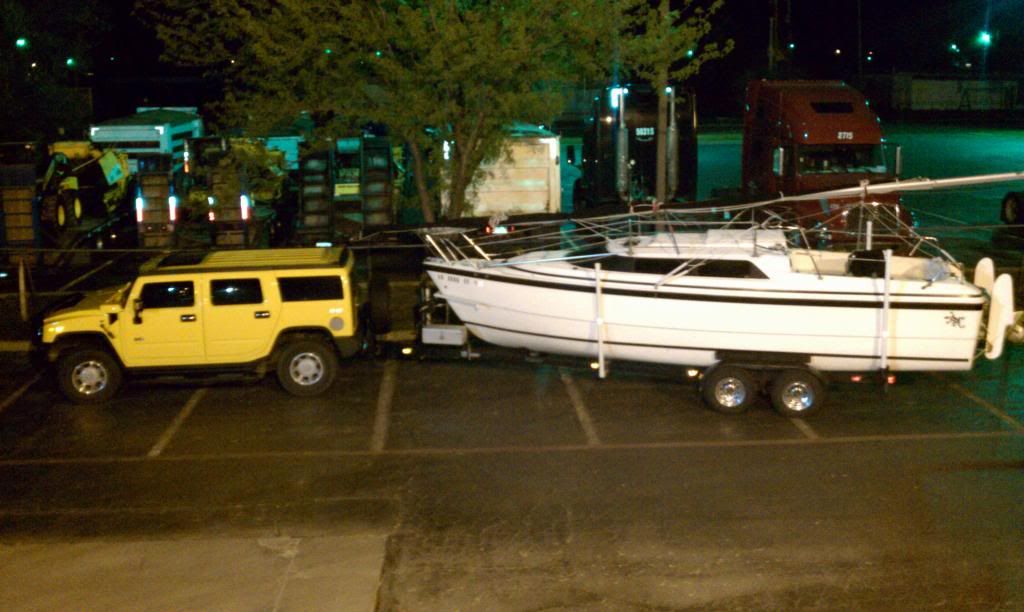

 like a dream.
 Both vehicles can be bought at a low price, and the combined price will still leave a huge gas fund compared to buying new. Insurance is very low. Best of both worlds.