


I leave mine attached when trailering; it just sits there, fully rigged and ready to work. It's just going to go back on when I get where I'm going anyway, so why take it off?RussMT wrote:I believe Sumner keeps his pole attached like this.
http://purplesagetradingpost.com/sumner ... ing-2.html
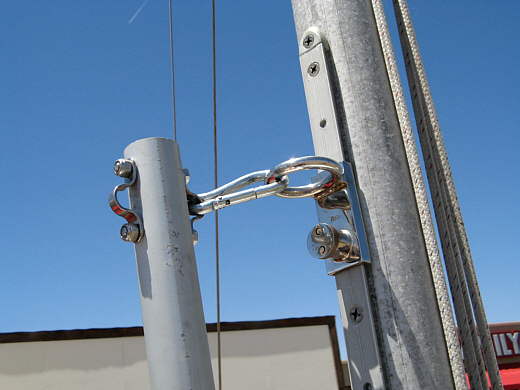

I store it in the car (road trip) or garage (home port) so it doesn't bang around when sailing and otherwise get in the way. I would keep it on the boat when sailing if there was the possibility of needing to drop the mast to get under a bridge, but that hasn't been an issue (yet). I store it fully rigged with the line coiled and strapped on. It pins on with a long bolt, and the lower block connects with a captive-pin shackle, and I run the line through the main halyard rope clutch for convenience, but the whole thing only takes a few minutes. And it's only done half the time (per the first paragraph), so on average, it takes a relatively small percentage of the mob/demob time.
As to using PVC, I wouldn't do it. The failure mode is brittle fracture, so it would essentially explode should it let go. Like using cast iron for a crane hook - you could make one strong enough for the intended load, of course, but should it fail, it would be catastrophic and without warning.
If you give me the dimensions of all the locations where the lines terminate, where the gin pole connects, and where on the gin pole the connections are, I can easily give you approximate static forces on all the lines and their terminations, plus the pole compressive or tensile forces (yes, it can see tension with the mast all the way up, depending on how the rigging is run, though that's not likely to govern).


