Page 2 of 3
Re: Unintended rudder modification
Posted: Sun Aug 07, 2016 2:49 pm
by DaveC426913
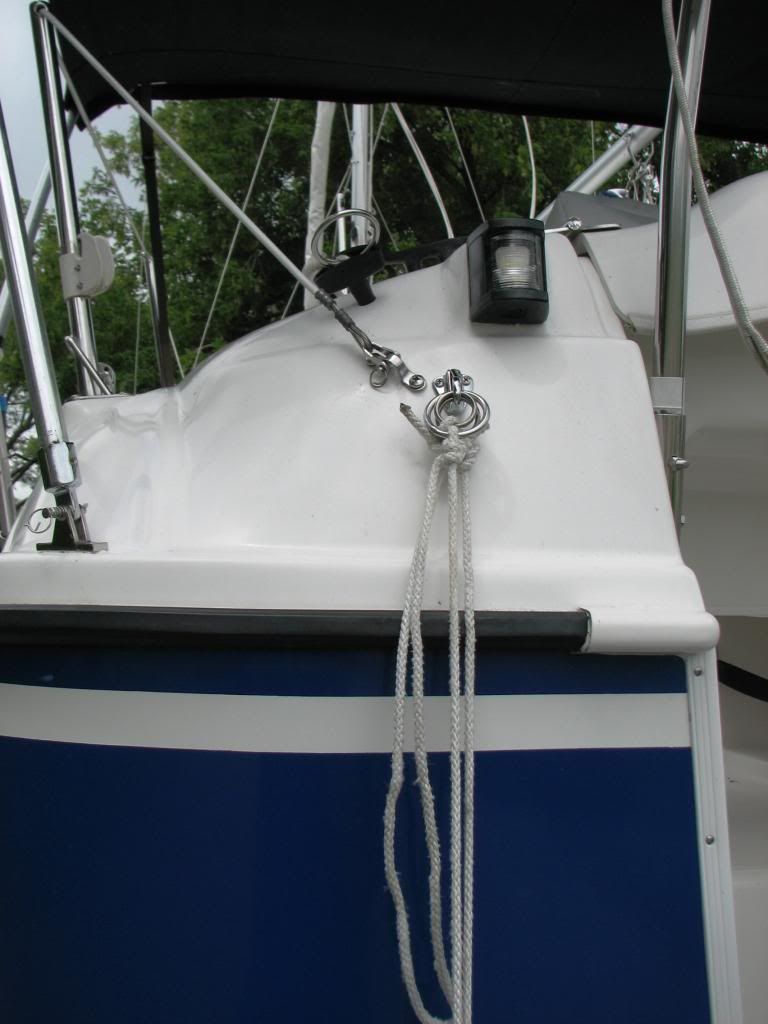
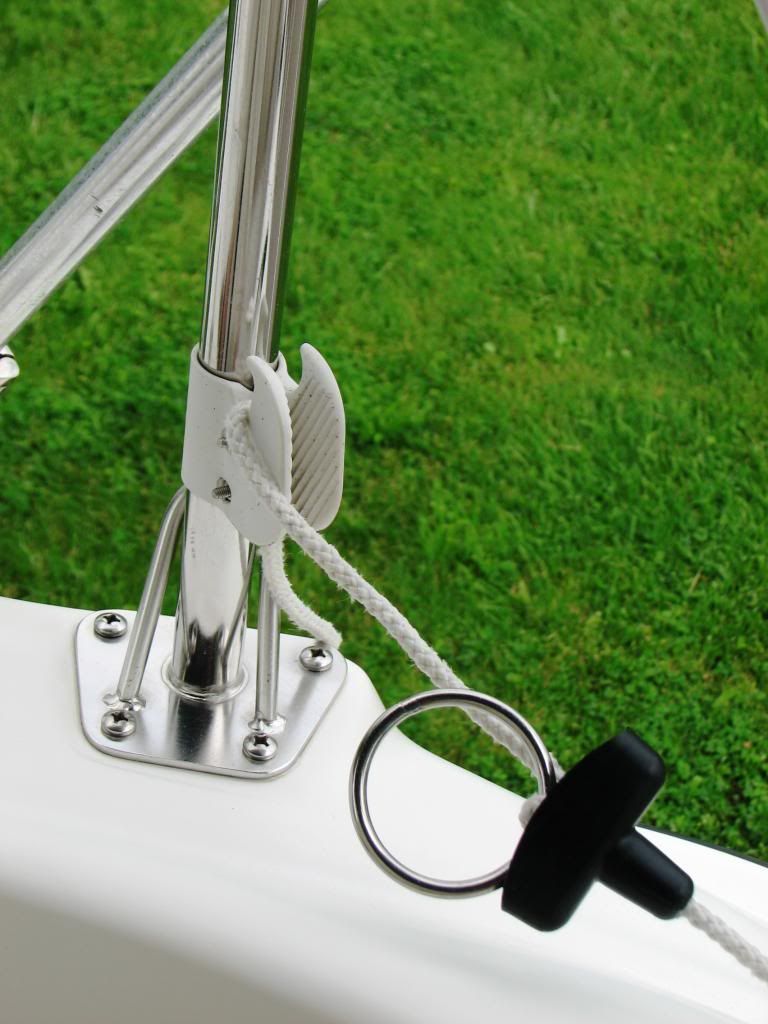
Finally got a good pic to show line layout.

Re: Unintended rudder modification
Posted: Sun Aug 07, 2016 4:07 pm
by bobbob
I'm not sure the clam cleat is a great idea for the up haul line - you probably want to cleat the rudders properly when they are up.
Something I discovered today as I was playing around with the steering - if you cleat the rudders up just by the D collars, you will find that as you steer from left to right slack will occur causing the rudder to fall somewhat. I have started looping the up haul line higher up on the the rudder to keep them fully upright throughout the steering range.
I think that, without doing this, the steering gets much more difficult because it's always pulling one rudder or the other up a little bit.
Re: Unintended rudder modification
Posted: Sun Aug 07, 2016 10:38 pm
by Todd
DaveC426913 wrote:Finally got a good pic to show line layout.
That's a great pic. Thankyou for taking the time to do that.
Re: Unintended rudder modification
Posted: Mon Aug 08, 2016 2:44 pm
by C Buchs
DaveC426913 wrote:Finally got a good pic to show line layout.
I was trying to figure out why my rails look different, then I read your post to the mods section.
http://www.macgregorsailors.com/modt/in ... ?view=2037 Do you have pictures of those stern-mounted seats on your

?
Jeff
Re: Unintended rudder modification
Posted: Mon Aug 08, 2016 7:33 pm
by DaveC426913
C Buchs wrote:DaveC426913 wrote:
Do you have pictures of those stern-mounted seats on your
?
They are standard Dowsar Marine (Hamilton ON) stern seats.
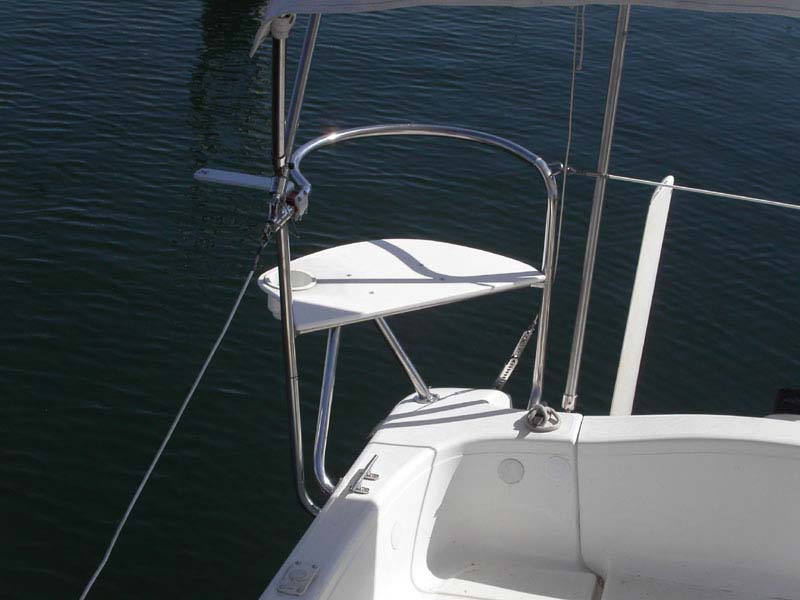 http://www.dowsar.com/options.htm
Re: Unintended rudder modification
Posted: Mon Aug 08, 2016 7:38 pm
by DaveC426913
bobbob wrote:I'm not sure the clam cleat is a great idea for the up haul line - you probably want to cleat the rudders properly when they are up.
Indeed. I always** cleat the slack on the standard cleat next to the clam cleat - because the lines can - and do - come out of the clam cleats.
Just last week, I was sailing (or was I motoring?) and suddenly the wheel became virtually impoosible to turn. Looked back and saw one rudder floating in the water, sticking straight out. Not good for the brackets.
**
almost always
Re: Unintended rudder modification
Posted: Mon Aug 08, 2016 8:12 pm
by Russ
I don't have any fancy break away stuffs. I cleat the rudders with friction to keep them down, yet allow them to release if they hit something.
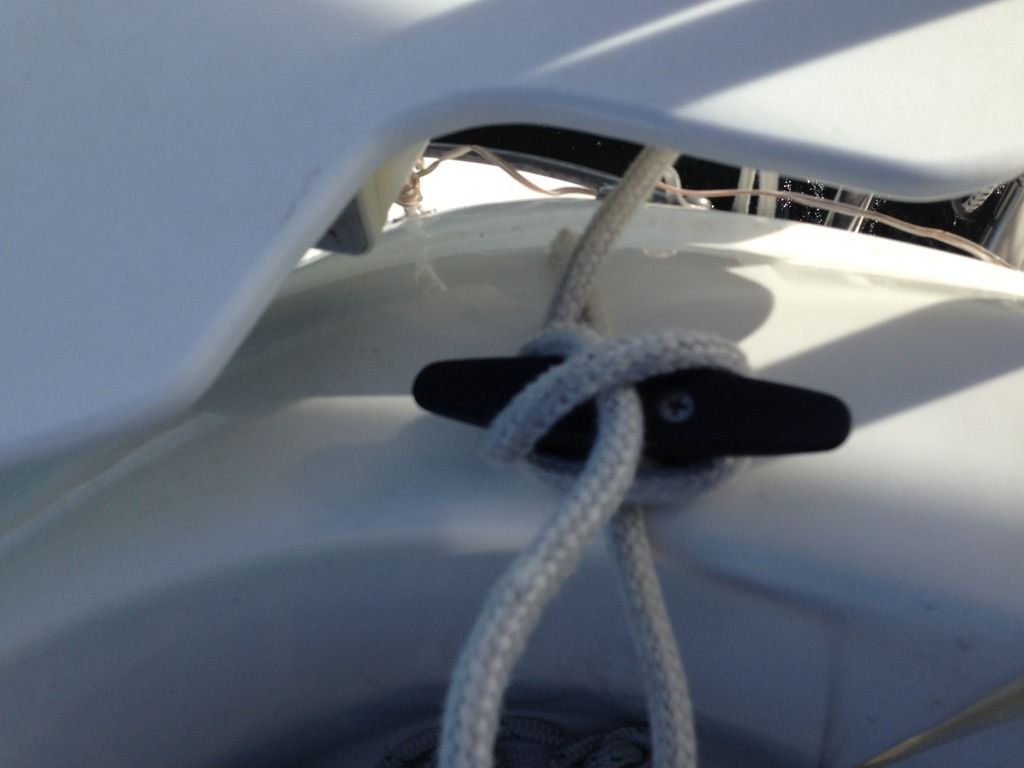
The rudder line holding it down comes through the cleat and I wrap the line around the cleat to create friction so it doesn't lift up.
(Line to rudder runs vertical in photo)
The wrap creates a "grip" so it doesn't lift up easily. A quick hitch holds the stuff in place. If I hit something, the line through the cleat gives way. SIMPLE.
I like simple.
--Russ
Re: Unintended rudder modification
Posted: Tue Aug 09, 2016 8:59 am
by Crikey
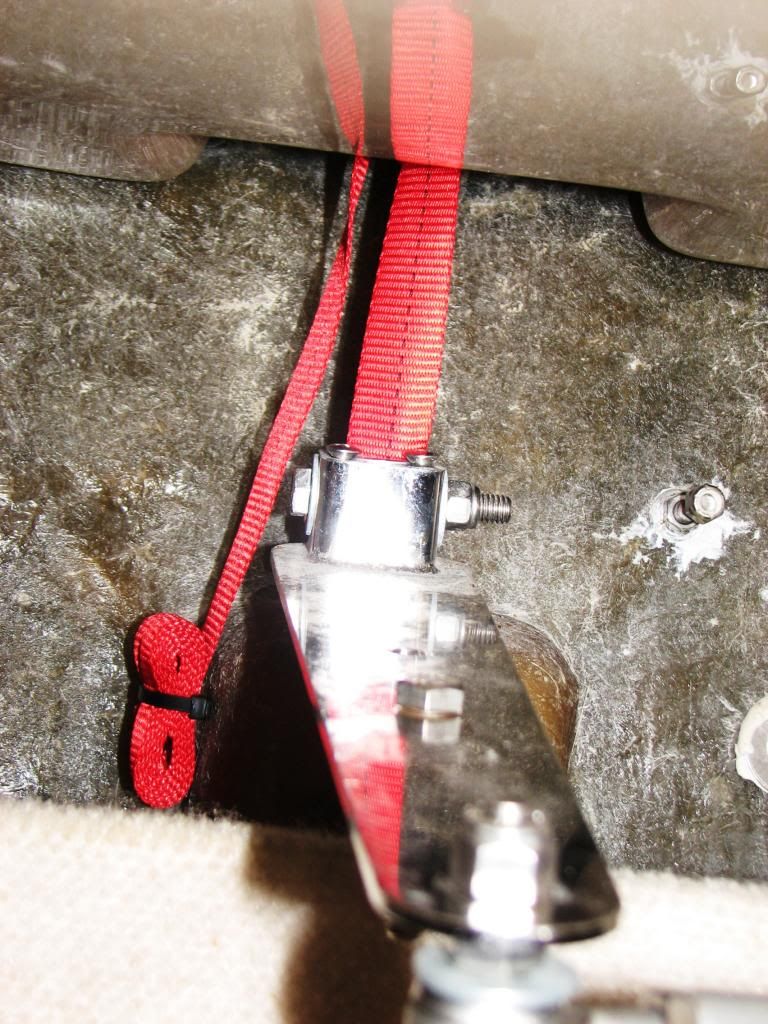
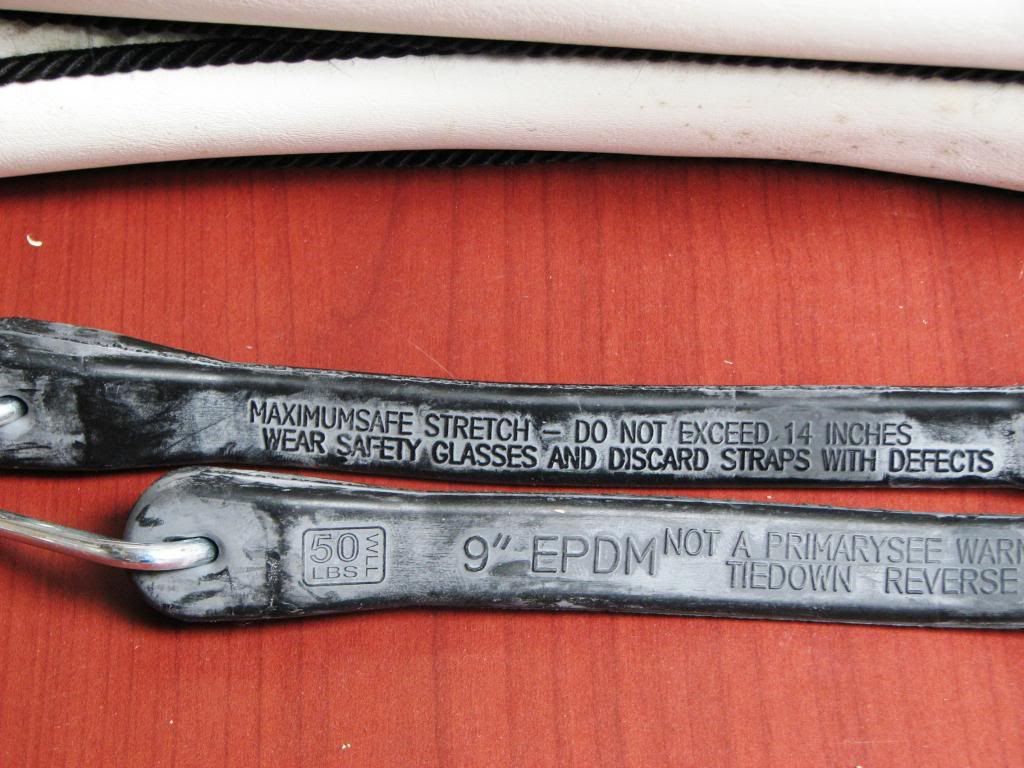
I replaced my rope with a heavy duty bungee system. Two per rudder for redundancy and it will deflect if it hits anything but stay down fully while sailing.
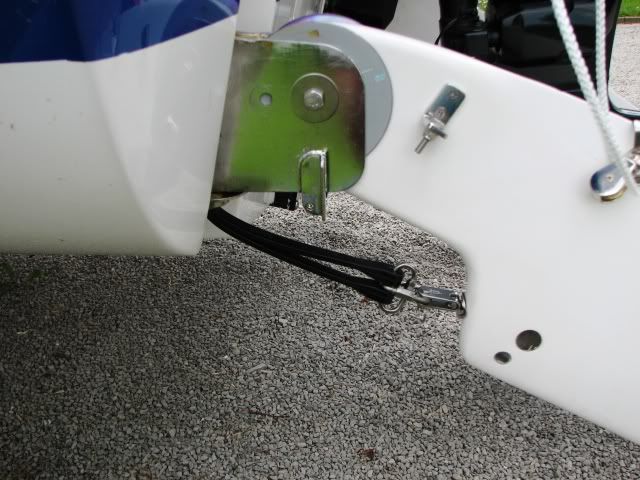
Here's the replacement downhaul (not hooked in).
Ross
Re: Unintended rudder modification
Posted: Tue Aug 09, 2016 9:37 am
by BOAT
Crikey wrote:I replaced my rope with a heavy duty bungee system. Two per rudder for redundancy and it will deflect if it hits anything but stay down fully while sailing.
Here's the replacement downhaul (not hooked in).
Ross
Yeah, okay, now you got my attention.
I mean, really - the rudders never really see anything over 6 knots so there should not be a huge pile of force on the rudders when sailing? Does that make sense - I'm not much good at water hydraulics and stuff so I am assuming that the force on the rudder in normal sailing conditions is not going to be huge (?) so the bungee seems like a good solution for guys that sail in the shallows a lot (something I just don't do, but I can appreciate the problems you guys would face that are forced into such conditions).
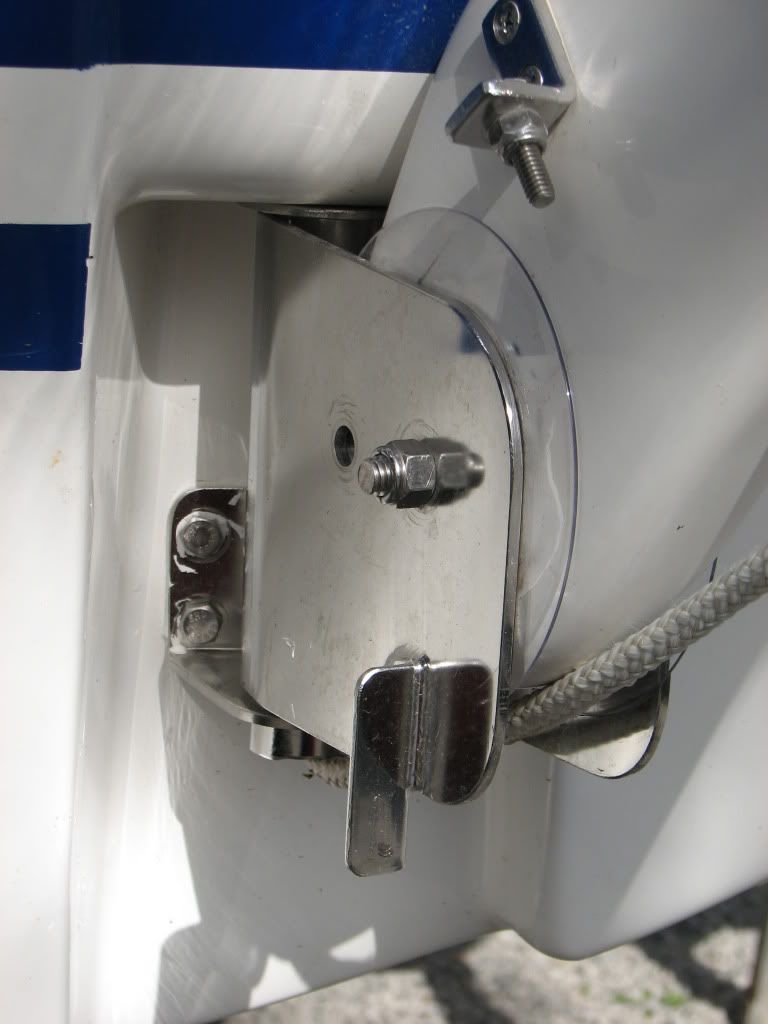
I think the bungee is a good idea except for one thing that is very important. Note, I have completely disassembled my entire rudder system and rebuilt it in the course of creating my auto pilot control because I needed precise geometry to create the system - so I observed a lot of interesting things about the rudder controllers:
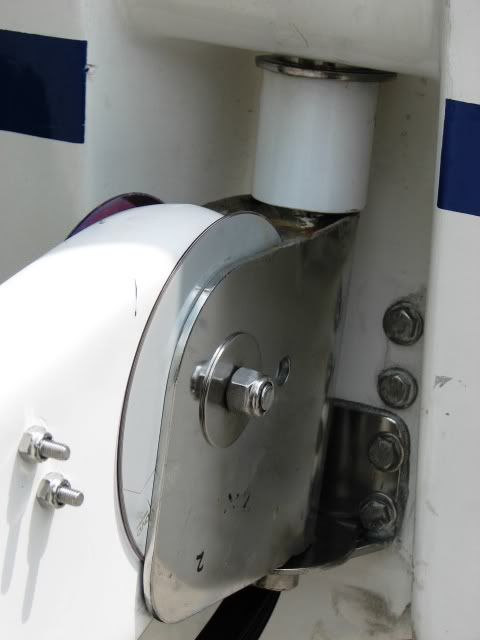
The way our rudders work (on the M boat) is that they are supposed to be loose and floppy until they are cinched completely into the metal bracket. This prevents a rudder in the horizontal position from destroying fiberglass connections and races that the rudder pivot axle is attached to:
If your in a storm and the rudder comes loose and floats horizontally and you get knocked hard enough with that much leverage hanging out there it could rip the bolts holding the tang assembly right out of the fiberglass resulting in a hole below the water line - not a good thing - better to break a rudder or deform a tang than take on water. It's very traditional boat design from tiny sailboats to large cruise ships to make the rudder post soft enough to bend so it does not rip a hole in the bottom of the ship if it fouls. Bent rudder shafts are common, but not holes from rudders for this reason.
On the M
It's the part of the metal bracket closest to the boat that does all the work. The bracket could be bent out ward thus giving a loose rudder a lot of play but the part of the bracket that is closest to the boat - that WELDED part - is always going to have the same clearance and dimension no matter how bad the tangs are bent up - that's by design > in other words, by cinching up the rudder VERY TIGHT against that inner slot you are removing all the play in the rudder - EVEN IF THE TANGS ARE BENT - EVEN IF THE RUDDER BOLT IS LOOSE. That is why the solid - non stretchy rope is critical to removing all rudder play when underway.
Another thing I realized is that it's not really the rudder bolts that are holding the rudders against the water - it's THE ROPE! The rope is actually PULLING the rudder THROUGH the water. (Please forgive the emphasis words - I do this because my brain needs the talking points to organize my thoughts). Anyways - That rope is really doing more of the work than we might think - the rope is pulling the rudder through the water and at the same time it's keeping the rudder snugly in that "slot" that holds the sideways play in check. But think of the geometry when you turn the rudder - the rudder presents itself to the water in a sideways fashion - it's the ROPE that is actually holding the rudder against the boat and pulling the rudder through the water!
If the rope can stretch - it presents a possibility for the rudder to dislodge from it's snug slot - then the question is - does the connection have enough force to return the rudder to a secure position? If the connection IS strong enough to return the rudder snugly then is it also too strong to save a rudder from damage on a rock? These are the things I would wonder about.
Still I think Ross might have the best solution to working the shallows as long as you keep things on the slow side it seems like the best way to manage the rudders. I would not use such a thing in heavy seas myself.
Re: Unintended rudder modification
Posted: Tue Aug 09, 2016 3:11 pm
by sailboatmike
I think the ideal system would be angled dagger board rudders that you could adjust the depth on much like the beneteau 21
http://www.finot.com/bateaux/batproduct ... ribord.jpg
Re: Unintended rudder modification
Posted: Tue Aug 09, 2016 4:00 pm
by Crikey
BOAT, I'll reply to your lengthy post as well as I can but ask that we not go too far with this in order to avoid excessively hijacking this thread.
I have to apologize about my first picture as it was an earlier version and not representative of what I ended up with in the end. I finally ran with three 9'" bungees (shown below) to both provide more force when set down, and to allow the connection to the rudder attachment point to consist of a synthetic strap for easier sliding over the welded rod in the bottom of the rudder tube when the tension is put on. It also circumvented the exposure to the rubber of sunlight and water. I had to replace one of the earlier pairs due to cracking for these reasons.
Now the shorter, and more robust assembley(s) fit inside the tube leading up to the topsides with room to spare and can be set to eliminate any slack by simply tightening the strap cinch.
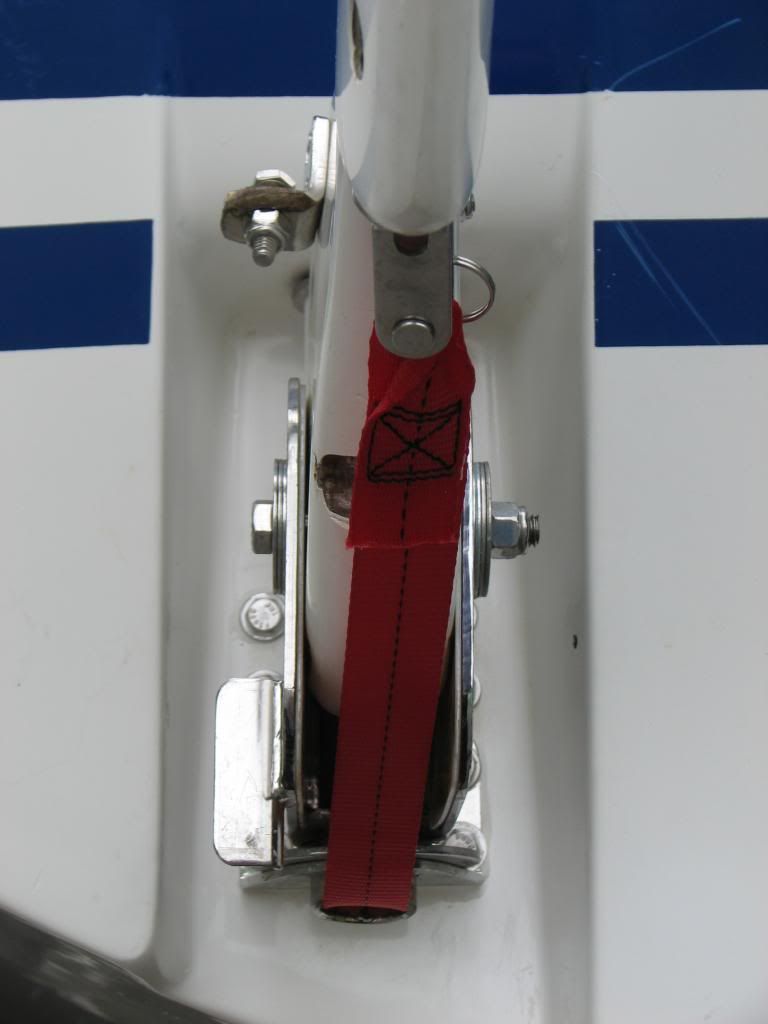
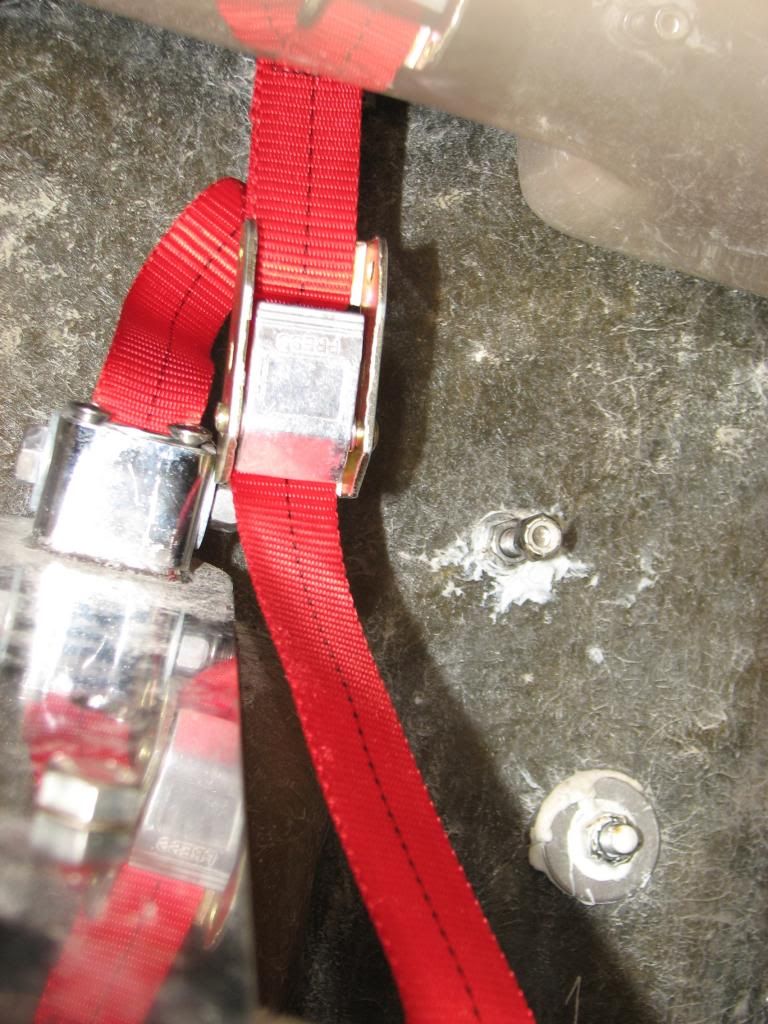
Here's a pic inside with the rudder deployed and the clamp up inside the tube.
http://i1121.photobucket.com/albums/l52 ... 13cbd2.jpg
I can also shorten or lengthen the line on the ring in order to fine tune things a bit more.
http://i1121.photobucket.com/albums/l52 ... 9d1770.jpg
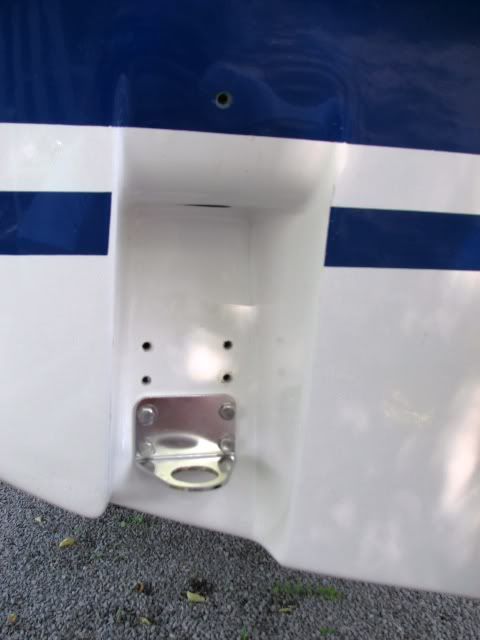
Also notice that I've taken the stock position, and dropped everything lower by a bracket dimension. I did this with the wishful thought of obtaining a bit more 'bite' with less turning (drag) required while sailing. It's hard for me to conceive of anything being torn through the very thick transom - especially with the final inside washers I installed - and regardless my mod will be re-visited once more to add a second custom retaining bracket (inverted) containing a bearing, and possibly eliminating the spacer currently used. That will capture everything much more solidly.
http://i1121.photobucket.com/albums/l52 ... G_2239.jpg
http://i1121.photobucket.com/albums/l52 ... G_2351.jpg
http://i1121.photobucket.com/albums/l52 ... G_2487.jpg
Some of your theory concerning ropes and slots is a little hard to visualize but in fairness it's the eventual elimination (or minimization) of slack and play that we're all after, and anything that avoids a fail in the haul-down rope can only be a good thing in the end. We sail in interesting waters in this part of the world and regardless of shallow water operation, do encounter more than our fair share of deadheads, branches and shoals. I've done runs where we've touched both without incident or malfunction. Swells and waves get pretty interesting up here as well! When we are exceeding hull speed, either under power or running down-wave, you can observe the water pressure forcing the rudders off the stops slightly, then returning properly after the event. This is as intended and I don't have to worry about a stretched or failed ageing stock rope anymore. Roger made a good boat but everything is capable of improvement right?
Regards..... Ross
Re: Unintended rudder modification
Posted: Tue Aug 09, 2016 4:17 pm
by BOAT
This sure is a funny looking little boat. It really does have enough rudder to spare - but I'm not so sure those rudders are going to kick out of the way on their own the way Ross intended when you run them aground.
And about the "Ross Rubber Rudder" with the rubber bungee things - I still think his set up is probably the better way to go in the shallows - he also has put in a tensioning strap that allows you to pre-load the system for a certain amount of tightness. I assume you make that adjustment from below decks before you raise the rudders. That would give you a measure of control on the force applied to the rudders. If your going to troll around in the shallows a light tension probably would be better.
You guys should look at the "Ross Rubber Rudder" system - it looks to me like it may have merit.
Re: Unintended rudder modification
Posted: Tue Aug 09, 2016 4:23 pm
by DaveC426913
RussMT wrote:I don't have any fancy break away stuffs. I cleat the rudders with friction to keep them down, yet allow them to release if they hit something.
The rudder line holding it down comes through the cleat and I wrap the line around the cleat to create friction so it doesn't lift up.
(Line to rudder runs vertical in photo)
The wrap creates a "grip" so it doesn't lift up easily. A quick hitch holds the stuff in place. If I hit something, the line through the cleat gives way. SIMPLE.
I like simple.
--Russ
Different strokes for different folks I guess. I would definitely not consider that enough tension.
Not only do I cleat my rudder lines off
tightly, but I even "twang" on the rudder line (like it was a guitar string) to be sure there is both zero slack
and no chance of give. I don't want my rudders lolling about even a few inches.
Re: Unintended rudder modification
Posted: Tue Aug 09, 2016 4:25 pm
by DaveC426913
That's the perfect boat for a wheelchair-bound sailor!
Re: Unintended rudder modification
Posted: Tue Aug 09, 2016 5:01 pm
by BOAT
DaveC426913 wrote:
That's the perfect boat for a wheelchair-bound sailor!
I think you may be right - but look at that hardware! And a bowsprit? Holy Cow! I bet that thing cost a fortune and weighs a ton! I dunno, just seems like overkill to me for just a little 21 boot boat. I guess the rich people get it better than I do.
I think the "Ross Rubber Rudder" system might be strong enough to keep the rudders in place Russ, but I suppose a test would be in order - He says he sails the rough seas without issue - although I was concerned about his statement that the rudders had moved or stretched the connection in waves - but I'm not sure what he meant by that.
Look, the MAC boat is not traditional. I am a traditional sailor so I don't sail in shallows and I don't run around at 24 miles per hour under power - BUT - that is what the MAC is all about! The whole point of a MAC is to DO EVERYTHING (like in Zootopia) or at least be able to. Otherwise we could all just sail those funny looking boats in that picture - now THAT is a traditional Sailboat!