You can use the trailer itself as a jack, to transfer the boat to blocks where the support is in a different place than the bunks. Then after painting the boat bottom everywhere but the supports, lower the boat back onto the trailer and finish the places where the supports were.
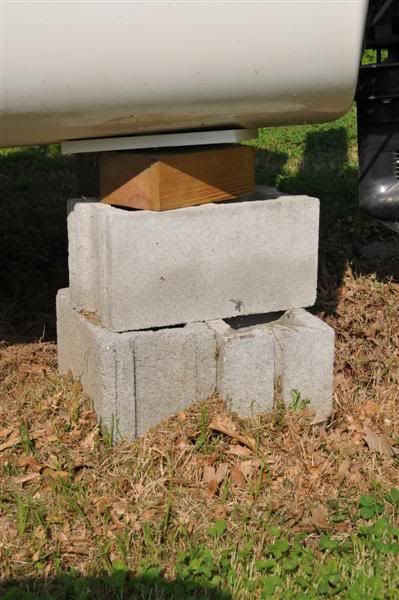
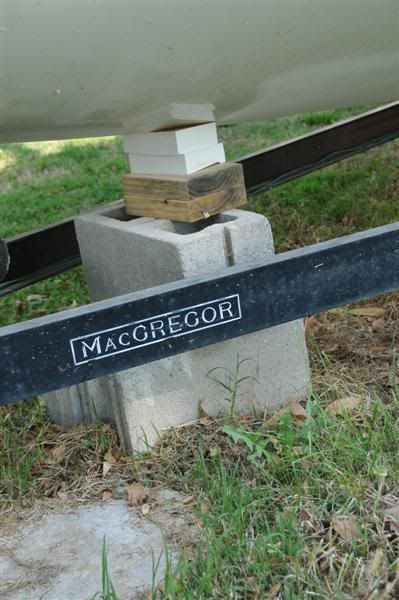
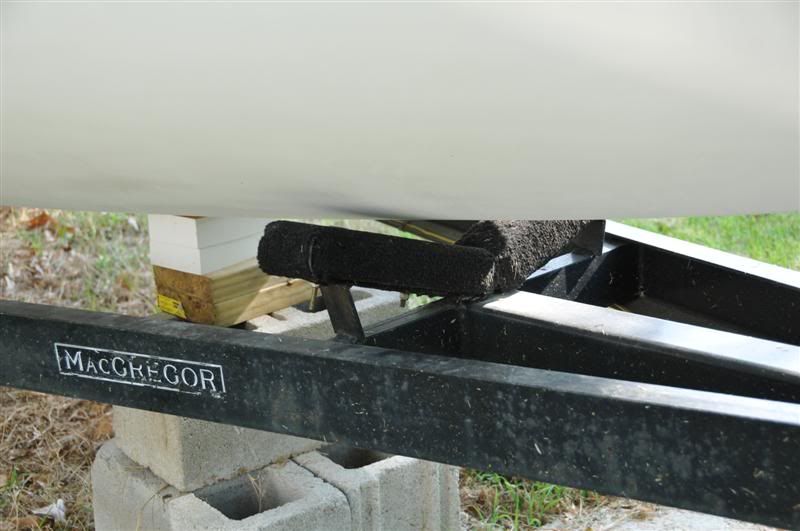
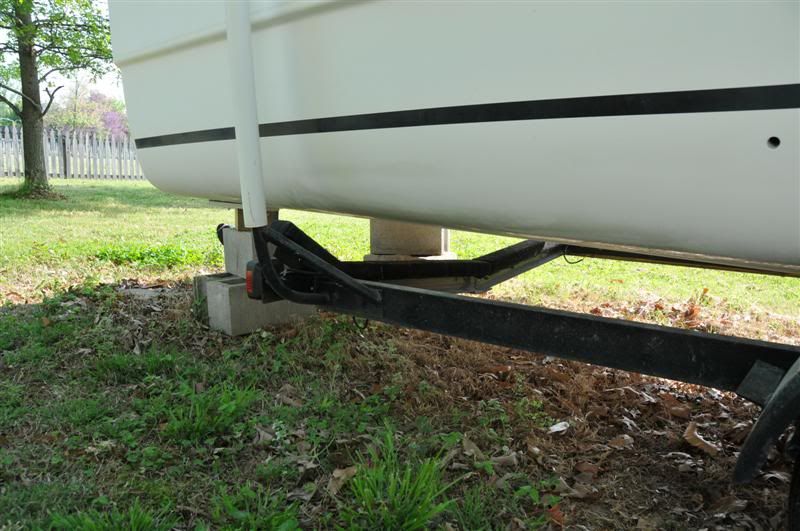
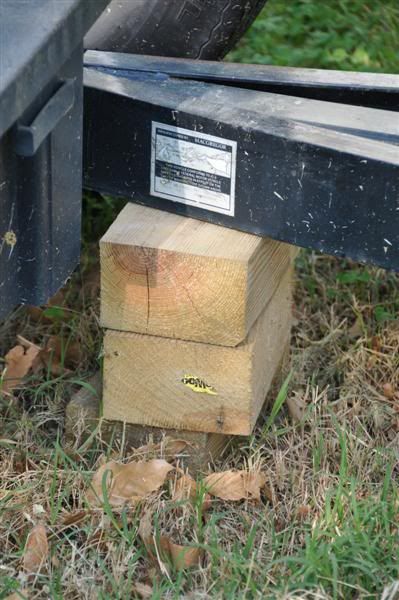
First lower the front of the trailer as far as it can go. I removed the wheel and put a solid plate on the jack to let it get lower. PLace concrete blocks under the rear of the boat almost at the transom, and as far apart as possible still under the almost flat bottom. I was able to put two concrete blocks side-by-side, and a third on top to make a really stable support for each side of the hull. Top off the concrete blocks piers with a wooden pad of square-cut pieces of 2X8, or 2X12 to spread the load. Made the supports at the back as high as possible under the boat.
Then at the bow, start raising the trailer with its own jack, and in a few inches, the stern of the boat will begin to rest on the rear supports you made. The concrete block pyramids will hold the rear as the trailer pivots on its axle. When the nose of the boat is raised as high as your trailer jack can go, make a stack of blocks under the trailer where the A frame and cross members meet the tongue, as high as possible. Then lower the trailer onto this block stack, and keep retracting the trailer jack until you have it all the way up. Then build another stack of blocks under the jack, and start jacking the nose again. When you have the nose just a tad higher than the stern, build a block stack under the front of the boat, just in front of the centerboard slot, and behind the trailer bunks, a single center support for the front. The boat has a moderate V shape there, and I used a very dense PVC foam block that would only compress a little, to take the boat's weight and conform to the shape a bit. You could just cut a block of wood slightly V shaped to do the same. Then lower the boat jack until the boat rests on the front block stack, and the boat is completely off the trailer, by several inches at all points. You can make more space between the bunks and the boat by raising or lowering the front and back of the trailer, without touching the boat. The trailer is trapped under the boat by the block stacks, but you could move it a few inches forward and back without disturbing the blocks that hold up the boat.
After painting the bottom, except for the three blocking points, reverse the procedure for putting the boat back onto the trailer, by first lowering the jack, and continueing the reversal process until the boat is back on the trailer. Then the stern can be painted easily, as it sticks way past the last bunk, and the one spot in the front behind the front bunk, as well.
I found the boat to be very stable when under the three points of support, and went aboard several times, moving about freely with no rocking or any sort of motion. By leaving the trailer under the boat, you always have a safety margin when working under. You do not have to launch the boat to change the support points.
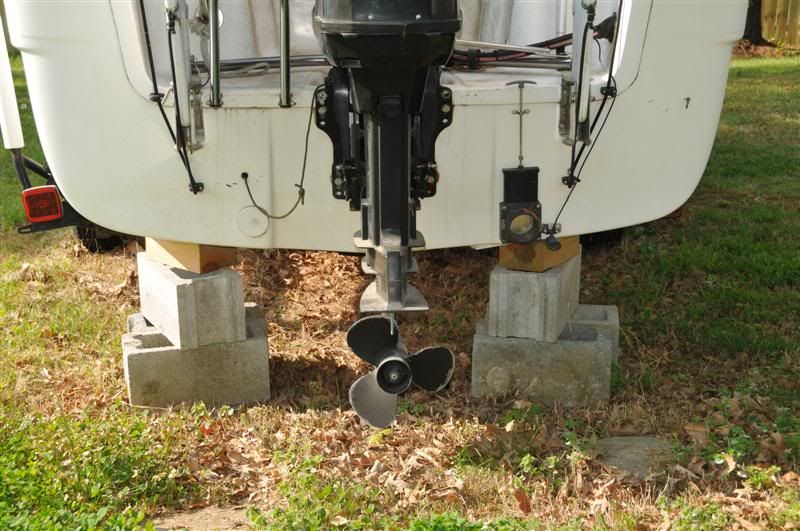
very stable, no rocking, notice load spread by plywood or flat boards on top of concrete blocks
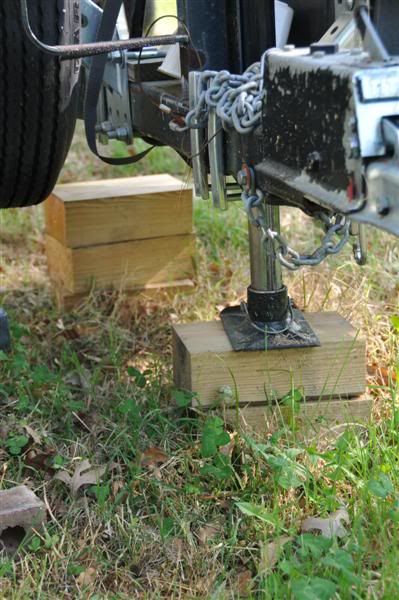
The standard wheel can be re-installed easily, but I prefer the flat plate adapted to fit under the jack post, instead of the wheel.
It spreads load better, and seems to be more secure, especially if you want the trailer to stay in place. Also avoids flattening the wheel if inadvertently left down with all that weight. It is held on by the same pin, and raises higher to allow the trailer to go lower in front.
(That allows the rear to lift higher)
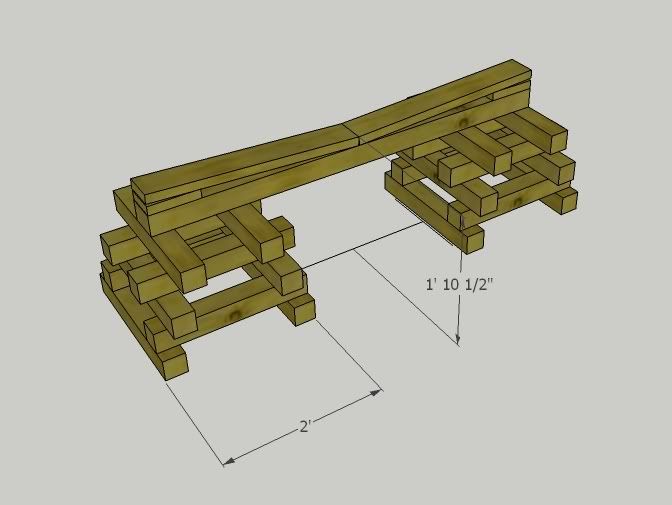




 and
and  guys have over some of us is that flat hull in the back makes thing somewhat easier
  .
.