Here is our last outing of 13 days with 4 on board loaded heavily for the extended trip. It is a perfect example of why having 24 gallons on board is necessary. It's not a really long trip like our 500+ mile trip a few years back, but doing it with only 12 gallons on board would be running at the ragged edge by the end of each segment.
Start in Lake Washington at the Newport Shores ramp, all 4 of the 6 gallon tanks full.
Day 1 - Across the lake, out the locks, across the Sound to Kingston, 20.5 Nm (plus idling time at the locks) at 8 knots.
Day 2 - From Kingston to Point Hudson Marina in Port Townsend via the outside of Morrowstone Island, 24.5 Nm at 8 knots.
GAS - Fill up two tanks in Port Townsend with 10.5 gallons, 45.0 Nm traveled.
Day 5 - Cross the Bay to Fort Flaggler State Park, 4.65 Nm at 7 knots.
Day 7 - Head South through the Port Townsend Canal, under the Hood Canal floating bridge and down Hood Canal to Pleasant Harbor, 36.2 Nm at 14 knots.
GAS - Fill up two tanks in Pleasant Harbor with 12.0 gallons, 40.85 Nm traveled.
Day 10 - Back north up Hood Canal past the subs at Bangor and into Port Ludlow, 25.8 Nm at 7 knots.
Day 12 - Cross Admiralty Inlet and Puget Sound to Edmonds, 16.1 Nm at 7 knots.
Day 13 - Go South into 25 knot headwind to ShilShole Bay and the locks, circle for 45 minutes waiting for the locks, go through the locks, Lake Union, and across Lake Washington above SR520 floating bridge then south to Newport Shores, 22.1 Nm at 7 knots.
Fuel left on board is 9 gallons for 15 gallons used, 64.0 Nm traveled.
Total trip, 149.85 Nm traveled, using 37.5 gallons of fuel.

Read about it and see the pictures here
http://home.comcast.net/~duane.dunn/LogBook126.htm
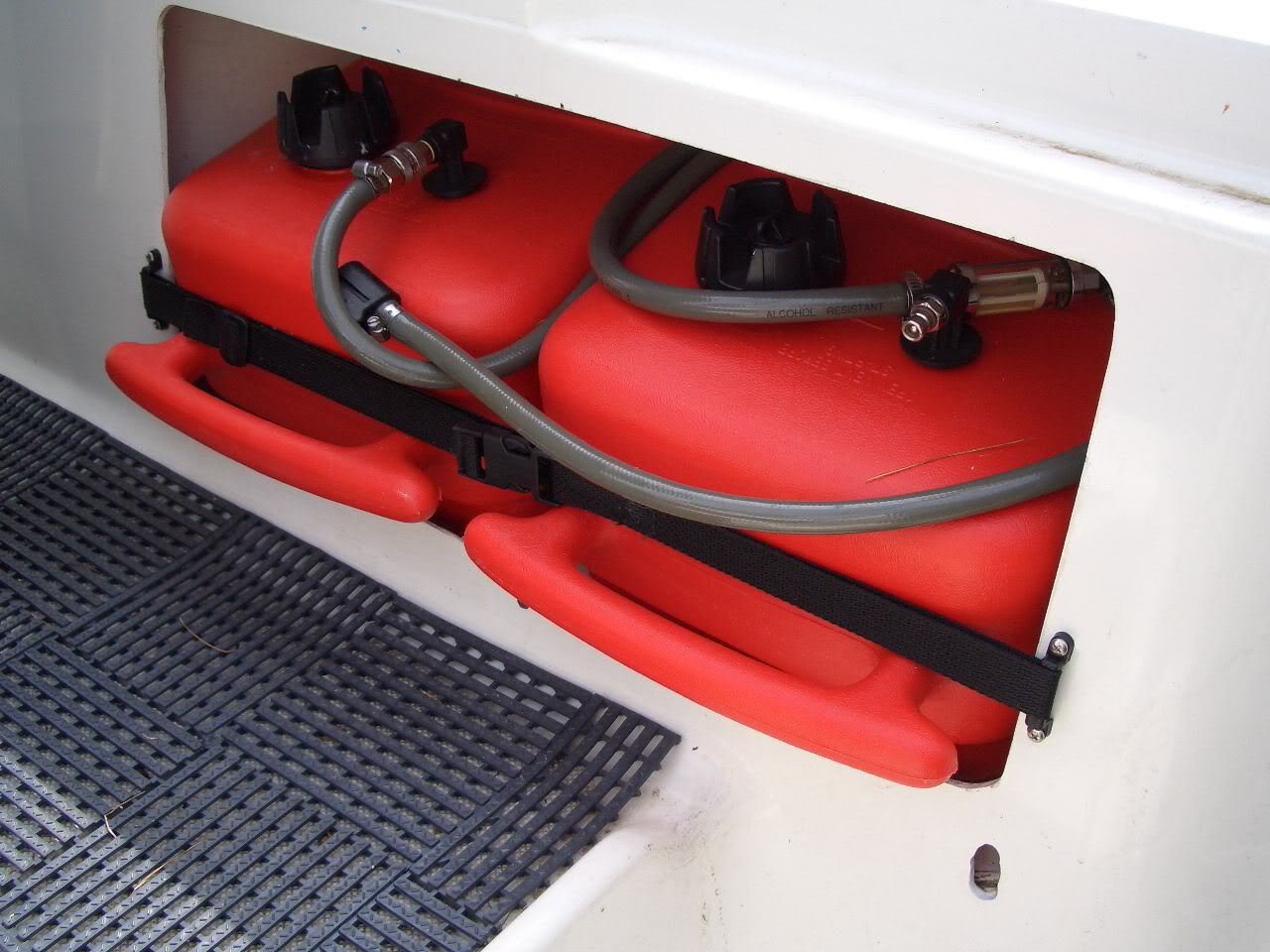
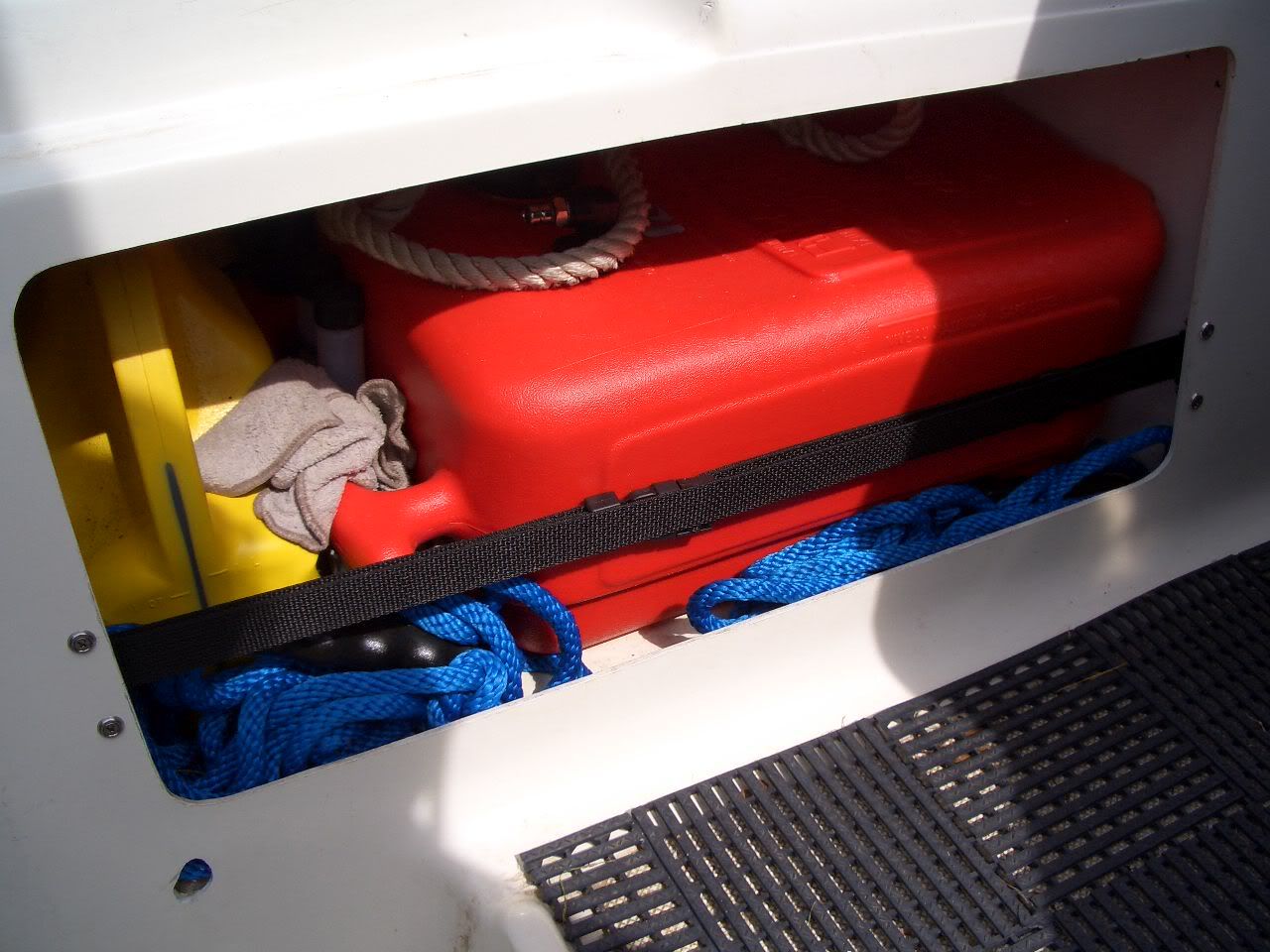
By the way I am a major fan of having 4 - 6 gallon tanks instead of 2 - 12 gallon tanks. Filling up before the trip I took the three empty ones to the gas station in the back of the Jeep. In Pleasant Harbor rather than leave the slip, motor to the fuel dock, then return to the slip I just took the two empty tanks in a dock cart over to the fuel dock and filled them up. I've also had one time where a fuel dock refused to fill portable tanks (which the red 12 gallon ones count as) while they were in the boat. I had to remove my tanks and place them on the dock to be filled.
I find I can easily switch my fuel hose from tank to tank without the motor dying or having to prime the line. I just throttle back to idle and move the hose. My style tanks with the fittings fully exposed make this very easy, no fumbling in the dark fuel locker. I usually start with the aft tank which is back a bit under the helm seat as it is easiest to pull it off that one and place it it on the more exposed forward one. I also will swap tanks before they run dry if I am approaching a critical time in the trip such as docking or passing through the locks. At the end of the trip above I had one tank still full, one with 1 gallon (the one we were running on at the end), and one with 2 gallons that I had switched from before it ran out.

 )
)


 less in Las Vegas
 Rob
Rob