

Replacement would be the next step to sail track cleaning and lubing, see threads like:
viewtopic.php?f=9&p=373220#p373220
The question is, how would you know when the slugs are due for replacement? As some slugs might be sewn on, making it a little more complicated than just 30 bucks and an hour of time, it would be helpful to identify old slugs.Tsunami wrote: ↑Fri May 02, 2025 8:28 am Just a "follow up" so we can put this thread to bed.
While the mast was down I used a wire bottle brush to clean out the mast track then sprayed the track with a dry lube. I also gave each slug a shot of the lube as they were fed into the slot. That did the trick, no issues as the halyard pulled the sail completely to the top.
Thanks again guys for all your suggestions.
Im assuming that slugs are made of lubricant impregnated plastics like delrin / etc. Age, use, and UV will eventual degrade the lubricating qualities of the plastics as they dryrot or become chalky.
In testing out my sail inventory (before I take the new-to-me boat out for the first time), Ive found one of my sails, specifically the one that appears to be original and was left out in the sun when I bought the boat, cannot go up two slugs before they bind. The slugs appear to be stock and are 12mm:
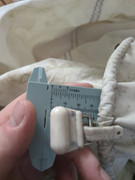
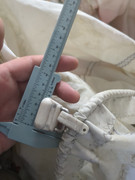
Where as another, possibly newer (still older than dirt) sail slides up and falls down without issue, though it has a different type slug as well. These for sure aren't stock and are 11.5mm:
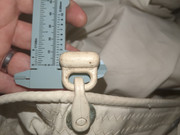
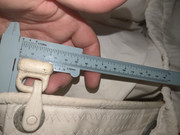
So to further add to the question and troubleshoot the issue Im having, how might someone identify old slugs vs dirty sail track vs wrong type of slugs


