$150 and a Wallyworld cutting board

A forum for discussing topics relating to MacGregor Powersailor Sailboats
TheLandlady
Chief Steward
Posts: 85
Joined: Sat Jul 10, 2021 3:07 pm
Sailboat: MacGregor 26X
Location: SOMD

$150 and a Wallyworld cutting board

Post by TheLandlady »

I know the necessity of flushing your outboard while on a slip can be argued in either direction, but it can’t hurt so I went over to the marina late the other night to do just that and check on the new dock line setup at low tide.

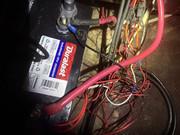
Well I got everything set up and went to start the motor, it turned over a few times but just wouldn’t kick through to idle. Since it wasn’t cranking I switched my perko to “ALL” to try and assist but that had zero effect. Eventually the battery was toast and I opened up the aft port settee to do something I’ve been procrastinating for 5 years and finally try to make sense of the rats nest of electrical wiring in that little locker. What I found was shocking on several levels.

I bought new batteries this year, and in what I can only blame on operator error, the deep cycle was in that aft locker and the cranking was in the forward port settee. I had the deep cycle connected to “1” on the perko switch ad the cranking on “2”. I usually start the motor on 1, which meant I have been using a deep cycle to start my motor every time since we moved east, which is obviously terrible for it.

Aside from that, the perko has every single positive circuit in the board wired directly to the common post, and every single negative was wired to the negative post on the deep cycle. There was an abhorrent mess of all those circuits bundled up adjacent to the battery sitting in the bilge, and when I shake them the lights flicker.

There’s a wiring diagram in sharpie on the bottom surface of the wood panel covering the access port: a crude rectangle representing the battery with a plus in the northeast corner and a minus sign in the northwest, an arrow with the word “BOW” pointing in the right direction, and next to the negative and positive signs: the words “9 rings” and “3 rings” respectively.

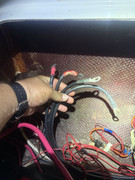
I looked down and the negative post had only (ha) 7 rings attached to it. Wondering where the other two were, I started digging around and found two 6awg black cables leading aft, which I though were somehow connected to the motor, but in reality just hanging out loose in the bilge, terminating in rings about two feet beyond where I could see.

I followed them forward to their origin, and to my surprise they were both attached to the same negative post on the wrongly-placed cranking battery up in the front! They wouldn’t have fit on the post on the deep cycle with all the other 14awg rings stacked on it, but had the cranking battery been it the right spot they would have fit there as the cranker has a slightly taller post.

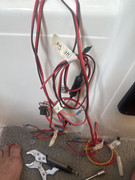
I decided I need to fix this, I took the perko off to take look at and try to untangle each individual circuit, and found again doubled pair of 6awg cables were leading from the “2” post all the way to the forward battery. Whoever installed this 2nd battery went cheap and tried to decrease resistance by using doubled 6awg on both the positive and negatives, which after a little research I’ve found is questionably safe and definitely illegal as per ABYC standards.

So I untangled the mess, found 5 distinct circuits and taped each one with a different color of duct tape after jotting down the appliance and number on each one’s individual inline fuses.

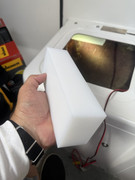
Some YouTube searching on boat electrical wiring led me to designing and building a bus bar and fuse box system. One guy I found used a cheap HDPE cutting board as a mount. He screwed a 2x4 under the top surface of the bench near the HIN as a backing plate for the cutting board but that didn’t sit quite right with me so I found a pair of 8”x3”x2” blocks of HDPE on Amazon for $30.

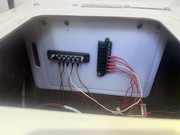
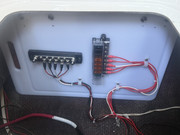
I picked up some blue sea hardware, a150a 10 circuit bus bar and 100a 8 circuit mini fuse box from Fawcett’s, a bunch of stainless screw and bolts and washers from the local hardware shop, and a pair of cheap 18” red and black 4awg battery cables from West Obscene. After a few hours this morning stripping and crimping and screwing things together, it works!! ((The only question I have about the system is on the white circuit that leads up to the overhead light switch panel, there was a 6am glass inline fuse. I removed that and wired directly to its own channel on the fuse box, but there is no 6amp blade fuse so I went with a 5amp. This shouldn’t sacrifice any safety, correct? Just may blow out sooner than I wish? I thought about leaving the 6amp on and connecting it directly to the post but it wouldn’t look so clean.))

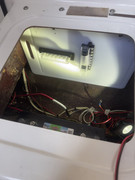
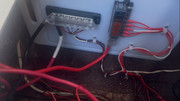
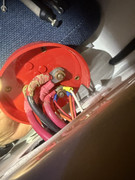
Pics show the before and after, I have to say I am quite pleased with the results. I put the crank battery, still pristine from never having been used, in its correct seat and on slot “1” on the perko. I have been trickle charging the deep cycle for about 24 hours but it’s still not charged, I think it may be a boat anchor now (kidding).

I got a hydraulic crimper, some 4awg wire and appropriate connectors on prime day coming in the mail tomorrow, so after heading to autozone I’ll have some fun learning how to make battery cables and have a new deep cycle installed on slot 2. I plan to rewire the entire boat at some point so $40 for a new tool is justified in my mind. All’s well that ends well.

Oh also it’s been insanely hot and humid in Maryland, especially in the direct sunlight starting at around 9am. My wife found a sun shade tarp while shopping the other day, and my stern points directly into the sunrise. I hoisted one corner on the topping lift, passed it behind the backstay, and ball bungeed the other three corners to the life lines. It’s been a godsend. I think the whisker pole strapped to the boom sitting in the mast support post will make a wonderful shade tent when at anchor. Thanks for reading my blogpost!
Image

Image

Image

Image

Image

Image

Image

Image

Image

Image

Image
2001 :macx:
2008 Mercury 50 2 stroke
2016 West Marine 9’ Dinghy
2019 Honda 2.3 4 Stroke
South Royalton, VT
Saint Louis, MO
Huntingtown, MD
User avatar
NiceAft
Admiral
Posts: 6698
Joined: Tue Feb 01, 2005 7:28 pm
Sailboat: MacGregor 26M
Location: Upper Dublin,PA, USA: 2005M 50hp.Honda4strk.,1979 Phantom Sport Sailboat, 9'Achilles 6HP Merc 4strk

Re: $150 and a Wallyworld cutting board

Post by NiceAft »

Success, all the way around.
Ray ~~_/)~~
User avatar
Russ
Admiral
Posts: 8299
Joined: Thu Oct 11, 2007 12:01 pm
Sailboat: MacGregor 26M
Location: Bozeman, Montana "Luna Azul" 2008 M 70hp Suzi

Re: $150 and a Wallyworld cutting board

Post by Russ »

Wow, that must feel so much better to have it cleaned up. All because you wanted to check the lines at low tide. 8)

You got some serious cables going into your bus bar and fuse bar.

FYI, you can crank from the deep cycle just fine. I only have 2 deep cycle batteries and crank from either.

I agree with your 5a fuse. Should be fine. 6a is probably hard to find and the difference is on the safer side to go 5a.
I used these terminal fuses for my battery connections. Just feels safer to have them fused close to the source.
https://www.amazon.com/Blue-Sea-Systems ... B0019ZBTV4


Shade and air movement will make the job easier.
--Russ
TheLandlady
Chief Steward
Posts: 85
Joined: Sat Jul 10, 2021 3:07 pm
Sailboat: MacGregor 26X
Location: SOMD

Re: $150 and a Wallyworld cutting board

Post by TheLandlady »

Russ wrote: Thu Jul 10, 2025 6:42 am Wow, that must feel so much better to have it cleaned up. All because you wanted to check the lines at low tide. 8)

You got some serious cables going into your bus bar and fuse bar.

FYI, you can crank from the deep cycle just fine. I only have 2 deep cycle batteries and crank from either.

I agree with your 5a fuse. Should be fine. 6a is probably hard to find and the difference is on the safer side to go 5a.
I used these terminal fuses for my battery connections. Just feels safer to have them fused close to the source.
https://www.amazon.com/Blue-Sea-Systems ... B0019ZBTV4


Shade and air movement will make the job easier.
So the cables on the fuse bar are from the perko and to the motor, similarly on the bus bar are from the motor and direct to neg on crank battery, which will soon connect a jumper to the neg on the deep cycle. My theory is that, since they are on the same post and electricity takes the path of least resistance, the big amp draw for the starter will mostly skip the rest of the block/bar as it’s activated, kind of like an eddy in a river. Also, update on the deep cycle after nearly 36 hours on the trickle charger it’s finally flashing a green light so I guess we’re back in business!

Those terminal fuses are catching my eye, the only wires I have now connected direct to the batteries are from the xantrex trucharge TC10TB, and I’m wondering if this would be a better way to put a 15a fuse on the positive terminals vs a floppy inline fuse.
2001 :macx:
2008 Mercury 50 2 stroke
2016 West Marine 9’ Dinghy
2019 Honda 2.3 4 Stroke
South Royalton, VT
Saint Louis, MO
Huntingtown, MD
TheLandlady
Chief Steward
Posts: 85
Joined: Sat Jul 10, 2021 3:07 pm
Sailboat: MacGregor 26X
Location: SOMD

Re: $150 and a Wallyworld cutting board

Post by TheLandlady »

Scratch that, I see what you mean now. Those are for fusing the battery itself up to 300a. I thought that was more of a single-slot version of this, https://a.co/d/fv0Gkgb, but a $30 a pair and only needing a 15a fuse on two single lines to each battery I may just reuse some of those inline I cut out of the rats nest.
2001 :macx:
2008 Mercury 50 2 stroke
2016 West Marine 9’ Dinghy
2019 Honda 2.3 4 Stroke
South Royalton, VT
Saint Louis, MO
Huntingtown, MD
OverEasy
Admiral
Posts: 2873
Joined: Mon Sep 28, 2020 11:16 am
Sailboat: MacGregor 26X
Location: NH & SC

Re: $150 and a Wallyworld cutting board

Post by OverEasy »

Hi TheLandLady!

Boy! You have been busy!
Congratulations! Job well done!

Terminal fuses are a great idea as would be terminal circuit breakers if you can go that route.
Generally placed on the terminal or within roughly 6-to-8 inches of wire length to the positive battery terminal.
They are to prevent a ‘dead short’ from a compromised or worn power cable turning into a crispy critter event.
Fuses or resettable circuit breakers assigned to particular circuits is a great improvement.
Carry readily accessible spares (and tools) in a dedicated location on board so you can get to them in a hurry without having to hunt for them later in a crisis.

Labeling/color-coding your wires is a smart idea too!
Saves a lot of fussing later.

Definitely a Great Improvemet!

(Aside: On Over Easy we chose to go with an all resettable circuit breaker approach for the batteries and for the individual circuits.
That way there is nothing to replace or carry spares for.

Best Regards,
Over Easy 8) 8)

Image
User avatar
Be Free
Admiral
Posts: 1889
Joined: Fri Nov 23, 2012 6:08 pm
Sailboat: MacGregor 26X
Location: Steinhatchee, FL

Re: $150 and a Wallyworld cutting board

Post by Be Free »

That looks so much better. Great job!

Russ is right about the terminal fuse and Overeasy is right about the length. You need a fuse on the house battery for sure. ABYC does not require a fuse on a dedicated start battery. I've heard valid arguments on both sides of the question. I chose not to install one.

I suspect that the light in your boat is similar to the ones that came in the "X". If so, it pulls a bit over 1 Amp so it will not be an issue with a 5 Amp fuse. In fact, on the "X" it came wired to a 5 Amp glass fuse and we have two lights on that circuit.

While you have everything open and fresh in your mind I encourage you to label both ends of every wire and document everything. No matter how much you believe you will remember what everything does years of experience have taught me that is not the case. Future you will thank present you. Trust me on this.
Bill
2001 26X Simple Interest
Honda BF40D
"If I were in a hurry I would not have bought a sailboat." Me
TheLandlady
Chief Steward
Posts: 85
Joined: Sat Jul 10, 2021 3:07 pm
Sailboat: MacGregor 26X
Location: SOMD

Re: $150 and a Wallyworld cutting board

Post by TheLandlady »

Roger that, I wish I knew how to quote all 3 of you for the reply but basically I should have a fuse between the house battery and the Perko switch? Starter battery to perko is not fused and that’s ok? I am leaning toward keeping the starter one raw because of things I’ve heard about the added resistance on hulltruth possibly causing issues but I’m no expert.

It may have been answered already but what size terminal fuse should be good for the house battery to perko?

The fuse box has 6 circuits now, all with 14awg and protected with 15,5,5,5,5 and 1a fuses. The cable from batt to perko will be 6awg, same as it is from perko to fuse box.

I’m in luck because I grossly underestimated the length from house to perko when I cut my cable at west marine and now I need to go back and get one about 3’ longer. I’ll grab a terminal fuse at the same time on Tuesday when I get a chance to go back.
2001 :macx:
2008 Mercury 50 2 stroke
2016 West Marine 9’ Dinghy
2019 Honda 2.3 4 Stroke
South Royalton, VT
Saint Louis, MO
Huntingtown, MD
OverEasy
Admiral
Posts: 2873
Joined: Mon Sep 28, 2020 11:16 am
Sailboat: MacGregor 26X
Location: NH & SC

Re: $150 and a Wallyworld cutting board

Post by OverEasy »

Hi TheLandLady!

Fuses should be at least 25% larger than the maximum continuous current you plan to draw.
If your batteries have maximum 100A draw, then 125A fuse is appropriate.

I’d avoid not having a circuit breaker or fuse in-line to anything from the battery.

People grouse about needing to potentially needing to find and replace a fuse but one REALLY doesn’t want to experience a dead short on the water in a boat. A dead short will dump all the current all at once and is more than capable of cooking off the power lead to the engine catastrophically. Lots of intense heat and a fiberglass boat are not compatible. That’s why my preferred solution is to go with a resettable circuit breaker. Just push and reset! Done! The safety and convenience of a reset circuit breaker is more than well worth the cost.
NOTE: I’d first check to see what caused either a fuse or a circuit breaker to pop BEFORE replacing or resetting.

Best Regards,
Over Easy 8) 8)
Image
User avatar
Russ
Admiral
Posts: 8299
Joined: Thu Oct 11, 2007 12:01 pm
Sailboat: MacGregor 26M
Location: Bozeman, Montana "Luna Azul" 2008 M 70hp Suzi

Re: $150 and a Wallyworld cutting board

Post by Russ »

OverEasy wrote: Sun Jul 13, 2025 11:37 pmThat’s why my preferred solution is to go with a resettable circuit breaker. Just push and reset! Done! The safety and convenience of a reset circuit breaker is more than well worth the cost.
I agree. I think Roger used an inline glass fuse for the main power to the panel. Trying to locate/inspect/replace that fuse in a quick moment would be difficult.

So I replaced it with an inline circuit breaker at the battery. Something similar to this. Easy to see if it trips and easy to reset.

https://www.amazon.com/RKURCK-Waterproo ... YP41V?th=1
--Russ
TheLandlady
Chief Steward
Posts: 85
Joined: Sat Jul 10, 2021 3:07 pm
Sailboat: MacGregor 26X
Location: SOMD

Re: $150 and a Wallyworld cutting board

Post by TheLandlady »

OverEasy wrote: Sun Jul 13, 2025 11:37 pm Hi TheLandLady!

Fuses should be at least 25% larger than the maximum continuous current you plan to draw.
If your batteries have maximum 100A draw, then 125A fuse is appropriate.
Thanks OE.

Ok… I’m almost getting confused but I’ll just keep asking questions lol.

First, what is my max continuous current draw on house battery right now? 36a? That is the number coming from adding up the fuses in the box: 15a, 5a x4, and 1a. If that’s the case, should I put a 50a breaker on there? (36*1.25=45)

Second, what if I have a 50a breaker or fuse on there and go to use the house battery to start the motor, say if the crank is dead for some reason? Will that be impossible (breaker trips) due to the current draw from the starter motor asking for more than 50a? Should I put a bigger breaker on there to account for that, and/or the possibility of adding more electrical appliances later on, like an autopilot or a garmin or something? Or would a fuse system be better for that expansion possibility, where I could just pop a bigger fuse in without breaking out the ratchet and screwdriver?

Again I am about only as proficient in electrical wiring as someone can be after a week of YouTube. I had always thought fuses were to protect the appliance, but after some video learning I now am
under the impression that a fuse/breaker is used to protect the wire from bursting into flames.

It’s about a 7’ run of 4awg cable from the house battery to the perko switch, 18” from the crank batter to perko, and about a 13’ run from the perko to the motor. Figuring out resistance and percent voltage drop and stuff like that is where I start to get a little fuzzy, but does that all come into play with this large terminal fuse/breaker we are talking about?

And hypothetically speaking, say I put a 50a or 150a breaker or fuse or whatever on the positive cable between the battery + and the perko switch. if it shorts or something to a point where that big breaker/fuse is tripping, will all the downstream fuses on my fuse box have already blown, protecting their respective wires, and the only thing left is to save the cable to the engine?

I guess I’m not sure what a dead short really is? I’ve tried looking it up
2001 :macx:
2008 Mercury 50 2 stroke
2016 West Marine 9’ Dinghy
2019 Honda 2.3 4 Stroke
South Royalton, VT
Saint Louis, MO
Huntingtown, MD
User avatar
Be Free
Admiral
Posts: 1889
Joined: Fri Nov 23, 2012 6:08 pm
Sailboat: MacGregor 26X
Location: Steinhatchee, FL

Re: $150 and a Wallyworld cutting board

Post by Be Free »

TheLandlady wrote: Sun Jul 13, 2025 6:38 pm Roger that, I wish I knew how to quote all 3 of you for the reply but basically I should have a fuse between the house battery and the Perko switch? Starter battery to perko is not fused and that’s ok? I am leaning toward keeping the starter one raw because of things I’ve heard about the added resistance on hulltruth possibly causing issues but I’m no expert.

It may have been answered already but what size terminal fuse should be good for the house battery to perko?

The fuse box has 6 circuits now, all with 14awg and protected with 15,5,5,5,5 and 1a fuses. The cable from batt to perko will be 6awg, same as it is from perko to fuse box.

I’m in luck because I grossly underestimated the length from house to perko when I cut my cable at west marine and now I need to go back and get one about 3’ longer. I’ll grab a terminal fuse at the same time on Tuesday when I get a chance to go back.
Yes, you need a fuse between the house battery and the Perko switch. Not putting a fuse on the starter battery is acceptable.

There are two things to consider when sizing the fuse on the house bank:
  • The maximum load you plan to put on the circuit
  • The maximum load the wire can support in case of an overload / short circuit
Overeasy gave you good advice on the first case. You want your fuse to be around 25% larger than your expected loads so that you don't get nuisance trips.

The other thing you need to consider is how much current a 6awg cable can handle. Depending on the type of wire and insulation (I'm assuming that you don't have the wire bundled with others or running through a very hot area) your 6awg wire will carry between 95 and 120 Amps. The BMS in your lithium battery should shut down before it can melt your battery cable; the fuse is there to protect the wire in case it doesn't.

You have to do the math regarding current and future loads. Size your cables for the loads you reasonably expect to have when you are done and then size your fuses accordingly.
Bill
2001 26X Simple Interest
Honda BF40D
"If I were in a hurry I would not have bought a sailboat." Me
OverEasy
Admiral
Posts: 2873
Joined: Mon Sep 28, 2020 11:16 am
Sailboat: MacGregor 26X
Location: NH & SC

Re: $150 and a Wallyworld cutting board

Post by OverEasy »

Hi TheLandLady!

Glad to help as best as I can….

A dead short it when the circuit between the battery terminals is completed without an application load. That’s gonna dump all the current capacity of the battery and things generally get very hot very quickly which can even potentially melt/vaporize the conductor… copper melts at 1,984°F… so pretty hot!

=>> The use of fuses and circuit breakers IS PRIMARILY TO PREVENT FIRES by shutting off electrical current through the electrical distribution wires. So YES, fuses and circuit breakers are sized to prevent the electrical distribution wiring from overheating WELL BEFORE the wiring and it’s insulation ever become compromised in any way. That allows for the simple replacement of a fuse or reset of a circuit breaker and not have to contend with pulling out all the wiring (and any other wires that were in physical or thermally affected). So having a lower current capacity fuse or circuit breaker is MUCH better.

==> The wire coming from the positive terminal to the battery selection/isolation “Perko” switch needs to be sized such that there is more than sufficient current carrying capacity for all the anticipated end use and anticipated load applications… basically you should plan on being able to turn on everything at its maximum current load draw.
So if you have a set of circuits like the following:
5 circuits at 5 amps = 25 amps
5 circuits at 10 amps = 50 amps
1 circuit at 60 amps. = 60 amps
===========================
Total = 135 amps
This would be the primary MINIMUM design current load carrying capacity of the gauge wire coming off the battery positive terminal to not only to the “Perko” switch, but also between the “Perko” switch to the positive bus bar AND from the negative bus bar and the battery negative terminal. This the starting point in the electrical design process.

Then one has to determine the individual electrical line runs and the various wire resistance losses to be anticipated. This is to keep line resistances to a minimum for the anticipated end load of those individual circuits. (The bigger the actual cross section of the wire conductor the less resistance… remember the actual bigger the wire the smaller the gauge number…wierd eh?) So one has to adjust what wire size one uses based upon the length of the run AND the end use load requirement. One needs to account for line resistance heating as undersized wires will get hot which is a bad thing. There are standardized tables and formulas available to help with this process so one uses the right gauge wire for the application and lengths involved.

Add the line currents and the application currents to get the total system current. The wire size from the battery positive to the “Perko” to the positive bus bar must be at least capable of carrying that electrical load current. Then one applies a factor of safety to increase the actual wire size. It is this larger margined wire size maximum amperage load carrying rating that determines the maximum fuse or circuit breaker size to be used. Generally one selects the fuse or circuit breaker size between the total application load and the maximum load carrying capacity of the main line. That way the line is capable of carrying the working loads and the wire is still protected as the current is below the wire capability.

Now one applies the same process for each application circuit coming off the positive bus bar to ensure that the circuit can operate the application without line heating. The fuse or circuit breaker is sized between the application load and the maximum safe current carrying capacity of that circuit’s wiring.

With that out of the way one can look at the aspect of protecting the actual application device from over current damage… Generally if an application load is valuable enough or critical enough it has an incorporated current load protective device. For example… Communication radios generally have an incorporated fuse that generally protects its internal circuitry from over current damage. Contemporary outboard engines with electronic ignition and computers generally have an incorporated fuse to protect those sensitive components but not necessarily the starter motor circuit…. (Hmm…that reminds me I need to get spares of those for my engine :o :wink: :|).

If you have a particular application load you want to protect then one can deliberately undersize that circuit’s fuse or circuit breaker to at or below that particular application’s load rating. That way that fuse or circuit breaker disable the circuit before it reaches the application’s rating. One generally does this for sensitive instrumentation or electronics that do not incorporate integral protection capability.

It’s important to adequately understand and implement electrical systems. Not doing so can, does and has resulted in harm, damage and injury… yes, even on boats.

Hope this helps some… There are some nice DIY books available that can help provide you with better details and instructions than I can.

I have a preference to use circuit breakers which can be reset relatively easily rather than replacing fuses which can get complicated.

Best Regards,
Over Easy 8) 8)

Image
Last edited by OverEasy on Mon Jul 14, 2025 5:20 pm, edited 2 times in total.
TheLandlady
Chief Steward
Posts: 85
Joined: Sat Jul 10, 2021 3:07 pm
Sailboat: MacGregor 26X
Location: SOMD

Re: $150 and a Wallyworld cutting board

Post by TheLandlady »

Be Free wrote: Mon Jul 14, 2025 3:50 pm
Yes, you need a fuse between the house battery and the Perko switch. Not putting a fuse on the starter battery is acceptable.

There are two things to consider when sizing the fuse on the house bank:
  • The maximum load you plan to put on the circuit
  • The maximum load the wire can support in case of an overload / short circuit
Overeasy gave you good advice on the first case. You want your fuse to be around 25% larger than your expected loads so that you don't get nuisance trips.

The other thing you need to consider is how much current a 6awg cable can handle. Depending on the type of wire and insulation (I'm assuming that you don't have the wire bundled with others or running through a very hot area) your 6awg wire will carry between 95 and 120 Amps. The BMS in your lithium battery should shut down before it can melt your battery cable; the fuse is there to protect the wire in case it doesn't.

You have to do the math regarding current and future loads. Size your cables for the loads you reasonably expect to have when you are done and then size your fuses accordingly.
Ok great stuff. I upgraded every 6awg to 4awg, and I think I’m going to put a 50 fuse on for now.
2001 :macx:
2008 Mercury 50 2 stroke
2016 West Marine 9’ Dinghy
2019 Honda 2.3 4 Stroke
South Royalton, VT
Saint Louis, MO
Huntingtown, MD
TheLandlady
Chief Steward
Posts: 85
Joined: Sat Jul 10, 2021 3:07 pm
Sailboat: MacGregor 26X
Location: SOMD

Re: $150 and a Wallyworld cutting board

Post by TheLandlady »

OverEasy wrote: Mon Jul 14, 2025 5:14 pm Hi TheLandLady!

Glad to help as best as I can….

A dead short it when the circuit between the battery terminals is completed without an application load. That’s gonna dump all the current capacity of the battery and things generally get very hot very quickly which can even potentially melt/vaporize the conductor… copper melts at 1,984°F… so pretty hot!

=>> The use of fuses and circuit breakers IS PRIMARILY TO PREVENT FIRES by shutting off electrical current through the electrical distribution wires. So YES, fuses and circuit breakers are sized to prevent the electrical distribution wiring from overheating WELL BEFORE the wiring and it’s insulation ever become compromised in any way. That allows for the simple replacement of a fuse or reset of a circuit breaker and not have to contend with pulling out all the wiring (and any other wires that were in physical or thermally affected). So having a lower current capacity fuse or circuit breaker is MUCH better.

==> The wire coming from the positive terminal to the battery selection/isolation “Perko” switch needs to be sized such that there is more than sufficient current carrying capacity for all the anticipated end use and anticipated load applications… basically you should plan on being able to turn on everything at its maximum current load draw.
So if you have a set of circuits like the following:
5 circuits at 5 amps = 25 amps
5 circuits at 10 amps = 50 amps
1 circuit at 60 amps. = 60 amps
===========================
Total = 135 amps
This would be the primary MINIMUM design current load carrying capacity of the gauge wire coming off the battery positive terminal to not only to the “Perko” switch, but also between the “Perko” switch to the positive bus bar AND from the negative bus bar and the battery negative terminal. This the starting point in the electrical design process.

Then one has to determine the individual electrical line runs and the various wire resistance losses to be anticipated. This is to keep line resistances to a minimum for the anticipated end load of those individual circuits. (The bigger the actual cross section of the wire conductor the less resistance… remember the actual bigger the wire the smaller the gauge number…wierd eh?) So one has to adjust what wire size one uses based upon the length of the run AND the end use load requirement. One needs to account for line resistance heating as undersized wires will get hot which is a bad thing. There are standardized tables and formulas available to help with this process so one uses the right gauge wire for the application and lengths involved.

Add the line currents and the application currents to get the total system current. The wire size from the battery positive to the “Perko” to the positive bus bar must be at least capable of carrying that electrical load current. Then one applies a factor of safety to increase the actual wire size. It is this larger margined wire size maximum amperage load carrying rating that determines the maximum fuse or circuit breaker size to be used. Generally one selects the fuse or circuit breaker size between the total application load and the maximum load carrying capacity of the main line. That way the line is capable of carrying the working loads and the wire is still protected as the current is
the wire capability.

Now one applies the same process for each application circuit coming off the positive bus bar to ensure that the circuit can operate the application without line heating. The fuse or circuit breaker is sized between the application load and the maximum safe current carrying capacity of that circuit’s wiring.

With that out of the way one can look at the aspect of protecting the actual application device from over current damage… Generally if an application load is valuable enough or critical enough it has an incorporated current load protective device. For example… Communication radios generally have an incorporated fuse that generally protects its internal circuitry from over current damage. Contemporary outboard engines with electronic ignition and computers generally have an incorporated fuse to protect those sensitive components but not necessarily the starter motor circuit…. (Hmm…that reminds me I need to get spares of those for my engine :o :wink: :|).

If you have a particular application load you want to protect then one can deliberately undersize that circuit’s fuse or circuit breaker to at or below that particular application’s load rating. That way that fuse or circuit breaker disable the circuit before it reaches the application’s rating. One generally does this for sensitive instrumentation or electronics that do not incorporate integral protection capability.

It’s important to adequately understand and implement electrical systems. Not doing so can, does and has resulted in harm, damage and injury… yes, even on boats.

Hope this helps some… There are some nice DIY books available that can help provide you with better details and instructions than I can.

I have a preference to use circuit breakers which can be reset relatively easily rather than replacing fuses which can get complicated.

Best Regards,
Over Easy 8) 8)

Image
Awesome brother, thanks for the deep dive!!
2001 :macx:
2008 Mercury 50 2 stroke
2016 West Marine 9’ Dinghy
2019 Honda 2.3 4 Stroke
South Royalton, VT
Saint Louis, MO
Huntingtown, MD
Post Reply