
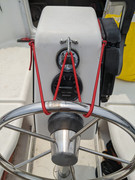
This is my wheel tamer.
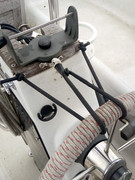
Two tiny eye-straps on the corners, one large in the middle.
The hook is one of these shock cord hooks with both pointy bits cut off:
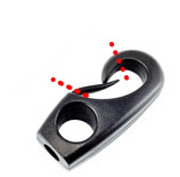

This is my wheel tamer.
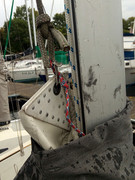
Attaches to sail head. Some people here prefer to attach to the first slug below the sail head. I tried it but did not like it. Season-to-taste.
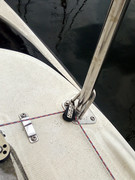
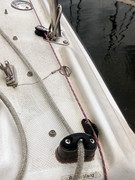
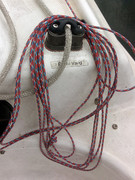
That's a great setup! I'm going to do this over the winter. It looks fairly easy. My halyard is run back on the starboard side so I'll run the downhaul the same side.DaveC426913 wrote: ↑Sun Sep 18, 2022 1:54 pmAttaches to sail head. Some people here prefer to attach to the first slug below the sail head. I tried it but did not like it. Season-to-taste.
I ran my downhaul to the starboard rail because my port rail was pretty busy. I regret this now because my main halyard is on port. It's a pain to operate them both simultaneously - to keep tension on the halyard while hauling the downhaul.
I advise you run the downhaul on the same side as your main halyard.
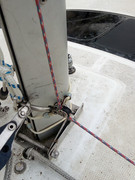
You want a cleat to ensure you can snug up the downhaul - both when the sail is up and when it is down. You don't want that downhaul flopping about while under sail where it will certainly hang up on various hardware prominences (such as the steaming light) just when you need it.
Ensure you tie a stopper knot sufficiently large to keep the bitter end of the downhaul from being pulled through the blocks by wind and drawn up the mast.
Naturally you need a long enough line to reach the mast head when the sail is up.
BTW, is your main halyard run back to the 'pit? If not, my downhaul setup is overkill.

Ditto. I was going to replace the halyard with a loop. But this I can do by simply adding another.
I am highly skeptical of this "loop" idea that's going around.
I like having the motor in the water in case of an emergency but I never thought of connecting it to the steering quick disconnect. Great idea and perhaps she'll steer a little better under sail with this setup!

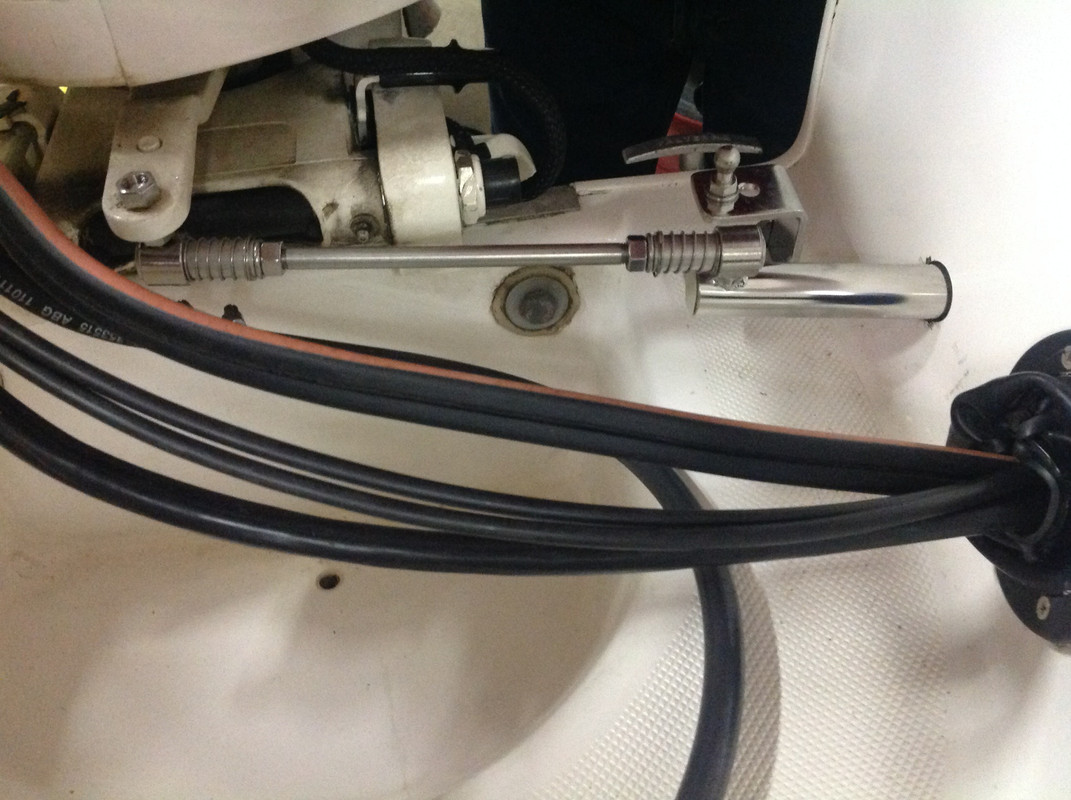
Just so we're all clear, the steering quick disconnect kit has a fixed post to secure the outboard in the straight-ahead position; when NOT connected to the steering system. This allows the rudders to steer without the weight of the outboard on the wheel. It's a huge difference. I always disconnect the motor from the steering when sailing. You can steer at low speed using the rudders with the motor locked straight-ahead. I usually drop the motor and fire up after sailing, using the rudders to head up to drop sails. Then, put the motor in neutral to swap the steering connector back to the steering system. You don't really want to make that transition while the motor is in gear.returnofthemac wrote: ↑Mon Sep 19, 2022 10:00 am I like having the motor in the water in case of an emergency but I never thought of connecting it to the steering quick disconnect. Great idea and perhaps she'll steer a little better under sail with this setup!
Can that cleat be drilled right into the fibreglass or do you need to have some kind of supporting bracket on the other side. I don't think there is much tension on there but I thought I'd ask. Is 1/8" line sufficient or would you recommend larger?DaveC426913 wrote: ↑Sun Sep 18, 2022 1:54 pmAttaches to sail head. Some people here prefer to attach to the first slug below the sail head. I tried it but did not like it. Season-to-taste.
I ran my downhaul to the starboard rail because my port rail was pretty busy. I regret this now because my main halyard is on port. It's a pain to operate them both simultaneously - to keep tension on the halyard while hauling the downhaul.
I advise you run the downhaul on the same side as your main halyard.
You want a cleat to ensure you can snug up the downhaul - both when the sail is up and when it is down. You don't want that downhaul flopping about while under sail where it will certainly hang up on various hardware prominences (such as the steaming light) just when you need it.
Ensure you tie a stopper knot sufficiently large to keep the bitter end of the downhaul from being pulled through the blocks by wind and drawn up the mast.
Naturally you need a long enough line to reach the mast head when the sail is up.
BTW, is your main halyard run back to the 'pit? If not, my downhaul setup is overkill.
Similar question. Do you think those eye straps can be drilled into the pedestal?DaveC426913 wrote: ↑Sun Sep 18, 2022 1:36 pmThis is my wheel tamer.
Two tiny eye-straps on the corners, one large in the middle.
The hook is one of these shock cord hooks with both pointy bits cut off:
I screwed the cleat into the glass, yes. Use short screws and put a dab of silicon seal on the threads. No, there is no tension on the downhaul line.
Yes. Again, little tension on them. Although here it's easy to access the underside, if you want to bolt them in instead.
DaveC426913 wrote: ↑Mon Apr 10, 2023 10:49 amYes. Again, little tension on them. Although here it's easy to access the underside, if you want to bolt them in instead.
DaveC426913 wrote: ↑Mon Sep 19, 2022 7:06 amI am highly skeptical of this "loop" idea that's going around.
1. I suspect the loop will prevent me from raising it - and dropping it - fast and easy. I doubt the loop will run free - I suspect I will be constantly getting it caught and having to undo kinks and twists introduced to the loop. The nice thing about bitter ends is that they can untwist themselves without twisting something else up.
2. To have a loop big enough I'd want, like, ten feet. I don't see much advantage in having "only" ten feet of halyard in the cockpit, rather than 30.
3. My downhaul is mere 1/8" line. You're going to have 30 feet of 3/8" line flapping on your sail.
4. 30 feet of 1/8" line takes up very little room in the 'pit.
I'm happy to be proven wrong, but for me, I think the hassles will outweigh the dubious gain.
