

enclosed bimini and fuel fumes
-
JeffJuneau
- Engineer
- Posts: 167
- Joined: Mon Jul 20, 2020 11:37 am
- Sailboat: MacGregor 26M
- Location: Juneau, Alaska 2009 26M 70hp Suzuki
enclosed bimini and fuel fumes
Hi, I couldn't find a discussion about this in my forum searches. I have been looking enviously at images of some of the Macs with fully enclosed bimini's and imagining how helpful that would be in Southeast Alaska. I have one of the BWY dodger, connector, and bimini systems on my 26M that has pretty good coverage except when it is raining sideways. It looks like it is designed to connect up to the rest of the BWY side curtains for a fully enclosed system. I am just not sure how safe it would be, with the 2-12 gallon tanks naturally vented to the cockpit. Would that be a safety issue possibly leading to an accidental ignition of gas fumes that inevitably leak out of the tanks during warm days or with any wave action when anchored? Thanks for any insights, Jeff
-
Russ

- Admiral
- Posts: 8401
- Joined: Thu Oct 11, 2007 12:01 pm
- Sailboat: MacGregor 26M
- Location: Bozeman, Montana "Luna Azul" 2008 M 70hp Suzi
Re: enclosed bimini and fuel fumes
Sounds like you have the same BWY dodger/bimini/connector that I have. So you are halfway there. BWY can sell you the remaining pieces.
As for fumes, I wouldn't worry about that. Heavier than air and naturally vent over the transom area. I don't think the enclosure is that air-tight. The "hole" under the helm seat would allow plenty of fumes to escape out that direction.
As for fumes, I wouldn't worry about that. Heavier than air and naturally vent over the transom area. I don't think the enclosure is that air-tight. The "hole" under the helm seat would allow plenty of fumes to escape out that direction.
--Russ
-
Tomfoolery

- Admiral
- Posts: 6135
- Joined: Tue Jul 05, 2011 7:42 am
- Sailboat: MacGregor 26X
- Location: Rochester, NY '99X BF50 'Tomfoolery'
Re: enclosed bimini and fuel fumes
My Dowsar enclosure fully encloses the cockpit, including a panel under the helm seat. But as Russ said, it’s hardly air tight, I don’t use my camp stove in there unless the sides are rolled up with screens in place, which they usually are since it’s summer, and the gas tanks don’t vent very much to start with. In other words, I just don’t worry about it. 
Tom
Be seeing you . . .
Be seeing you . . .
-
JeffJuneau
- Engineer
- Posts: 167
- Joined: Mon Jul 20, 2020 11:37 am
- Sailboat: MacGregor 26M
- Location: Juneau, Alaska 2009 26M 70hp Suzuki
Re: enclosed bimini and fuel fumes
Thanks Russ and TomFoolery. Your amazing experience with these vessels and anything marine puts my worries to rest. Appreciate the response! Jeff
-
OverEasy
- Admiral
- Posts: 3019
- Joined: Mon Sep 28, 2020 11:16 am
- Sailboat: MacGregor 26X
- Location: NH & SC
Re: enclosed bimini and fuel fumes
We’ve had a similar concern with a full enclosure especially with the vinyl side panels.
Fumes are something that can sneak up on you gradually like my childhood neighbor who had a slow drip of gasoline from his old 1964 Comet. He was working inside the not very well closed garage but passed out from the fumes anyway after a couple hours. Fortunately it was supper time and his kids were putting their bicycles back in for the night and found him. Big scare for everybody involved.
While a full enclosure might not be air tight it might still be tight enough.
In our cruising plans we would very much like to get a full enclosure but when we do we will be making sure that the area under the swing seat always has a screen panel AND that the cabin area has a forced inlet air supply from the top deck (like from a 24 hr solar vent fan.
As a former city medic long ago I’ve seen one too many accidental asphyxiations not to make it a point to keep areas adequately ventilated. Also a GREAT BELIEVER in smoke and CO detectors at home, garage, basement and boat. Just the two cents….
Be safe


Fumes are something that can sneak up on you gradually like my childhood neighbor who had a slow drip of gasoline from his old 1964 Comet. He was working inside the not very well closed garage but passed out from the fumes anyway after a couple hours. Fortunately it was supper time and his kids were putting their bicycles back in for the night and found him. Big scare for everybody involved.
While a full enclosure might not be air tight it might still be tight enough.
In our cruising plans we would very much like to get a full enclosure but when we do we will be making sure that the area under the swing seat always has a screen panel AND that the cabin area has a forced inlet air supply from the top deck (like from a 24 hr solar vent fan.
As a former city medic long ago I’ve seen one too many accidental asphyxiations not to make it a point to keep areas adequately ventilated. Also a GREAT BELIEVER in smoke and CO detectors at home, garage, basement and boat. Just the two cents….
Be safe

-
JeffJuneau
- Engineer
- Posts: 167
- Joined: Mon Jul 20, 2020 11:37 am
- Sailboat: MacGregor 26M
- Location: Juneau, Alaska 2009 26M 70hp Suzuki
Re: enclosed bimini and fuel fumes
Thanks so much OverEasy for your advice. I hadn't checked this post for a while and see that you added this interesting information at the end of June. It certainly seems like you have the professional work history to understand the tradeoffs and safety issues for gas fumes accumulating in these enclosed spaces. I wish it could be as easy as installing a gas monitoring device for gasoline, that worked as easily as a CO or smoke detector. I don't see anything like that in the boating literature, but maybe I am not looking in the right places. In Southeast Alaska it just isn't practical on many days to run a lot of outside air through the front vent (hatch), because the summertime air temps can be pretty cold and it is often pouring rain. I am still in limbo at what to do about enclosing my cockpit further after reading your important post. Jeff
-
OverEasy
- Admiral
- Posts: 3019
- Joined: Mon Sep 28, 2020 11:16 am
- Sailboat: MacGregor 26X
- Location: NH & SC
Re: enclosed bimini and fuel fumes
Hi JeffJuneau
Something we’ve sorta considered given we have installed our twin 12 gallon tanks with bench access hatches is to make ‘blister’ covers to physically close off the fuel cubbys inboard openings to the cockpit and vent the cubbys to the aft face of the stern and incorporate inlet blower ports to properly vent what would now be enclosed fuel lockers.
Not currently more than a thought at this point as we are not anywhere near getting a full enclosure as yet. But it would be one way to alleviate the fuel vapor risk similar to what one would expect from a good design practice perspective.
There are I believe propane / natural gas sensors for RVs and homes. Not sure where to get them or how much but they might possibly be able to sense gasoline vapors. It’s something ti possibly think further about and research.
The solar vent fans aren’t too expensive and they have multiple speeds. The marine type incorporate a water/weather baffle to keep out the elements.
Just thoughts….
We hope you are enjoying the summer and getting lots of time out on the water.
Best Regards,
Over Easy
Something we’ve sorta considered given we have installed our twin 12 gallon tanks with bench access hatches is to make ‘blister’ covers to physically close off the fuel cubbys inboard openings to the cockpit and vent the cubbys to the aft face of the stern and incorporate inlet blower ports to properly vent what would now be enclosed fuel lockers.
Not currently more than a thought at this point as we are not anywhere near getting a full enclosure as yet. But it would be one way to alleviate the fuel vapor risk similar to what one would expect from a good design practice perspective.
There are I believe propane / natural gas sensors for RVs and homes. Not sure where to get them or how much but they might possibly be able to sense gasoline vapors. It’s something ti possibly think further about and research.
The solar vent fans aren’t too expensive and they have multiple speeds. The marine type incorporate a water/weather baffle to keep out the elements.
Just thoughts….
We hope you are enjoying the summer and getting lots of time out on the water.
Best Regards,
Over Easy
-
OverEasy
- Admiral
- Posts: 3019
- Joined: Mon Sep 28, 2020 11:16 am
- Sailboat: MacGregor 26X
- Location: NH & SC
Re: enclosed bimini and fuel fumes
Here are some fuel and propane detectors we found on the West Marine on-line catalog…

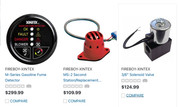

We haven’t gone in to the specification or limitations of these sensors but it could be a starting point.
Just didn’t want to get started on an idea and not at least provide a preliminary reference point.
We haven’t gone in to the specification or limitations of these sensors but it could be a starting point.
Just didn’t want to get started on an idea and not at least provide a preliminary reference point.
-
Chinook

- Admiral
- Posts: 1730
- Joined: Sun Feb 26, 2006 7:20 pm
- Location: LeavenworthWA 2002 26x, Suzuki DF60A
Re: enclosed bimini and fuel fumes
We have the BWY fully enclosed surround, and have never noticed any issues from venting gas fumes. As mentioned by others, gas vapor is heavier than air, and has lots of opportunity to dissipate. With its strong and distinctive odor, any gas vapor issue would be quickly noticed. We did greatly value the surround in Southeast Alaskan waters. Really nice to be able to get out of the rain and wind.
-
JeffJuneau
- Engineer
- Posts: 167
- Joined: Mon Jul 20, 2020 11:37 am
- Sailboat: MacGregor 26M
- Location: Juneau, Alaska 2009 26M 70hp Suzuki
Re: enclosed bimini and fuel fumes
Thanks Chinook and OverEasy. OverEasy, I appreciate that you pointed out that there are such things as gas sensors/alarms for automotive gasoline fumes. I will check into that for small vessels some more. When you come up with your design for mitigating the potential for gas fumes to be a health risk, I would like to find out what you finally installed. I know the human nose is probably as good a detector as any for automotive gas fumes, but I am not sure that mine is still working as well as it did in my younger days. Chinook, it is good to know that with all of the miles you have logged with an enclosed bimini that you have never had any difficulty with the enclosed cockpit. By-the-way, I think your travelog blogs for your previous trips that I have followed are fantastic. I have stayed up way too late a few nights fascinated with how you overcome the challenges along the way. If you ever do another inside passage trip, please look me up. Jeff, Juneau, Alaska.
-
jimmy alonso

- Engineer
- Posts: 196
- Joined: Mon May 02, 2005 9:27 am
- Sailboat: MacGregor 26M
- Location: Puerto Rico, 2004 26M,Yamaha 50
Re: enclosed bimini and fuel fumes
The main problem I had with the 12 gallon tanks were while heeled over sailing with a full tank they would leak. I would close the vent to try to stop the leak then forget to reopen.
The aluminum tanks from BWY don’t leak or smell and to boot you get 17 gallons.
The aluminum tanks from BWY don’t leak or smell and to boot you get 17 gallons.
-
OverEasy
- Admiral
- Posts: 3019
- Joined: Mon Sep 28, 2020 11:16 am
- Sailboat: MacGregor 26X
- Location: NH & SC
Re: enclosed bimini and fuel fumes
Several years ago I saw an interesting solution to the heeled over fuel spillage through the vent problem.
They took the standard plastic fuel cap, drilled out the center, tapped it for 3/8 NPT, screwed in a hose barb fitting, connected to flexible fuel line and routed it up to the gunnel top and capped it with a spark arrestor water excluder deck mount vent fitting.
The fuel cap on the tank still worked and the raised vent didn’t spill.
The down side was I didn’t see a way to close the vent to keep water vapor from working its way into the fuel.
Maybe he had a spare unmodified cap for long term storage?
Maybe he used a filter/separator?
Maybe he used a fuel additive?
I dunno…..
But he was happy with it
BTW: Those 17 gallon tanks are nice! But BWY said they were for the Mac26M and they wouldn’t fit a Mac26X. 
One option we’ve been looking at are a pair of auxiliary 4 gallon fuel cans we can mount on our aft rails.
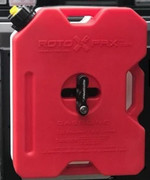
That would increase our cruising fuel capacity from 26 gallons to 34 gallons and our endurance from ~10.8 hrs to ~14.1 hrs which would be similar to those nice 17 gallon tank you have….
Note: Not to be an alarmist but, While a significant spill might set off someone’s olfactory alarm a lot of fuel leakage instances are more subtle but no less problematic. A slow leak can and does’sneak-up’ on people especially in circumstances where they slowly get used to it or are sleeping.
A pamphlet from Wyoming Work Force summed up some gasoline fuel aspects very nicely:
Do You Know the Common Facts About Gasoline?
You are around gasoline everyday, but not everyone realizes that gasoline is the most common flammable liquid manufactured and used. Because we use it so often, we sometimes forget some common facts about this flammable liquid:
=> Gasoline as a liquid does not burn – it is the vapors that the liquid gives off that burn.
=> Vapors usually cannot be seen but frequently travel long distances to a source of ignition. Thus the gasoline can be located a great distance from an actual ignition
source.
=> Gasoline gives off enough vapor to flash, when exposed to an external ignition source at
temperatures as low as –45 degrees F.! in other words, hazardous vapors are almost
always being released- unless you work in temperatures colder than –45 degrees F.!
=> Gasoline vapors are heavier than air. Vapors will settle to the ground and flow similar to a liquid. (In still air. Breezes can and do push vapors up and over over obstacles.) This is why gasoline vapors tend to find their way into drains, sewer lines,
basements, and other low spots.
=> Gasoline must be mixed with air before it can burn. It does not take much gasoline to
makeanignitablemixture. Ifthegas-to-airmixturecontainsaslittleas1.4%gasoline by volume, it can be ignited with explosive force. It has been said that the potential energy in a one-gallon can of gasoline is equal to numerous sticks of dynamite.
=> A gasoline/air mixture can be ignited by a hot surface, a smoldering object such as a cigarette, an open flame, or even a static spark.
=> Practice good hygiene after handling gasoline. Wash hands and other areas that may have come in contact with gasoline. Avoid prolonged inhalation of vapors as gasoline contains benzene, a known carcinogen.
The following tips are good advice when handling or using gasoline:
=> Never use gasoline for anything other than its intended purpose, as a fuel. Never use it as a cleaning solvent!
=> Store gasoline in UL approved safety containers.
=> Never smoke when anywhere near gasoline. Shut off all equipment before refueling
and allow it to cool off first. Inspect all fuel hoses, pipes, and pumps frequently. Fix leaks now!
NOTE: This is why it’s always recommended that fuel cans not be stored inside (like garages) where there are potential ignition sources (such as water heaters [electric or gas], outlets, etc…).
Side note: I found out that most municipalities are now moving to require new water heaters to be mounted on a 12 inch or more raised platform if located in a garage. This is to raise the potential ignition source above potential gasoline vapors. Found this out when I was getting plans together to heat & air condition my garage to turn it into a year round workshop. While some may grouse about rules, codes and permits the facts are that those aspects generally have come from repeated tragic events.
In my case I will be able to not only raise but also enclose my water heater and supply it with an outside air ventilation as I’ll be generating a fair bit of fine sanding & saw dust along with finishing solvent vapors. (Total DIY cost is less than $50 with new materials.)
I was already incorporating a shop vacuum and air filtration system with external vent but will now include a ‘make-up’ fresh air supply. The small up front costs to do it right are small potatoes compared to the potential consequences.
They took the standard plastic fuel cap, drilled out the center, tapped it for 3/8 NPT, screwed in a hose barb fitting, connected to flexible fuel line and routed it up to the gunnel top and capped it with a spark arrestor water excluder deck mount vent fitting.
The fuel cap on the tank still worked and the raised vent didn’t spill.
The down side was I didn’t see a way to close the vent to keep water vapor from working its way into the fuel.
Maybe he had a spare unmodified cap for long term storage?
Maybe he used a filter/separator?
Maybe he used a fuel additive?
I dunno…..
But he was happy with it
BTW: Those 17 gallon tanks are nice!
But BWY said they were for the Mac26M and they wouldn’t fit a Mac26X. One option we’ve been looking at are a pair of auxiliary 4 gallon fuel cans we can mount on our aft rails.
That would increase our cruising fuel capacity from 26 gallons to 34 gallons and our endurance from ~10.8 hrs to ~14.1 hrs which would be similar to those nice 17 gallon tank you have….
Note: Not to be an alarmist but, While a significant spill might set off someone’s olfactory alarm a lot of fuel leakage instances are more subtle but no less problematic. A slow leak can and does’sneak-up’ on people especially in circumstances where they slowly get used to it or are sleeping.
A pamphlet from Wyoming Work Force summed up some gasoline fuel aspects very nicely:
Do You Know the Common Facts About Gasoline?
You are around gasoline everyday, but not everyone realizes that gasoline is the most common flammable liquid manufactured and used. Because we use it so often, we sometimes forget some common facts about this flammable liquid:
=> Gasoline as a liquid does not burn – it is the vapors that the liquid gives off that burn.
=> Vapors usually cannot be seen but frequently travel long distances to a source of ignition. Thus the gasoline can be located a great distance from an actual ignition
source.
=> Gasoline gives off enough vapor to flash, when exposed to an external ignition source at
temperatures as low as –45 degrees F.! in other words, hazardous vapors are almost
always being released- unless you work in temperatures colder than –45 degrees F.!
=> Gasoline vapors are heavier than air. Vapors will settle to the ground and flow similar to a liquid. (In still air. Breezes can and do push vapors up and over over obstacles.) This is why gasoline vapors tend to find their way into drains, sewer lines,
basements, and other low spots.
=> Gasoline must be mixed with air before it can burn. It does not take much gasoline to
makeanignitablemixture. Ifthegas-to-airmixturecontainsaslittleas1.4%gasoline by volume, it can be ignited with explosive force. It has been said that the potential energy in a one-gallon can of gasoline is equal to numerous sticks of dynamite.
=> A gasoline/air mixture can be ignited by a hot surface, a smoldering object such as a cigarette, an open flame, or even a static spark.
=> Practice good hygiene after handling gasoline. Wash hands and other areas that may have come in contact with gasoline. Avoid prolonged inhalation of vapors as gasoline contains benzene, a known carcinogen.
The following tips are good advice when handling or using gasoline:
=> Never use gasoline for anything other than its intended purpose, as a fuel. Never use it as a cleaning solvent!
=> Store gasoline in UL approved safety containers.
=> Never smoke when anywhere near gasoline. Shut off all equipment before refueling
and allow it to cool off first. Inspect all fuel hoses, pipes, and pumps frequently. Fix leaks now!
NOTE: This is why it’s always recommended that fuel cans not be stored inside (like garages) where there are potential ignition sources (such as water heaters [electric or gas], outlets, etc…).
Side note: I found out that most municipalities are now moving to require new water heaters to be mounted on a 12 inch or more raised platform if located in a garage. This is to raise the potential ignition source above potential gasoline vapors. Found this out when I was getting plans together to heat & air condition my garage to turn it into a year round workshop. While some may grouse about rules, codes and permits the facts are that those aspects generally have come from repeated tragic events.
In my case I will be able to not only raise but also enclose my water heater and supply it with an outside air ventilation as I’ll be generating a fair bit of fine sanding & saw dust along with finishing solvent vapors. (Total DIY cost is less than $50 with new materials.)
I was already incorporating a shop vacuum and air filtration system with external vent but will now include a ‘make-up’ fresh air supply. The small up front costs to do it right are small potatoes compared to the potential consequences.
Last edited by OverEasy on Wed Jul 21, 2021 11:16 am, edited 1 time in total.
-
OverEasy
- Admiral
- Posts: 3019
- Joined: Mon Sep 28, 2020 11:16 am
- Sailboat: MacGregor 26X
- Location: NH & SC
Re: enclosed bimini and fuel fumes
Several years ago I saw an interesting solution to the heeled over fuel spillage through the vent problem.
They took the standard plastic fuel cap, drilled out the center, tapped it for 3/8 NPT, screwed in a hose barb fitting, connected to flexible fuel line and routed it up to the gunnel top and capped it with a spark arrestor water excluder deck mount vent fitting.
The fuel cap on the tank still worked and the raised vent didn’t spill.
The down side was I didn’t see a way to close the vent to keep water vapor from working its way into the fuel.
Maybe he had a spare unmodified cap for long term storage?
Maybe he used a filter/separator?
Maybe he used a fuel additive?
I dunno…..
But he was happy with it
BTW: Those 17 gallon tanks are nice! But BWY said they were for the Mac26M and they wouldn’t fit a Mac26X.
One option we’ve been looking at are a pair of auxiliary 4 gallon fuel cans we can mount on our aft rails.
That would increase our cruising fuel capacity from 26 gallons to 34 gallons and our endurance from ~10.8 hrs to ~14.1 hrs which would be similar to those nice 17 gallon tank you have….
Note: Not to be an alarmist but, While a significant spill might set off someone’s olfactory alarm a lot of fuel leakage instances are more subtle but no less problematic. A slow leak can and does’sneak-up’ on people especially in circumstances where they slowly get used to it or are sleeping.
A pamphlet from Wyoming Work Force summed up some gasoline fuel aspects very nicely:
Do You Know the Common Facts About Gasoline?
You are around gasoline everyday, but not everyone realizes that gasoline is the most common flammable liquid manufactured and used. Because we use it so often, we sometimes forget some common facts about this flammable liquid:
=> Gasoline as a liquid does not burn – it is the vapors that the liquid gives off that burn.
=> Vapors usually cannot be seen but frequently travel long distances to a source of ignition. Thus the gasoline can be located a great distance from an actual ignition
source.
=> Gasoline gives off enough vapor to flash, when exposed to an external ignition source at
temperatures as low as –45 degrees F.! in other words, hazardous vapors are almost
always being released- unless you work in temperatures colder than –45 degrees F.!
=> Gasoline vapors are heavier than air. Vapors will settle to the ground and flow similar to a liquid. (In still air. Breezes can and do push vapors up and over over obstacles.) This is why gasoline vapors tend to find their way into drains, sewer lines,
basements, and other low spots.
=> Gasoline must be mixed with air before it can burn. It does not take much gasoline to
makeanignitablemixture. Ifthegas-to-airmixturecontainsaslittleas1.4%gasoline by volume, it can be ignited with explosive force. It has been said that the potential energy in a one-gallon can of gasoline is equal to numerous sticks of dynamite.
=> A gasoline/air mixture can be ignited by a hot surface, a smoldering object such as a cigarette, an open flame, or even a static spark.
=> Practice good hygiene after handling gasoline. Wash hands and other areas that may have come in contact with gasoline. Avoid prolonged inhalation of vapors as gasoline contains benzene, a known carcinogen.
The following tips are good advice when handling or using gasoline:
=> Never use gasoline for anything other than its intended purpose, as a fuel. Never use it as a cleaning solvent!
=> Store gasoline in UL approved safety containers.
=> Never smoke when anywhere near gasoline. Shut off all equipment before refueling
and allow it to cool off first. Inspect all fuel hoses, pipes, and pumps frequently. Fix leaks now!
NOTE: This is why it’s always recommended that fuel cans not be stored inside (like garages) where there are potential ignition sources (such as water heaters [electric or gas], outlets, etc…).
Side note: I found out that most municipalities are now moving to require new water heaters to be mounted on a 12 inches or more platform above the floor if located in a garage. This is to raise the potential ignition source above potential gasoline vapors. Found this out when I was getting plans together to heat & air condition my garage to turn it into a year round workshop. While some may grouse about rules, codes and permits the facts are that those aspects generally have come from repeated tragic events.
In my case I will be able to not only raise but also enclose my water heater and supply it with an outside air ventilation as I’ll be generating a fair bit of fine sanding & saw dust along with finishing solvent vapors. (Total DIY cost is less than $50 with new materials.)
I was already incorporating a shop vacuum and air filtration system with external vent but will now include a ‘make-up’ fresh air supply. The small up front costs to do it right are small potatoes compared to the potential consequences.
They took the standard plastic fuel cap, drilled out the center, tapped it for 3/8 NPT, screwed in a hose barb fitting, connected to flexible fuel line and routed it up to the gunnel top and capped it with a spark arrestor water excluder deck mount vent fitting.
The fuel cap on the tank still worked and the raised vent didn’t spill.
The down side was I didn’t see a way to close the vent to keep water vapor from working its way into the fuel.
Maybe he had a spare unmodified cap for long term storage?
Maybe he used a filter/separator?
Maybe he used a fuel additive?
I dunno…..
But he was happy with it
BTW: Those 17 gallon tanks are nice!
But BWY said they were for the Mac26M and they wouldn’t fit a Mac26X. One option we’ve been looking at are a pair of auxiliary 4 gallon fuel cans we can mount on our aft rails.
That would increase our cruising fuel capacity from 26 gallons to 34 gallons and our endurance from ~10.8 hrs to ~14.1 hrs which would be similar to those nice 17 gallon tank you have….
Note: Not to be an alarmist but, While a significant spill might set off someone’s olfactory alarm a lot of fuel leakage instances are more subtle but no less problematic. A slow leak can and does’sneak-up’ on people especially in circumstances where they slowly get used to it or are sleeping.
A pamphlet from Wyoming Work Force summed up some gasoline fuel aspects very nicely:
Do You Know the Common Facts About Gasoline?
You are around gasoline everyday, but not everyone realizes that gasoline is the most common flammable liquid manufactured and used. Because we use it so often, we sometimes forget some common facts about this flammable liquid:
=> Gasoline as a liquid does not burn – it is the vapors that the liquid gives off that burn.
=> Vapors usually cannot be seen but frequently travel long distances to a source of ignition. Thus the gasoline can be located a great distance from an actual ignition
source.
=> Gasoline gives off enough vapor to flash, when exposed to an external ignition source at
temperatures as low as –45 degrees F.! in other words, hazardous vapors are almost
always being released- unless you work in temperatures colder than –45 degrees F.!
=> Gasoline vapors are heavier than air. Vapors will settle to the ground and flow similar to a liquid. (In still air. Breezes can and do push vapors up and over over obstacles.) This is why gasoline vapors tend to find their way into drains, sewer lines,
basements, and other low spots.
=> Gasoline must be mixed with air before it can burn. It does not take much gasoline to
makeanignitablemixture. Ifthegas-to-airmixturecontainsaslittleas1.4%gasoline by volume, it can be ignited with explosive force. It has been said that the potential energy in a one-gallon can of gasoline is equal to numerous sticks of dynamite.
=> A gasoline/air mixture can be ignited by a hot surface, a smoldering object such as a cigarette, an open flame, or even a static spark.
=> Practice good hygiene after handling gasoline. Wash hands and other areas that may have come in contact with gasoline. Avoid prolonged inhalation of vapors as gasoline contains benzene, a known carcinogen.
The following tips are good advice when handling or using gasoline:
=> Never use gasoline for anything other than its intended purpose, as a fuel. Never use it as a cleaning solvent!
=> Store gasoline in UL approved safety containers.
=> Never smoke when anywhere near gasoline. Shut off all equipment before refueling
and allow it to cool off first. Inspect all fuel hoses, pipes, and pumps frequently. Fix leaks now!
NOTE: This is why it’s always recommended that fuel cans not be stored inside (like garages) where there are potential ignition sources (such as water heaters [electric or gas], outlets, etc…).
Side note: I found out that most municipalities are now moving to require new water heaters to be mounted on a 12 inches or more platform above the floor if located in a garage. This is to raise the potential ignition source above potential gasoline vapors. Found this out when I was getting plans together to heat & air condition my garage to turn it into a year round workshop. While some may grouse about rules, codes and permits the facts are that those aspects generally have come from repeated tragic events.
In my case I will be able to not only raise but also enclose my water heater and supply it with an outside air ventilation as I’ll be generating a fair bit of fine sanding & saw dust along with finishing solvent vapors. (Total DIY cost is less than $50 with new materials.)
I was already incorporating a shop vacuum and air filtration system with external vent but will now include a ‘make-up’ fresh air supply. The small up front costs to do it right are small potatoes compared to the potential consequences.
-
OverEasy
- Admiral
- Posts: 3019
- Joined: Mon Sep 28, 2020 11:16 am
- Sailboat: MacGregor 26X
- Location: NH & SC
Re: enclosed bimini and fuel fumes
From this forum and personal experience I found out that there is a seam joint within the fuel cubbys that if the sealant is compromised could allow leaked fuel to migrate Into the space between the aft berth head liner panel and the cockpit structure. This ‘air gap’ space is connected to the cabin interior along the aft section. Ours was still intact but I cleaned up the sealant in the cubbies and applied an over seal coat of Permatex fuel resistant sealant.
If there is a fuel spill in the fuel cubbys or cockpit floor it also drains into the engine well bowl and the bottom overboard drain. These connection at the cavity in the aft berth stern wall can potentially leak. It might be prudent to periodically check/tighten these fittings and clamps. If for nothing else to keep water out of the aft bilge areas.
If there is a fuel spill in the fuel cubbys or cockpit floor it also drains into the engine well bowl and the bottom overboard drain. These connection at the cavity in the aft berth stern wall can potentially leak. It might be prudent to periodically check/tighten these fittings and clamps. If for nothing else to keep water out of the aft bilge areas.
-
JeffJuneau
- Engineer
- Posts: 167
- Joined: Mon Jul 20, 2020 11:37 am
- Sailboat: MacGregor 26M
- Location: Juneau, Alaska 2009 26M 70hp Suzuki
Re: enclosed bimini and fuel fumes
Thanks for all the information on this topic. I'm still ruminating on the tradeoffs for my situation and need for more protection from the elements here during the short sailing season. Jeff